
In JRR Tolkien’s Lord of the Rings, Gandalf has just revealed to Frodo that he must accept responsibility for a ring of power left to him by Bilbo. Gandalf continues, “This is the Master-ring, the One Ring to rule them all. This is the One Ring that (the Dark Lord) lost many ages ago, to the great weakening of his power. He greatly desires it– but he must not get it.”
Frodo sat silent and motionless. Fear seemed to stretch out a vast hand, like a dark cloud rising in the East and looming up to engulf him. “I wish it need not have happened in my time,” said Frodo.
“So do I,” said Gandalf, “and so do all who live to see such times. But that is not for them to decide. All we have to decide is what to do with the time that is given us. And already, Frodo, our time is beginning to look black.”
Remove the wrappings from Tolkien’s tale. Its heart speaks to us. Fear “like a dark cloud rising in the East” engulfs our planet with a series of climate crises, wars, disasters. We hear ourselves echoing Frodo’s words: “I wish it need not have happened in my time.”
Gandalf’s wisdom also echoes: All we have to decide is what to do with the time that is given us.
To decide that will require wisdom as well as courage. Yet we also need a sense of hope, as well as sources of solace…. This I wish to offer especially in one area of our current darkness: the depredation of our planet, Gaia. And for this I turn to poets who, as Teilhard de Chardin has written, also serve us as mystics and philosophers. To find hope in Gaia even in the midst of our suffering, it’s good to remember the words of Kahlil Gibran in The Prophet: When you are sorrowful, look again in your heart, and you shall see that in truth you are weeping for that which has been your delight.
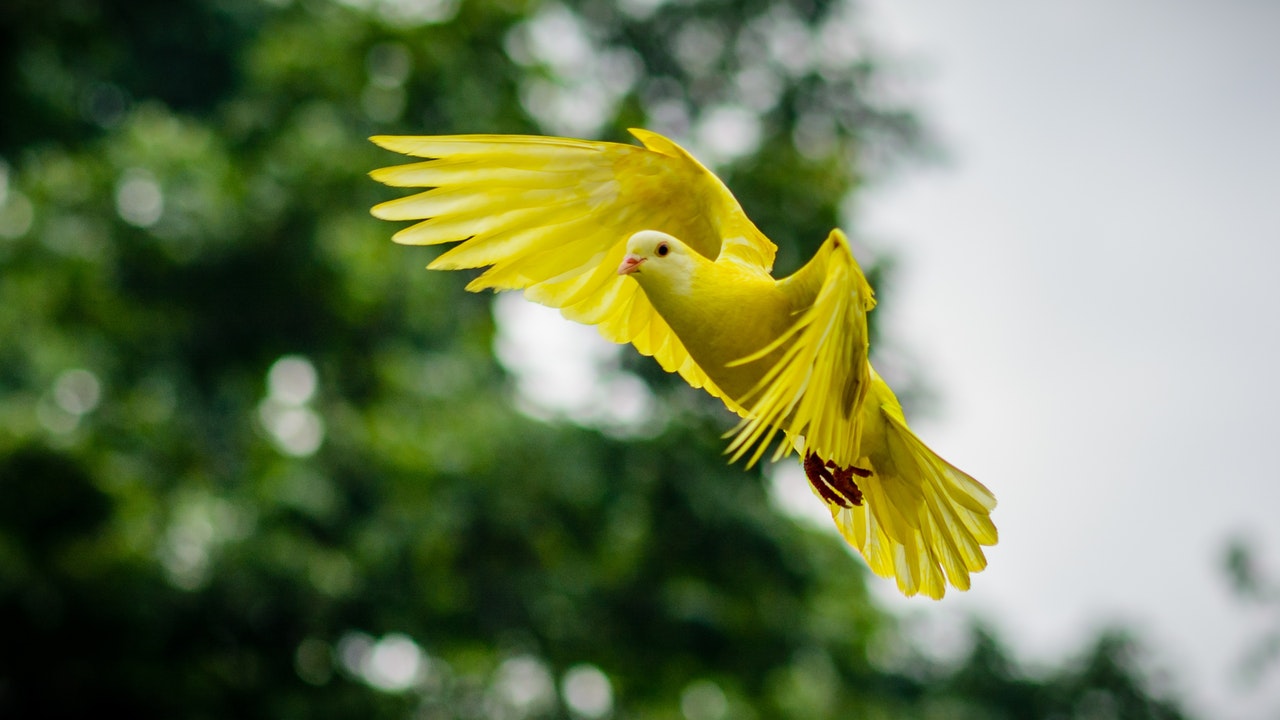
The poet Alfred K LaMotte reminds us that even now Gaia has delight to offer us, to sustain us:
YOU ASKED
When you asked,
How can I face
such a dark world?
the answer was all around you.
The wands of pine
in rain-laden breeze answered,
bell-throated, blackbirds
ringing over the wetland
answered, stars
floating on a still pond
answered, dancing
snow of milkweed,
pearl-eyed mushrooms
seeing through midnight
in the forest answered:
This world is not the seat of sorrow.
This world is sunlight
playing in a risen mist
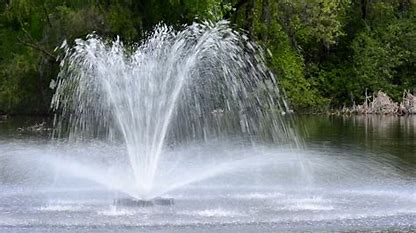
over the fountain of beauty.
The seat of sorrow is your heart
aching, thirsting
for its own illumination.
But the healing is easy.
Turn your gaze around
and see into your source.
You are that fountain, that
refraction of prism’d beauty.
Listen to the raindrop fall,
how it finds its way home,
as fallen things do,
to the hidden spring
under pungent green moss
where it was born.
Even the raindrop answers,
Yes.
Jude Currivan in “The Story of Gaia” describes a mystical moment of beauty and wonder during a solar eclipse:
On August 1, 2008, together with some fellow travelers, I climbed one of the high peaks of mount Huashan, located about 120 kilometers from the city of Xian in China, to witness a total Solar eclipse. Across from me was another of the five summits of this sacred mountain.
With their rocks delving deep into Gaia and their peaks reaching high to the heavens, mountains have held spiritual significance for millennia, inviting pilgrims to undertake journeys of inner and outer discovery and revelation. Indeed, the Chinese phrase for pilgrimage, h’ao-shan chin-hsiang, means “to offer respect to a mountain.” And from ancient times this particular massif, carved from a single huge block of granite, and the precipitous and dangerous paths to its crests have held especial meaning, offering hard-won opportunities for insight and guidance.
Its five-peaked shape spreads open like the lotus after which it’s named – symbolizing a flower that rises from its roots in mud, through water, to open its blossoms to Sol. Representing purity of heart and mind, the lotus and thus the mountain embodies the sacred seat of Buddha, as attested to by the many shrines and temples adorning its flanks and heights.
After a spectacular cable car ride to near the top of the peak and a steep climb to its crest, we arrived in the late afternoon of a beautiful, warm late-summer day. In the pale blue sky above the mountain, Luna in her fullness was slowly but inexorably extending her shadow over the disk of Sol.
One small cloud was visible in an otherwise clear sky. But as the eclipse continued to proceed to its few minutes of totality, when Luna completely covered Sol, the arc of their combined path, to my consternation, dipped behind the cloud.
After journeying so far to witness one of the most glorious of cosmic phenomena, it seemed that I was destined for it to be out of sight and only to sense its occurrence. So, I closed my eyes, aiming to attune with the coming few minutes of totality, when Gaia, Sol, and Luna perfectly aligned.
With my conscious mind having surrendered to whatever I might experience, I had no further expectations. A few moments later, though, I heard clairaudiently a message to “open your eyes.”
When I did, I literally began to shake with emotion and tears began to flow down my face. My gaze took in an amazing scene. Across the valley beneath me and upward to the pointed mountain peak beyond, the disk of Sol was now exactly covered by that of Luna. Fully clear of the small cloud and with no sunlight to reflect off Luna’s face, the total eclipse created a perfect circle of utter blackness against the backdrop of bright sky.
Of itself, this incredible sight is one of the most extraordinary phenomena of our Soular System. Yet, in a further miracle, the eclipse appeared almost impossibly poised: perfectly balanced, exactly and only for its few minutes of totality, on the very tip of the mountain.
This trinity of Sol, Luna, and Gaia experienced uniquely, only at this precise moment and at this exact vantage point, and shared only with my fellow travelers and a few young and local Chinese people was, as yet, the most wonder-full sight of my life.
It was as though the galaxy had sent an emissary to remind me of the vast black hole at its center and even, perhaps, as a sense of connecting to its sentience through the totality of the eclipse.
I watched this miracle in silence, along with the world around us that also seemed spellbound, as, in their cosmic dance, Sol and Luna, majestically sashaying together, slipped behind the peak. Moments later, now hidden from our view, as they silently parted to go their separate ways until their next communion, the sky behind the mountain crest before us exploded into light.
Solar eclipses as seen from Gaia certainly appear like nothing else in our Soular System and may be exceedingly rare or even unique throughout our galaxy and even entire Universe. The striking image of what black holes might look like when seen up close, may be nearest to this celestial phenomenon that occurs with awe-full regularity a few times every year. It’s a vision that on a profound level inspires in me a sense of the “black whole” of no-thingness and yet al-thingness.
Let us set our hearts to find what we are called to do with this, our time. And let us sustain our courage, our joy with the beauty that still exists on Gaia.
 sophiawakens
Anne Kathleen, this is MAGNIFICENT! I have read it a few times and taken it into my whole being…transforming, a Light of Grace and Peace…sufficient thanks is not possible for your visions, for that’s what they are…thank you, thank you…
LikeLike
Oh Anne Kathleen…the beauty you notice and convey so well! So well! You open my heart to see beyond and through the difficult world news we hear and face each day…Thank You, Thank you…
LikeLike