All posts by amclaughlin2014

Member of Community of Grey Sisters of Pembroke; Masters Degree in Religious Communication, Loyola University, Chicago; Author: Called to Egypt on the Back of the Wind (2013) Planted in the Sky (2006) both published by Borealis Press, Ottawa Canada www.borealispress.com Retreat facilitator: The Wooing of the Soul (2013) The Sophia Salons, beginning in February 2016, offer journeys to one's own inner wisdom for small groups of women. For information: amclaughlin@sympatico.ca

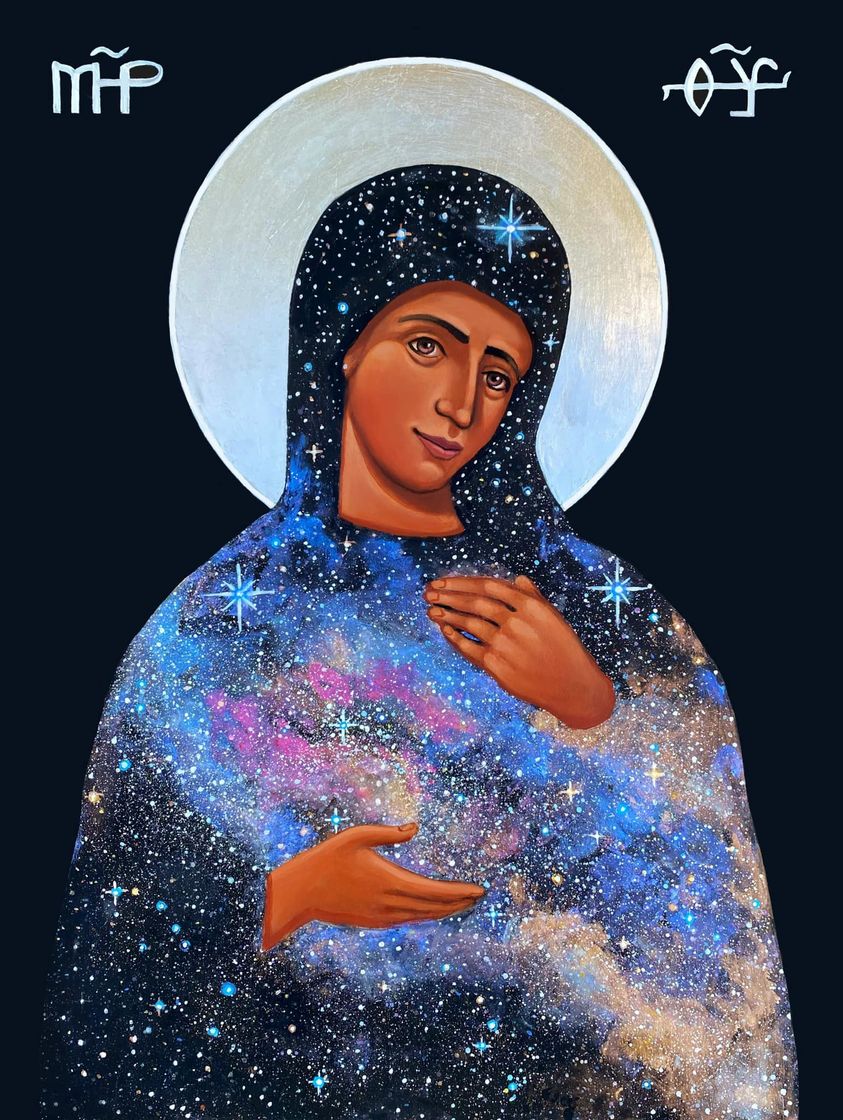
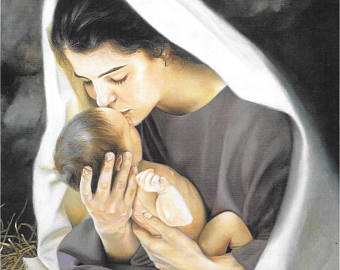
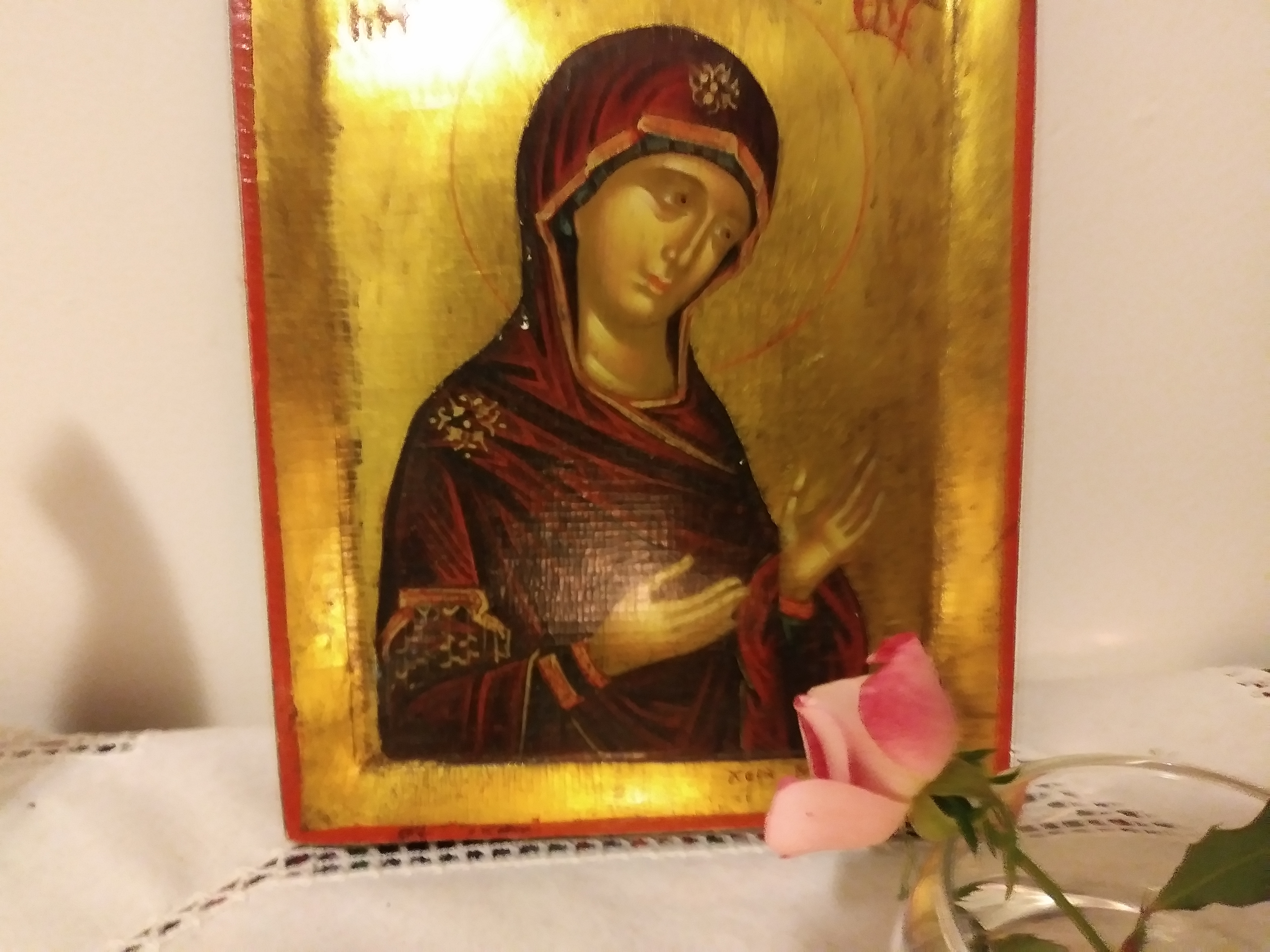
Mary, Mother of Jesus, Who Are You?

Advent Four December 2025

If you grew up Catholic in the years before the Second Vatican Council, chances are Mary was at the very heart of your faith. You prayed the “Hail Mary” many times daily; you sang hymns to Mary as you walked in May processions carrying flowers to decorate her statue; in every trouble and doubt, in every dark moment of your own life, you turned to her as to a mother whose love for you was unconditional. You probably knew by heart the “Memorare”, a prayer to Mary that says, in part, “Remember…Mary, that never was it known that anyone who fled to your protection, implored your help or sought your intercession was left unaided…”

At the call of Pope John 23rd, 2600 Roman Catholic Bishops gathered in Rome for the Second Vatican Council in the mid-1960’s. Believing they were restoring a balance, they invited Mary to step from her throne, and guided her gently to a place among the faithful, the followers of her son, Jesus. The “excesses” of Marian devotion were curbed… and then what happened?

Over the past sixty years since the closing of the Vatican Council, we have seen a burgeoning of interest in the “Sacred Feminine”; a recovery of ancient stories of the Goddess; archaeological finds that create renewed interest in the time when the Sacred One was honoured as a woman; an explosion of writing among theologians, historians, cultural storytellers, seeking to understand the power and presence of “Mary” in the Christian story. I will cite a few here: The Virgin by Geoffrey Ashe; Missing Mary by Charlene Spretnak; Untie the Strong Woman by Clarissa Pinkola Estes and Truly Our Sister by Elizabeth Johnson.

Though I am no theologian, I have a consuming interest in the many aspects of this mystery. What I glimpse is this: the human heart longs for a divine mothering presence. Ancient cultures honoured a feminine divine who over millennia was called by many names: Isis in Egypt; Inanna in Sumeria; Ishtar in Babylon; Athena, Hera and Demeter in Greece, Anu or Danu among the ancient Celts; Durga, Kali and Lakshmi in India; for the Kabbalists, Shekinah; for the gnostics, Sophia or Divine Wisdom. Christianity had no “Mother God” to put in the place of the Goddesses whose worship it was determined to eradicate. Geoffrey Ashe’s theory is that Mary’s gradual ascension in Christianity was not an initiative of Church Leadership, but rather a response to the hunger of the early Christians for a sacred feminine presence.

Mary became for us an opening to a loving feminine sacred presence. Or, put another way, a loving sacred feminine presence responded to the cries of her people when they called her “Mary”, just as that presence had responded over the millennia to other names cried out in love or sorrow or desperate need.

Over these darkening days as we descend to the longest night of the year at the Winter Solstice, Mary will be our companion. We reflect on her pregnancy, her waiting, her uncertainty, the doubts of those who love her, the trust that sustains her “while she opens deeper into the ripple in her womb…”

This is profound mystery. For Mary. For each one of us who carries the Holy within us, seeking a place of birth. We walk the dark road, with Mary, in trust.

We walk companioned by one who knows our struggles to maintain our trust in the face of inner doubts and outer calamity. We walk with one who loves us and encourages us until we are ready to welcome “the day which will be born from the womb of this present darkness.”

What mystery is “Coming Ashore” inside you?

Advent Three: Becoming Wild Inside

As we prepare to celebrate the Birth of Jesus, the One whose coming brings Light at the darkest time of the year, Mary is a companion, a guide, a friend who walks with us in the darkness.

Mary has left us no written word. The little we know of her from the Gospels is sketchy at best, her appearances brief, her words cryptic. Yet her influence on Christian spirituality is staggering in its power.

Who is this woman, and how has she risen from a quiet life in the outposts of the Roman Empire to become, as the Church proclaims her, “Queen of Heaven and Earth”?

If you grew up Catholic in the years before the Second Vatican Council, chances are Mary was at the very heart of your faith. You prayed the “Hail Mary” many times daily; you sang hymns to Mary as you walked in May processions carrying flowers to decorate her statue; in every trouble and doubt, in every dark moment of your own life, you turned to her as to a mother whose love for you was unconditional. You probably knew by heart the “Memorare”, a prayer to Mary that says, in part, “Remember…Mary, that never was it known that anyone who fled to your protection, implored your help or sought your intercession was left unaided…”

At the call of Pope John 23rd, 2600 Roman Catholic Bishops gathered in Rome for the Second Vatican Council in the mid-1960’s. Believing they were restoring a balance, they invited Mary to step from her throne, and guided her gently to a place among the faithful, the followers of her son, Jesus. The “excesses” of Marian devotion were curbed… and then what happened?

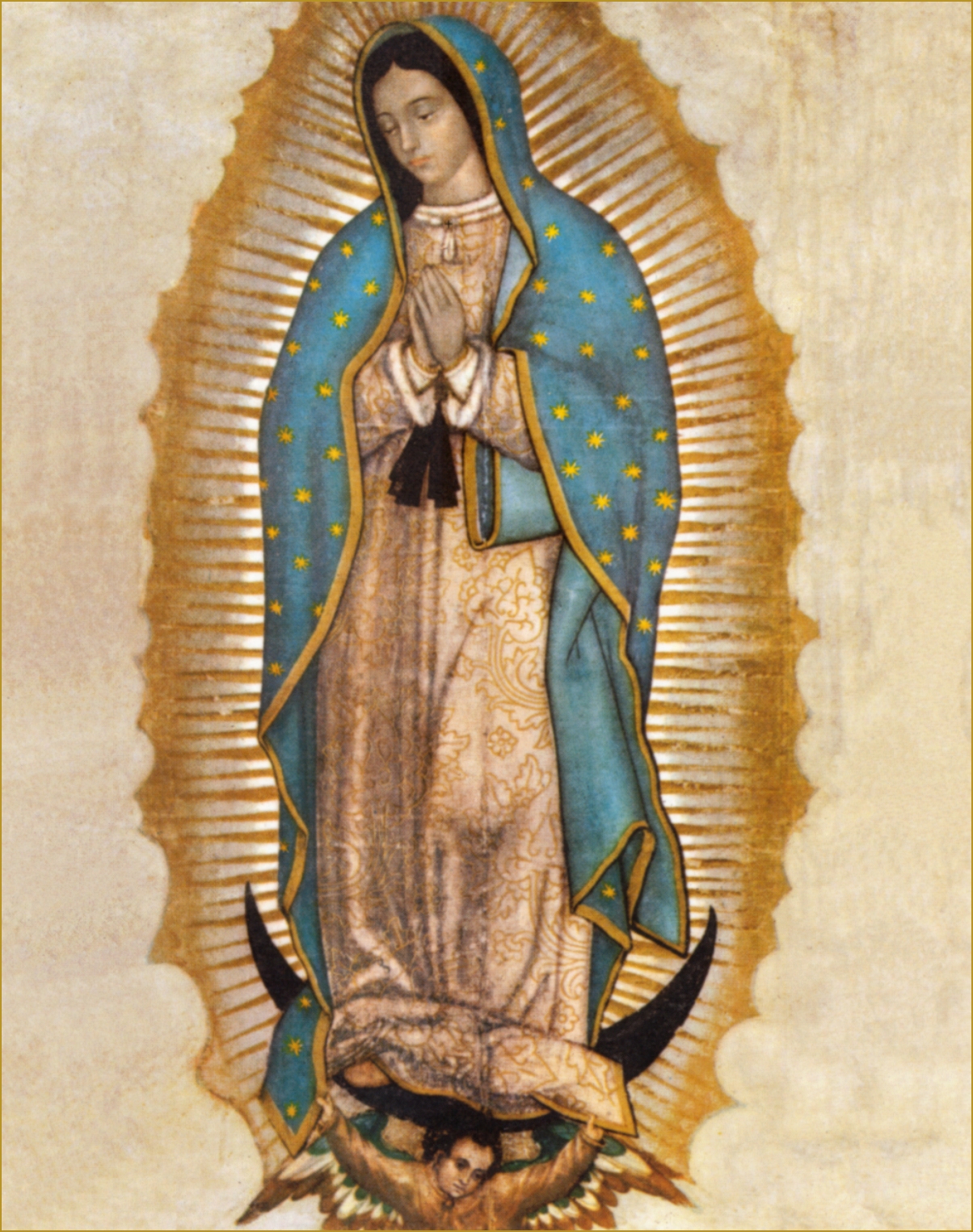
Over the past sixty years since the closing of the Vatican Council, we have seen a burgeoning of interest in the “Sacred Feminine”; a recovery of ancient stories of the Goddess; archaeological finds that create renewed interest in the time when the Sacred One was honoured as a woman; an explosion of writing among theologians, historians, cultural storytellers, seeking to understand the power and presence of “Mary” in the Christian story. I will cite a few here: The Virgin by Geoffrey Ashe; Missing Mary by Charlene Spretnak; Truly Our Sister by Elizabeth Johnson and Untie the Strong Woman by Clarissa Pinkola Estes, a collection of stories honouring Mary as “Our Lady Of Guadalupe,” beloved in Latin America where in the 16th century Mary, in the guise of a Latino woman, appeared to Juan Diego, Today, December 12, the feast day of Our Lady of Guadalupe is celebrated in Mexico.

Our Lady of Guadalupe

Though I am no theologian, I have a consuming interest in the many aspects of this mystery. What I glimpse is this: the human heart longs for a divine mothering presence. Ancient cultures honoured a feminine divine who over millennia was called by many names: Isis in Egypt; Inanna in Sumeria; Ishtar in Babylon; Athena, Hera and Demeter in Greece, Anu or Danu among the ancient Celts; Durga, Kali and Lakshmi in India; for the Kabbalists, Shekinah; for the gnostics, Sophia or Divine Wisdom. Christianity had no “Mother God” to put in the place of the Goddesses whose worship it was determined to eradicate. Geoffrey Ashe’s theory is that Mary’s gradual ascension in Christianity was not an initiative of Church Leadership, but rather a response to the hunger of the early Christians for a sacred feminine presence.

How it came about is less interesting to me than the reality that Mary became for us an opening to a loving feminine sacred presence. Or, put another way, a loving sacred feminine presence responded to the cries of her people when they called her “Mary”, just as that presence had responded over the millennia to other names cried out in love or sorrow or desperate need.

Over these darkening days as we descend to the longest night of the year at the Winter Solstice, Mary will be our companion. We reflect on her pregnancy, her waiting, her uncertainty, the doubts of those who love her, the trust that sustains her “while she opens deeper into the ripple in her womb…” as John O’Donohue has written.

This is profound mystery. For Mary. For each one of us who carries the Holy within us, seeking a place of birth. We walk the dark road, with Mary, in trust.

We walk companioned by one who knows our struggles to maintain our trust in the face of inner doubts and outer calamity. We walk with one who loves us and encourages us until we are ready to welcome “the day which will be born from the womb of this present darkness.”

Where does our story touch Mary’s? Where are the meeting points?

In his poem, “Annunciation”, John O’donohue offers some hints:

Cast from afar before the stones were born

And rain had rinsed the darkness for colour,

The words have waited for the hunger in her

To become the silence where they could form.

The day’s last light frames her by the window,

A young woman with distance in her gaze,

She could never imagine the surprise

That is hovering over her life now.

The sentence awakens like a raven,

Fluttering and dark, opening her heart

To nest the voice that first whispered the earth

From dream into wind, stone, sky and ocean.

She offers to mother the shadow’s child;

Her untouched life becoming wild inside.

Shall we make the offer that is asked of us? Will our hunger “become the silence” where the words of invitation take form? When our hearts open, will they also become a nest for a new birthing of the Holy?

These are questions to ask in our daily contemplative time… From Jean Houston, we have learned that now there is no time for us to modestly refuse any call that smacks of greatness. The urgent needs of our time require a “yes” to the conception, followed by the birthing, of newness.

Here are Jean’s words, reflecting upon the call of Mary, our call

.Just think of the promise, the potential, the divinity in you, which you have probably disowned over and over again because it wasn’t logical, because it didn’t jibe, because it was terribly inconvenient (it always is), because it didn’t fit conventional reality, because… because… because….

What could be more embarrassing than finding yourself pregnant with the Holy Spirit? It’s a very eccentric, inconvenient thing to have happen.

(Jean Houston in Godseed)

Eccentric. Inconvenient. Perhaps. But nonetheless it is our call. Mary’s story gives us the courage to say “yes” without knowing where that “yes” may lead. It is enough to know that certainly our own life will become, like Mary’s, “wild inside”.

Embracing the Darkness of the Cailleach

Dolores Whelan http://doloreswhelan.ie teaches us that it is no small task to integrate the divine energy of the sacred feminine within oneself. We only do one piece of the work but each piece joined together with the others creates a quantum shift.

Dolores said that the crime is to believe that we have no power. We need to ask, “What choices do I have here?” If we say, “there’s nothing I can do,” Dolores responds, “OH YES THERE IS!”

In her article, “Brigid: Cailleach and Midwife to a New World”, Dolores how Brigid assists us in this great work which is our great work.

Reflecting on the turmoil present in the world today it is clear to all but those steeped in denial, that all is not well. It seems that something ails us humans; something that causes us to live in ways that disrespect our mother, the living earth, and all our relatives. We ask what is it in us humans that creates such a restless world where there is little sense of belonging, nurture or home and which causes so many of the species with which we share this planet to suffer?

The exclusion of the Feminine energy in our naming and understanding of the Divine is reflected in a corresponding absence and devaluing of feminine energy in all aspects of life in western society. The devaluing and exclusion of the feminine energy over the past centuries has created a distorted story about life which has resulted in a world whose shape and vibration creates disharmony.

So how do we find our way back to a more harmonious way of life? If we know what is missing and what ails us, it may be possible for us to make the journey back towards wholeness and health.

At this time many people are becoming aware of the wisdom of the feminine. As this happens, the absence of genuine feminine energy present in most institutions, both religious and secular, throughout western culture, becomes obvious. To include the presence of the divine feminine energy in creating a world whose shape is more wholesome requires a fundamental reclaiming of the essential role of the feminine in all aspects of life. In order to create change within the physical world and in our society it is necessary to change the dreams and stories held within the imagination of a society.

Reconnecting with and remembering the spirit and archetypal energy of Brigid, in both her Goddess and saint manifestations, is an essential task of this renaissance. Brigid, although normally associated with the maiden and mother aspects of feminine energy, is also expressed in the cailleach form, as indicated in the prayer “Molamid Brid an mhaighean; Molamid Brid an mhathair; Molamid Brid an cailleach” (Praise to Brigid, the maiden, the mother, and the crone).

What then is the energy associated with the hag, crone, or cailleach aspect of the divine feminine? The cailleach is the embodiment of the tough mother-love that challenges its children to stop acting in destructive ways. It is the energy that refuses to indulge in inappropriate personal or societal dreams. It is the energy that will bring death to those dreams and fantasies that are not aligned with our highest good. Yet, this cailleach energy also will support the emergence and manifestation in the world of the highest and deepest within us. It will hold us safely as we embrace the darkness within ourselves and our society. It is an energy that insists that we stand still, open our hearts, and feel our own pain and the pain of the earth. This is the energy that teaches us how to stay with the process when things are difficult. This energy will not allow us to run away! Her way of being is a slow, inwardly focused way, with minimum outward activity: a way that values times of active waiting that pays attention and allows life to unfold.

The Cailleach’s way of being is a slow, inwardly focused way, with minimum outward activity: a way that values times of active waiting that pays attention and allows life to unfold.

An essential part of the journey that all the great heroes and heroines in world mythologies undertake includes facing and embracing the energy of surrender, darkness, and death. The hero or heroine learns the next step required in their outer world journey only by submitting to and being initiated into the dark world of the cailleach.

Through this initiation the mature masculine power can emerge and lead each one to find their true path. When this happens the action that follows will be in the service of the true feminine and bring forth wisdom and compassion creating new life, vitality, and sustainability.

Because western society is currently dominated by the young masculine energy, present in both men and women, characterized by its “can do” attitude, there is an urgent need for each of us to make this heroic journey with the cailleach, so that we will become agents for the transformation of our society.

To Dolores Whelan’s wisdom about Samhain, I add here the morning prayer from “Singing the Dawn.” Elspeth, the Cailleach of the novel, recites this prayer to honour Sophia in the darkness of dawn:

“Singing the Dawn” Anne Kathleen McLaughlin. Borealis Press, Ottawa, Canada, 2022)

http://borealispress.com

Welcoming Sophia at Samhain

The call to awaken to the presence of Sophia comes at a time when much of our planet struggles with darkness. Live-streaming news gives us an immediate knowing of disasters, disease, wars, weather-related devastation that can be overwhelming.

Yet the greater the darkness, the greater is our awareness of the need for light, the deeper our appreciation for it, the more compelling our own call to be co-creators of light.

As these shorter days in autumn prepare us for the yearly plunge into winter’s darkness, we are entering into the sacred time of Sophia. Our ancient ancestors, who knew almost nothing of events beyond their immediate homes, knew about the rhythms of the earth, the apparent movements of sun, moon and stars, the cycle of the seasons, with an accuracy of observation that fills us with awe. The early peoples of Ireland were so deeply attuned to the shifting balance of light and darkness that they could build a monument to catch the first rays of sunrise on the Winter Solstice. The Newgrange mound in Ireland, predating the Egyptian Pyramids, receives the Solstice light through a tiny aperture above the threshold.

Like the Egyptians and other ancient peoples, the Celts wove their spirituality from the threads of light and darkness that shaped their lives. Their spiritual festivals moved through a seasonal cycle in harmony with the earth’s yearly dance, associating the bright sunlit days with masculine energy, the darker time with contemplative feminine energy. For the Celts, the days we are entering this week, days we name Halloween, All Saints’ and All Souls’, were one festival known as Samhain (Saw’ wane). These three days marked the year’s end with a celebration that served as a time-out before the new year began. The bright masculine season with its intense activity of planting, growing, harvesting, was over. The quieter days of winter were ahead, “the time of darkness, the realm of the goddess where the feminine energy principle is experienced and the season of non-doing is initiated.” (Dolores Whelan: Ever Ancient, Ever New pp. 98-9) www.doloreswhelan.ie

We in the twenty-first century may still draw on this ancient wisdom to live in harmony with the earth as the Northern Hemisphere of our planet tilts away from the sun. We can welcome this time of darkness as a season of renewal when earth, animals, insects and humans rest. Our energy can be gathered inwards to support what is happening deep within the earth and deep within our souls. The energy gathered in this season will be used when the winter has passed and spring has brought new life to the land and the people.

We too can accept the invitation of Samhain to release whatever is not completed at this time, letting go of the light and the activity of sun-time, surrendering ourselves to the restful moon-time, the darkness of holy waiting. Living within the wisdom of the earth’s seasons, we move towards the rebirth of the sun at the Winter Solstice, embracing a journey of deep surrender.

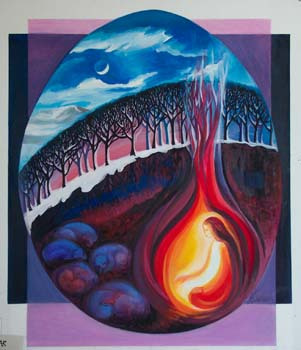
This is Sophia time. Within her sacred cauldron, our lives and our desires for our planet find a place of gestation, a safe darkness where, as with the caterpillar in a chrysalis, the great work of transformation of our souls and of all of life can happen.

Sylvia Shaindel Senensky writes:

We are being called upon by the sorrowing and powerful Dark Feminine to know our own darkness and the profound richness of all dark places, even when they are laden with pain. Through her we know the mystery of existence and the sacredness of the cycles of life. We learn how important the destruction of the old ways is to the rebirth of the new. When she steps into our lives and awakens us, we can be shattered to our core, and we know, as we see the tears streaming down her face, that she too is holding us in her compassionate and loving embrace.

. She is calling upon us, each in our way, to do our inner work, to become her allies, to become the best human beings we know how to be; to allow our creativity, our compassion and our love to flow to ourselves and to all life forms on this planet…. Love attracts love. If we flood our planet with loving and transformative energy, our actions will begin to mirror our feelings. We will come home to ourselves. (Healing and Empowering the Feminine Chiron Publications, Wilmette Illinois 2003)

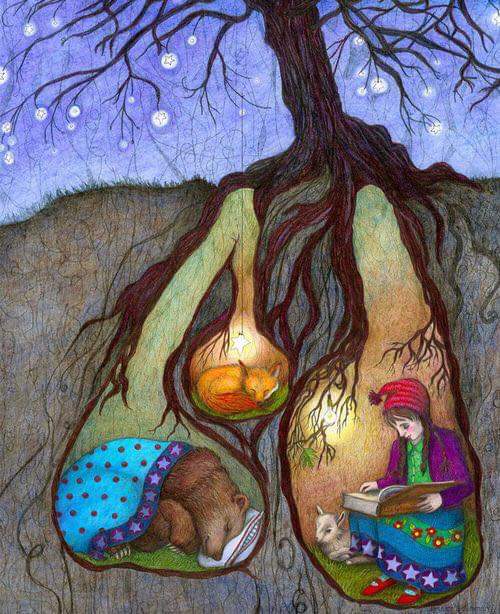
Let us enjoy this sacred season, this womb-time, as we curl up near the fireside of our hearts. From Sophia’s cauldron, we shall emerge in springtime in an interdependent co-arising with the earth, knowing ourselves renewed in soul, body and spirit

Brigid: Wise Guide for Spiritual Seekers

February 10, 2025

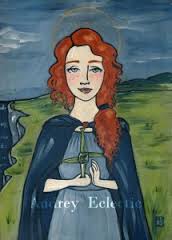
Brigid’s Day is celebrated on February 1st, the ancient Celtic Festival of Imbolc . Known as the one who ”breathes life into the mouth of dead winter,. Brigid has left us no written word. Her earliest biography was written a hundred years after her death by Cogitos, one of the monks of Kildare, the double monastery where Brigid was Abbess of both men and women in fifth century Ireland.

Brigid of Ireland

Ireland is a land of story. The stories woven through and around Brigid’s life are interlaced with the stories of the Ancient Goddess Brigid so that the two have come to be one sacred archetypal presence. This is best illustrated in words overheard a few years ago at a ceremony at Brigid’s Well in Kildare: “Sure and wasn’t she a goddess before ever she was a saint.”

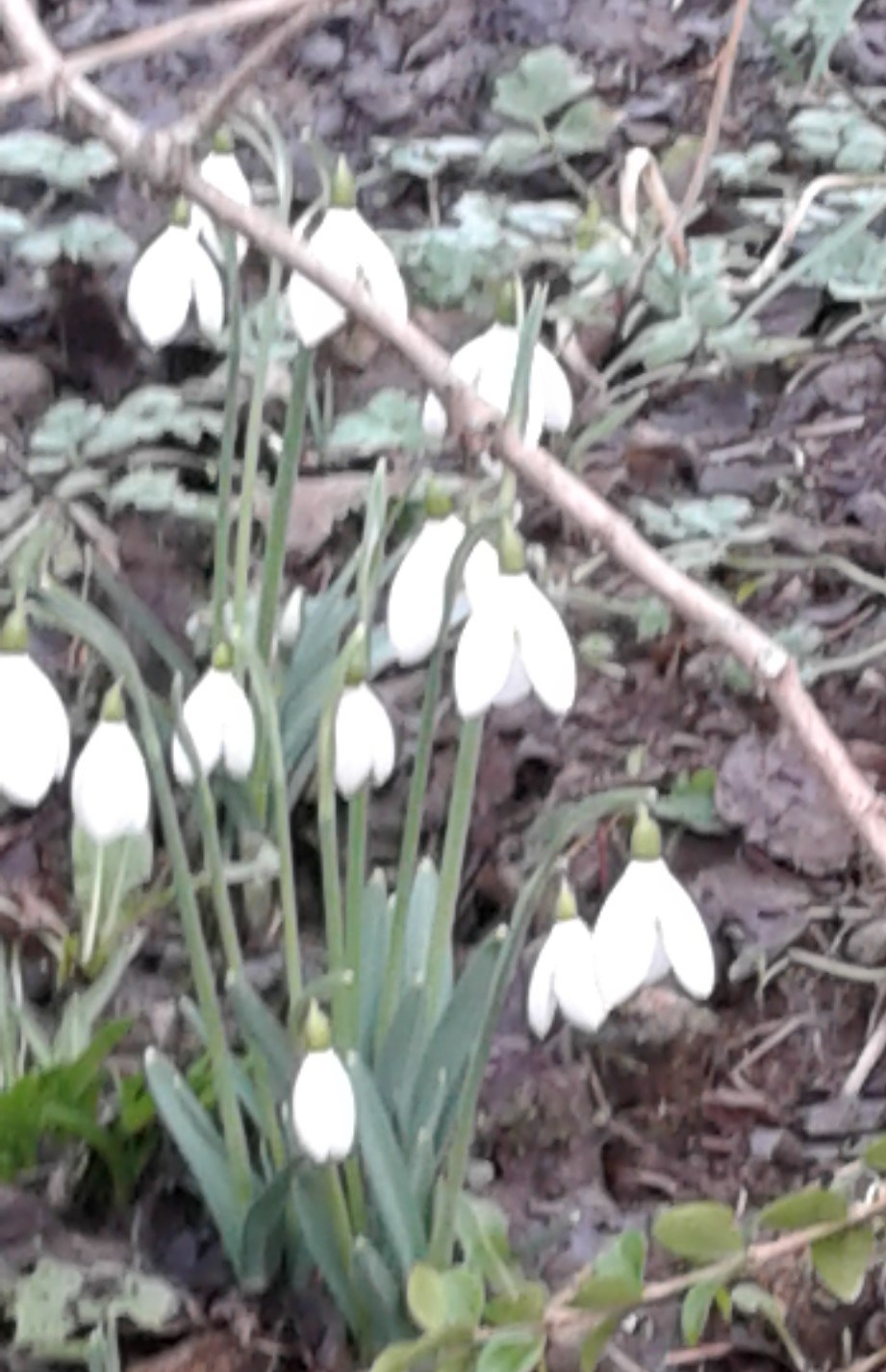
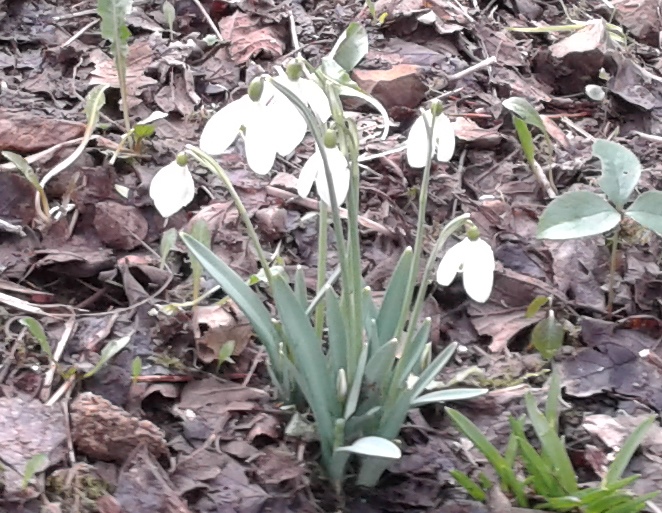
                                                                                                                                                                                                                                                                              In the winter of 2018, I was in Ireland for Imbolc, the Feast Day of Brigid.  Staying in the home of Dolores Whelan, I found in her garden small snowdrops blooming For a Canadian, such flowers in late January appeared miraculous.

snowdrops for Brigid’s Day

Dolores, who is my primary teacher in the ways of Brigid, showed me the hill of Faughart, clearly visible from the upper story window of her home. Faughart is known in legend as the birthplace of Brigid. I had the joy of being present at the Oratory in Faughart on February 1st, Brigid’s Day, for a Ritual of Music and Readings.

In her article, “Brigid of Faughart – Wise Guide for Modern Soul Seekers”, Dolores Whelan writes of coming to know Brigid:

Faughart, near Dundalk ,Co Louth, Ireland is an ancient place filled with a history that is both gentle and fierce. It is a place associated with battles, boundaries and travel. The Sli Midhluachra, one of the five ancient roads of Ireland, runs through the hill of Faughart on its way from the Hill of Tara to Armagh and then to the north coast of Ireland, making it a strategically important place.

However, Faughart is also a place of deep peace, tranquility, beauty and healing, being associated from ancient times with Brigid, Pre-Christian Goddess and Christian Saint. Brigid holds the energy of the Divine Feminine within the Celtic Spiritual tradition. Faughart is the place associated with Brigid, the compassionate woman who heals, advises and nurtures all who come to her in times of need.

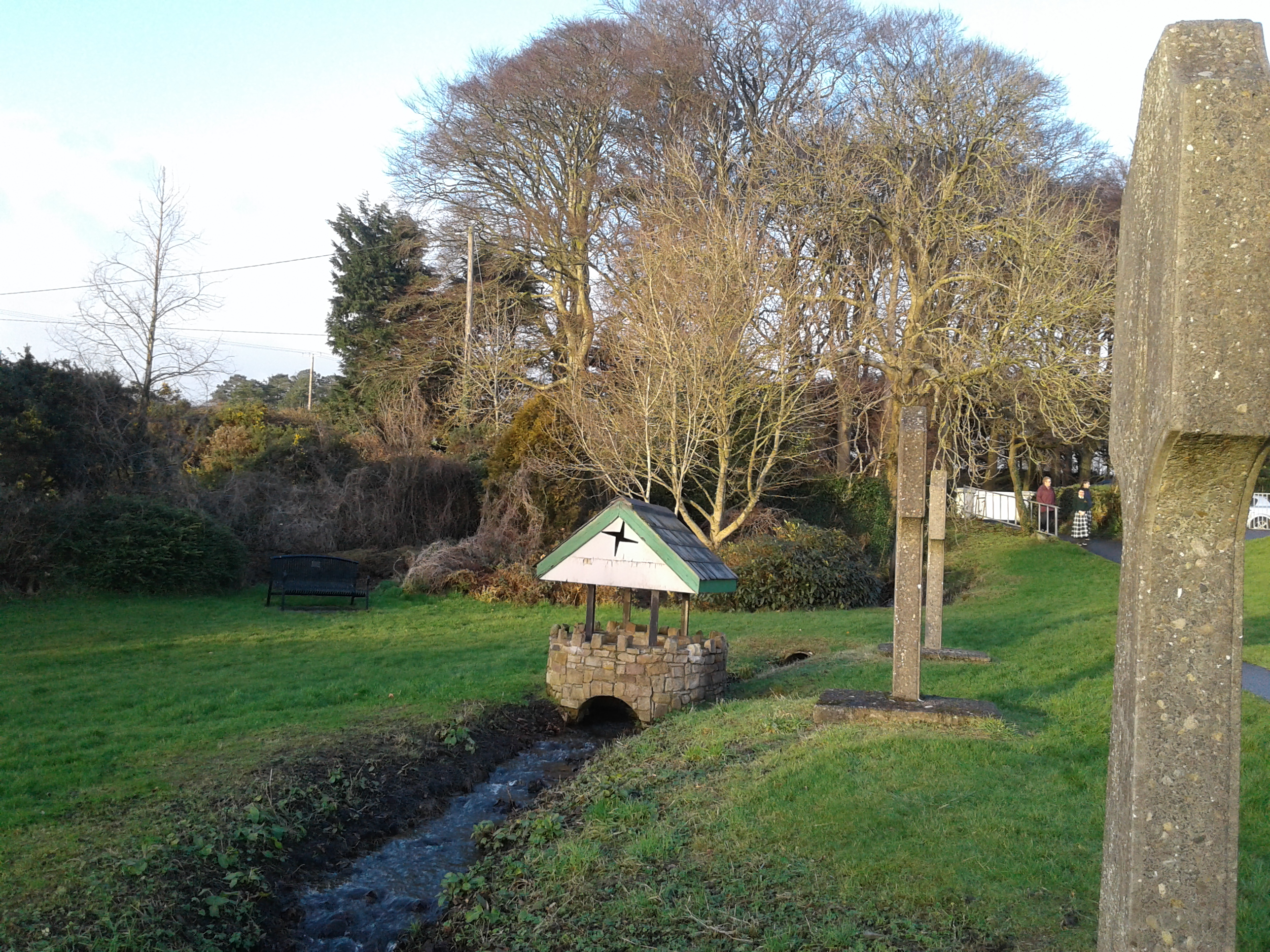
People are drawn to her shrine at Faughart because of the deep peace they experience there. Brigid’s peaceful presence can be experienced in this landscape where the ancient beech trees radiate old knowledge and hold a compassionate space for us all.

land, trees, water near Brigid’s Shrine, Faughart, Ireland

On La feile Bhride (Feb 1st) people come in their multitudes! On this special day the shrine at Faughart is thronged with pilgrims who come to invoke Brigid’s blessing on their emerging lives. Brigid is associated with springtime and new life emerging. She is the one who “breathes life into the mouth of dead winter.”

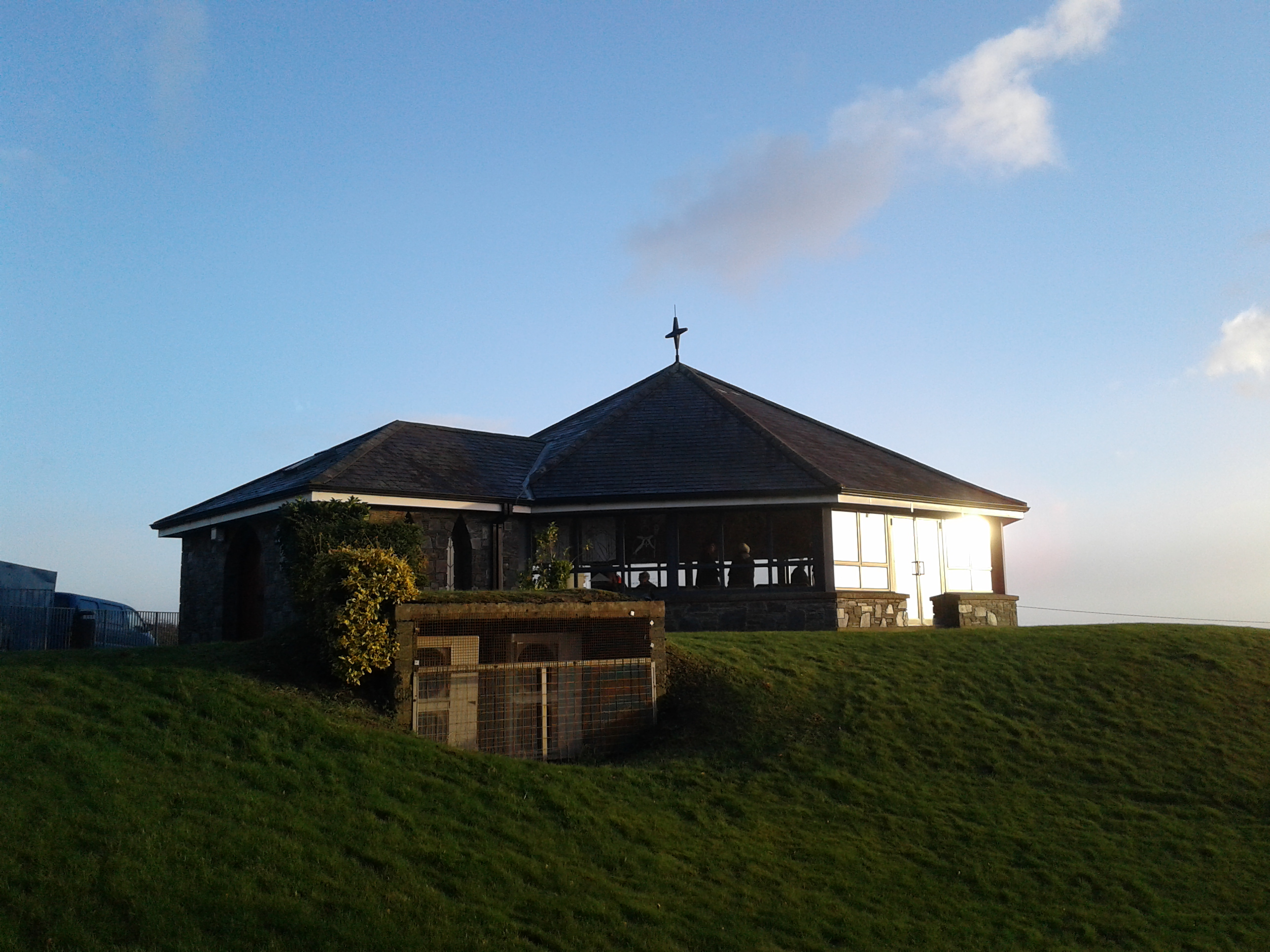
Shrine at Faughart on Brigid’s Feast

I first went to Faughart in 1992 and was amazed by the beautiful energy present there. At that time, I had begun to study the Celtic spiritual tradition, something from which I and so many other people had been disconnected over many centuries. My quest at that time and since then has been to recover some of the riches and wisdom of that ancient tradition. And to ask the question:  “How could this wisdom be integrated into the lives of us modern humans in ways which would create a more balanced and peaceful life for all of the beings on planet Earth”?

While at Faughart in 1992 something deep and ancient stirred in my heart and I have been on a journey with Brigid ever since. In 1993 I went to The Brigid Festival in Kildare, organised by Mary Minehan, Phil O’Shea, and Rita Minehan (Solas Bhride). At this festival these women, in a daring Brigid-like action, re-kindled the flame of Brigid in Kildare. The flame of Brigid had been quenched at the time of the suppressions of the monasteries around the 12th century.

As this took place an ancient part of my soul understood the significance of this prophetic act. My journey into the Celtic spiritual tradition changed and evolved over time, becoming a deeply significant part of my life’s purpose.

It is said that from the moment Brigid learned to know God that her mind remained ever focused on God/Divine. This allowed her to remain connected to God and the heavens while living on the earthly plane. Her great power of manifestation was a result of this ability to be aligned heaven to earth. The strong connection between her inner and outer worlds allowed her to focus her energy onto a particular intention so clearly as to ensure its manifestation in the physical world.

Brigid had the capacity to bring forth new life, to nourish, to create plenty in the crops or an abundance of the milk from cows, and to manifest or create ex nihilo. This gift reflected the true abundance and prosperity that was present in the society she created, a society living in right relationship with the land. Her life and work thrived due to her deep trust in life and because there was a total absence of fear within her.

Slowly, I began to understand that Brigid, the Pre-Christian Goddess and Celtic Christian saint who lived in the 5thCentury in Faughart and Kildare, who embodied wonderful qualities of compassion, courage, independence and spiritual strength was not only a historical figure! I realised that those energies and qualities exemplified by her in her lifetime are still alive in the world and available to me and to all humanity. What a gift it was to realise this! And so the task became how could I access those qualities in myself, embrace them and use them to challenge the dominant thinking of our culture and become like Brigid, a catalyst for change in society.

Brigid challenges each of us to have that same courage; to live our lives with the passion and commitment that comes from trusting our own inner truth and living the integrity of our unique soul journey. She invites us, like her, to breathe life into the mouth of dead winter everywhere we find it in ourselves and in our society. She represents for me the spiritual warrior energy reflected in this ancient triad “The eye to see what is, the heart to feel what is, and the courage that dares to follow.”

Deep thanks to Dolores Whelan for this compelling, insightful reflection on Brigid’s gifts for our time.

To read more from Dolores, go to her website: http://doloreswhelan.ie

Coming to Know Brigid in the 21st Century

Brigid, once only a name to me, has becomes a wise and loving companion, one to whom I turn morning and evening for light and guidance in my life. This fifth century Irish Saint, Abbess of a Monastery in Kildare where men and women lived a consecrated life, first began to interest me when I read Dolores Whelan’s book Ever Ancient, Ever New: Celtic Spirituality in the 21st Century (The Columba Press, Dublin 2006), Dolores writes of Brigid’s ability to manifest abundance, of her generosity and kindness. In these qualities, sometimes shown in miraculous ways, Brigid continues the tradition of loving actions manifested by the pre-Christian goddess Brigid.

Legend says Brigid’s mother gave birth to her on the doorstep of her home, so that Brigid has became known as a threshold person, able to see both sides of an issue while remaining aligned within. Her capacity for peacefully resolving conflicts is a frequent theme in the stories told of her.

Dolores writes that Brigid “has the ability to stand in the gap and remain centred within the uncertainty present in the outer world.” Further,“being centred and aligned with ones deep inner knowing is a quality that each of us can and must develop at this time.” (72)

Another strong gift of Brigid is her capacity for focus. Brigid is said to have told St. Brendan: “Since the first day I set my mind on God I have never taken it away from him and I never will.” (73)

Through Dolores’ writings, I have come to know that Brigid’s qualities are not meant not only to inspire. They are meant to be imitated. Gradually, as I begin to take her way of being into my life, Brigid is becoming a real and active presence for me.

When in February 2014, I invited Dolores Whelan to come to Canada to offer a weekend session on Brigid at Galilee Centre in Arnprior, I met a woman who consciously embodied Brigid’s qualities. When a scheduling conflict arose, Dolores refused to have our weekend plans sidetracked to accommodate another agenda. “I’ve had a Brigid moment,” Dolores told me as she declared we would stay with the planned schedule. “That’s what these women (our 21 participants) have come for.”

In February of 2018, I travelled to Ireland to celebrate the Festival of Brigid. I stayed in Dolores’ home and was enchanted to see, on February 1st, snowdrops blooming in Dolores’ front garden.

?????????????

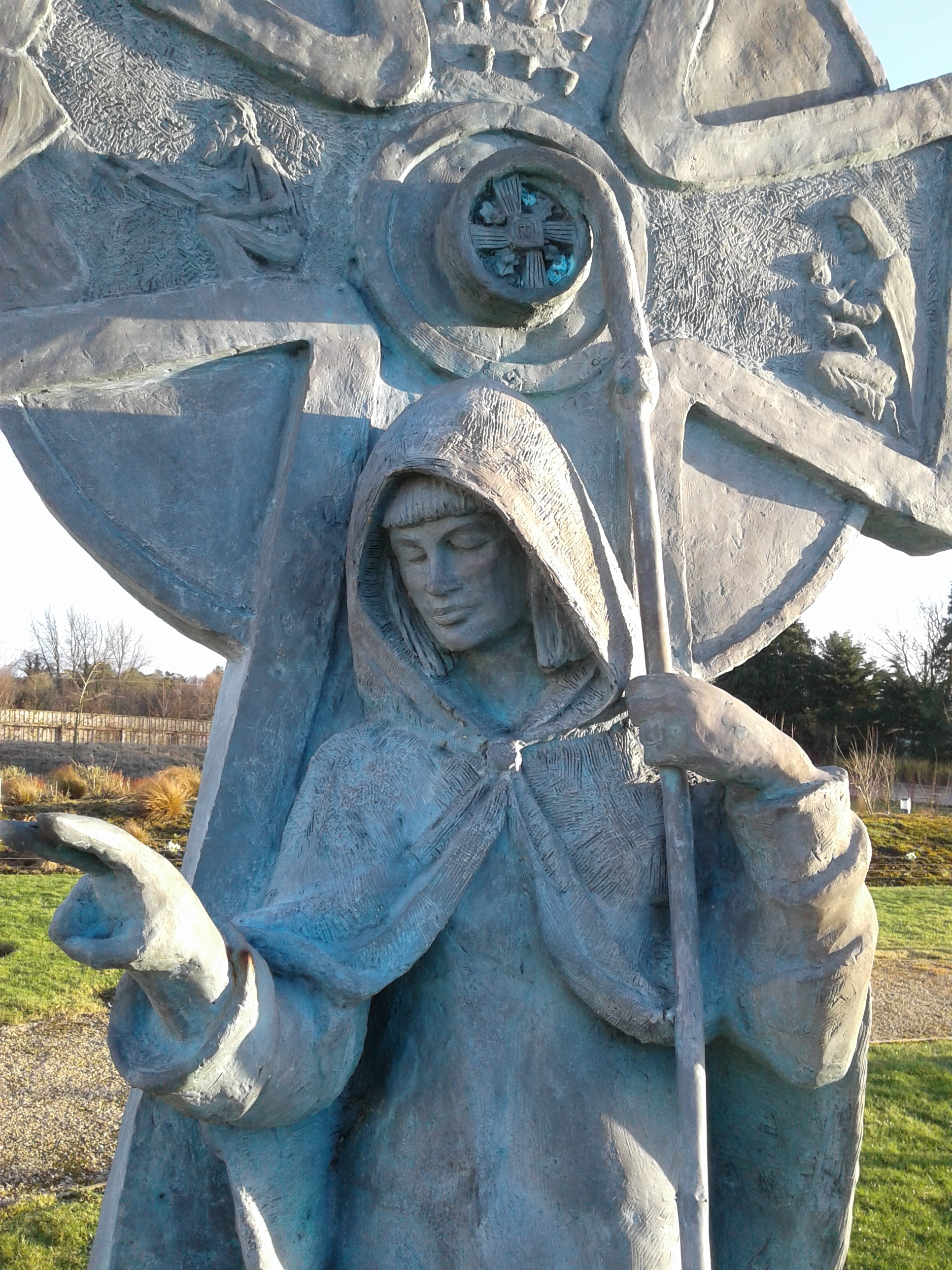
While in Ireland, I visited the beautiful Solas Bhride Centre outside Kildare. I stood before an enormous stone statue of Brigid, her hand raised to signify a Bishop’s Blessing.. I had to bend backwards to look up at her face as I asked her to guide my work in Spirituality. I was deeply moved to hear within me her words of response, as her hand, raised in blessing, seemed to gesture me onwards: Keep on your journey. Go on with your work. Don’t look back.

Brigid’s words continue to inspire me. They goad me on with my writing, my work of teaching, leading retreats and workshops on Spirituality. I continue to make Brigid’s inspiration known through my book “Singing the Dawn” (Borealis Press, 2022). http://www.borealispress.com/BookDetail/rid/1137/Singing%20the%20Dawn

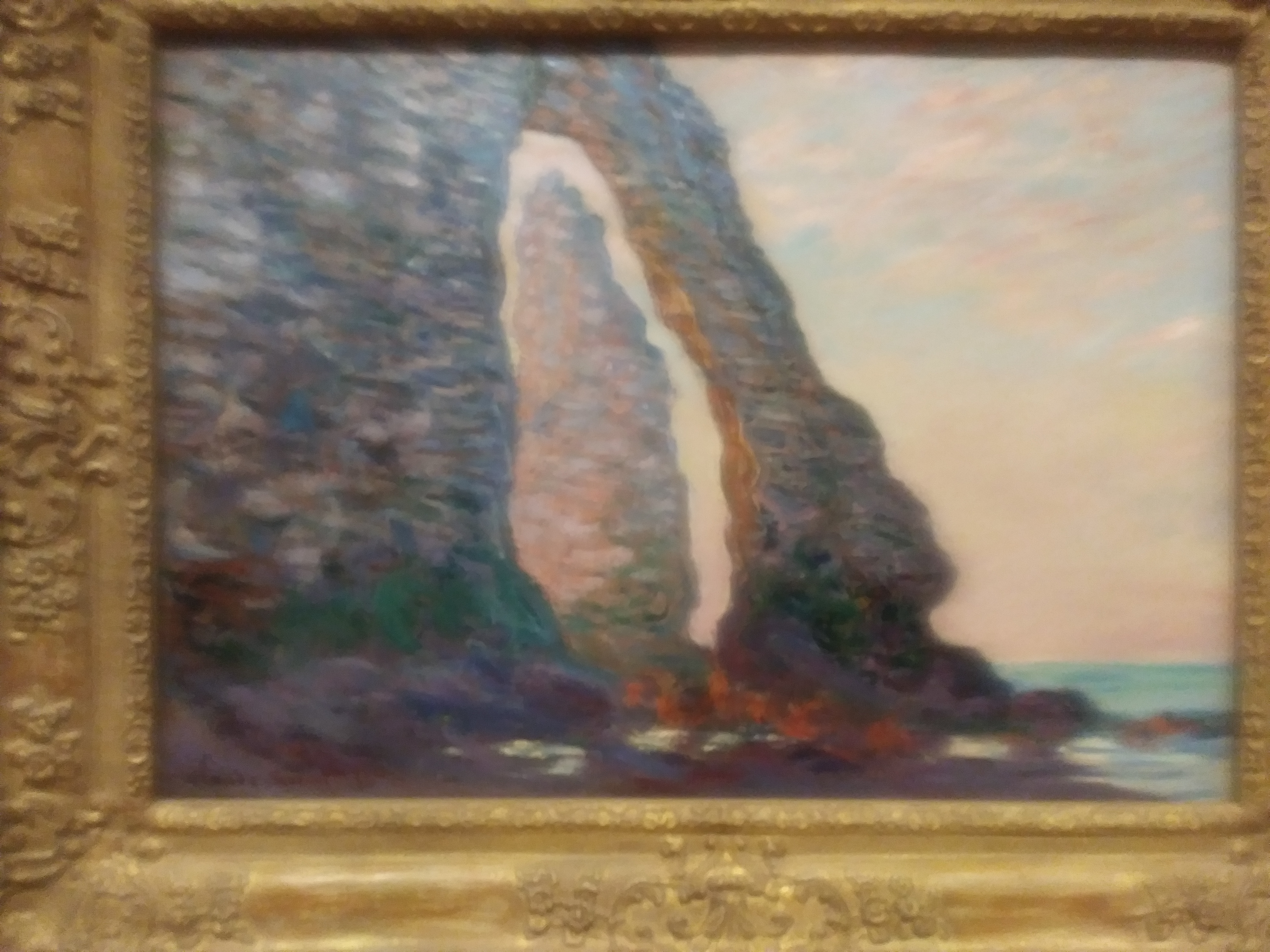
Cover image for “Singing the Dawn” : “Rock Needle Seen through the Porte d’Aval, Etretat, 1886 by Claude Monet
photo from National Gallery of Canada by Anne Kathleen McLaughlin

This novel celebrates Brigid’s inspiration for 21st century women who live in the light of her qualities.

For the past year I have had the grace of spending time each morning and evening with a set of sound recordings:“Healing Journeys with Brigid” created through the voice and violin of Kate Fitzpatrick. https://mythicvoice.ie/brigids-light/

I met Kate in 2018 while I was in Ireland. I find her guided meditations a wonderful way to come close to Brigid who has become a practical support in my daily life. For example, when I requested her help with an Internet breakdown last week, a snow-covered Bell Technician was at my door to repair the outdoor cable and restore my Internet connection within hours of my call for help. Now, that is miraculous!

Yet, Brigid’s guidance goes deeper. During a time of uncertainty, I heard Brigid counsel me to “focus on Sophia.” At times her clear guidance shows me where I have lost direction, or how to seek reconciliation within a difficult relationship, or to offer support to someone struggling.

Revisiting notes I made after working with Kate Fitzpatrick’s visualizations with Brigid, I read:

“Following a wakeful night, I allow Brigid to cleanse my heart, pouring. water over me from the stream that flows beside her. Brigid suggests that rather than blaming myself for taking on too much work, I might focus on how to recover energy after these experiences. Brigid’s advice brings memories of days I spent in Julian’s rose garden in Norwich, resting in beauty and peace after performing the play Julian.”

What I am now experiencing in this quiet companionship with Brigid is the healing I need: a practice of going into stillness before I begin an important task, so that my breathing, my heartbeats, my body become calm..Then I begin my work in a state of deep listening.

This mysterious and loving companionship is one I am coming to recognize as an aspect of Sophia, the Sacred Feminine Presence, to whom my life is consecrated.

SOPHIA, WISDOM OF THE AGES

That darkness would envelop the sacred feminine presence, forgetting her many names, abandoning her temples, sending her into two millennia of hiddenness…

Well, almost, but not quite. The light of the feminine holy, like the dawn that follows the darkest night, would find a way to break through. The Sheepskin of the Jewish Kabbalah, the Sophia of the Book of Wisdom and the Gnostic Gospels, Mary with her wonderful names drawn from the beauty of the planet: Mystical Rose, Star of the Sea, Our Lady of the Pines, of the Lakes, of the Mountains, Madonna of the Rocks… would find her way into hearts ready to receive her light.

We have been born into the time of the great recovery of ancient wisdom from story, myth, legend, from sacred writings, poetry, and ritual, from the peoples of earth-honouring religions: American and Australian Aboriginals; the Ancient Egyptians; the Celts.

Within these rediscovered traditions, we find the presence of a Sacred Mother, a womb of life who calls us to honour the earth and all her living systems, to honour ourselves, to honour our bodies which are part of the earth. She calls us to accept the wisdom of the circle of life: its rhythms of dawn to day to dark to day; of spring to summer to autumn to winter to spring; of birth to life to death to rebirth.  She calls us by our true name as she invites into the adventure of life in a time when each of us is needed to live fully.

She calls us into joy, through allurement to the hope, to the stunning beauty of a promise born in light. She reminds us that the universe herself is drawn, not through duty, despair, grim determination, but through allurement: the earth is allured to the sun, caught up into a dance of spinning wonder; the moon is allured to earth, circling her in ecstasy; the tides of the seas are allured to the moon, as are the cycles of women’s bodies. Each planet in our galaxy, like each of the galaxies of the universe, of the multiverse, twirls in a passionate dance of awe and delight.

Sophia calls us to awaken on this day which is being born from the womb of this present darkness. Her time is now.

artwork by David Neave

A Ritual for Epiphany

The following chant and prayer are from a , created by Kathleen Glennon in her book Heartbeat of the Seasons, (The Columba Press, Dublin, 2005)

Chant: The wisdom you desire will be given unto you. (Eccl. 6:30)

Dance of Wisdom

Wisdom of the Universe, come to me/us/all

raise hands over your head and bring down to your head

Wisdom of the Earth, come to me/us/all

bring hands upwards from the earth and bring to heart

Wisdom of the Ancestors, come to me/us/all

bow reverently

For the following verse, extend arms upwards,

palms facing upwards and sway to the music

Wisdom of the maiden, come to me/us/all. 

Wisdom of the mother, come to me/us/all. 

Wisdom of the crone, come to me/us/all.

Wisdom for Longest Night, Solstice

The external darkness of winter is mirrored by internal darkness this year. The fragility of our planet, the depletion of uncounted life-forms, the pollution of lakes, rivers, oceans, soil, even the air we breathe can no longer be ignored. The warnings of scientists about a coming time of disaster have shifted to confirmation that the dark future is already here. We see the effects of the destruction of our home planet with our own eyes and hearts.

In a time of great darkness, we may look for light; we may seek it in denial of the reality, in distractions, in seeking whatever comfort we may find to help us “make it through the night”… and yet there is another way: the way of the Cailleach, the way of Wisdom: we may choose to enter the darkness, to explore it for its hidden gifts, for what it has to teach us. We may learn to know the darkness.

Jan Richardson offers a Blessing for this:

Ancient people came to “know the darkness” with such accuracy that they could predict the time of the longer nights, the earlier dawns of winter solstice when the return of light became visible. We, in our time, have come to understand the darkness has come from an excessive love of light, from a worship of bright intellect over the nurturing of nature, the extremes of using the planet’s resources without the needed balance of wisdom….

The 20th century Jungian writer Helen Luke explains it clearly in her book The Way of Woman:

“…the instinct of the feminine is precisely to use nothing, but simply to give and to receive. This is the nature of the earth – to receive the seed and to nourish the roots– to foster growth in the dark so that it may reach up to the light.

“How are women to recover their reverence for and their joy in this great archetype of which the symbols have always been the earth, the moon, the dark, and the ocean, mother of us all? For thousands of years the necessity of freeing consciousness from the grip of the destructive inertia and from the devouring quality, which are the negative side of the life-giving mother, rightly gave to the emerging spirit of activity and exploration an enormous predominance; but the extremes of this worship of the bright light of the sun have produced in our time an estrangement even in women themselves from the patient nurturing and enduring qualities of the earth, from the reflected beauty of the silver light of the moon in the darkness, from the unknown in the deep sea of the unconscious and from the springs of the water of life. The way back and down to those springs and to the roots of the tree is likewise the way on and up to the spirit of air and fire in the vaults of heaven.” (pp. 15-16)

It is time for humanity to shift from “the extremes of this worship of the bright light of the sun”. Women, as well as men who are not afraid to explore their own feminine side, are called now urgently to do this work, essential for our time, to befriend once more the qualities of earth, moon, sea and springs, to make our way “back and down to those springs and to the roots of the tree.”

Here is a Blessing of Hope from Jan Richardson for Longest Night before the dawn of Winter Solstice December 21st::

Awaiting the Light

Darkness deepens in these early December days, throughout our planet, our Mother Earth. In the Northern Hemisphere we await the return of light at the Winter Solstice. Longing for light, for joy, for love is at the heart of the music and stories we hear as we await the Feast of Christmas.

Yet, the love and light, the joy we hunger for, will not pierce this present darkness until we come to a deeper understanding of the mystery of the Presence of Love in the Universe, the Presence of Love within all of life, within the lives of each of us.

What is needed is a new story, already being pieced together by today’s physicists and cosmologists, now recognized as among the mystics of our time.

This story begins in the absence of light, in the absence of time, in the absence of everything. Nothing is suddenly illumined by something. Time and story begin in that instant, nearly fourteen billion years ago…

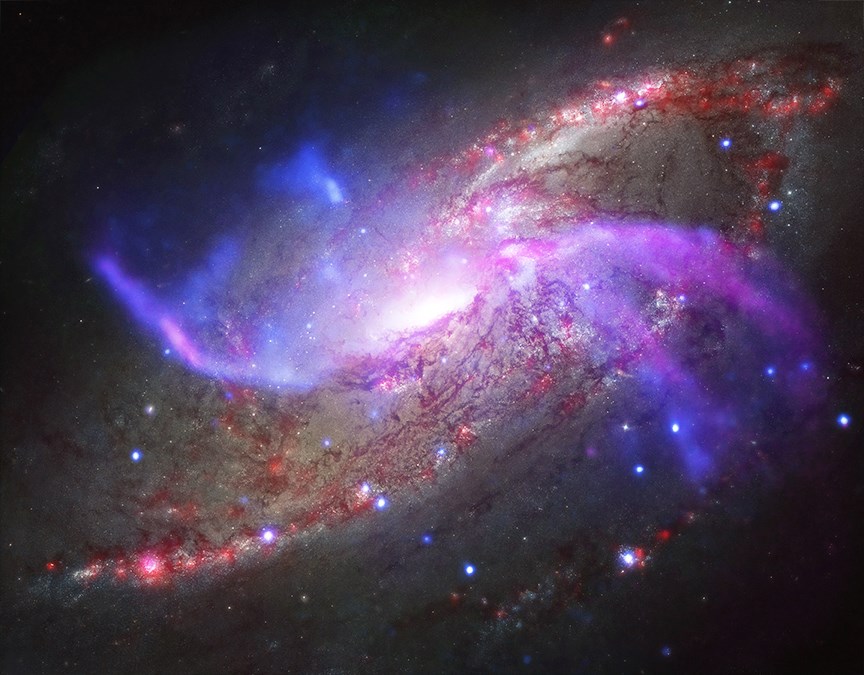
Some scientists call that first something, the “big bang”, an explosion that sent matter hurtling out across space in an ecstasy of movement that continues to this day, still to be seen in the deep heart of the Universe in photos taken by the James Webb Telescope. The cosmologist Brian Swimme calls it a “flaring forth”, a flame that penetrates the darkness.

In the beginning was FIRE. Within that fire was forged the essence of everything that would be birthed in our Universe. Was the Universe alive in that first moment? Perhaps not, yet scientists see that from that beginning the focus was to engender life…

The fire burned for a million years, the elements released by it spreading outwards in an expansion of stars and galaxies, black holes and planets, all engaged in a process we know intimately in our own lives, a dance of life/death/ life.

The flaring forth sent matter hurtling outward in a movement as precisely timed as a choreographed ballet. Had it been slower, even by the smallest measure, matter would have collapsed back into nothing. Had it been faster, the movement would have utterly destroyed it. Exquisite timing allowed it to expand and expand over the billions of years even until today.

Our own galaxy was birthed in this way, forming our sun, with its encircling planets in a spiral dance. Four billion years ago, our earth, with her enchanted moon encircling her, emerged, carrying within her body the seeds of every facet of life that would evolve over billions of years. Every aspect of life ever known on Earth was born of a star, from porpoises to pearls, from elephants to mosquitoes, from cows to sheep and goats, from apple and pear trees to us humans who eat their fruit, from dinosaurs to the tiny chambered nautilus…

What is more, each of these aspects of life has intelligence that guides it to seek out what it needs for its existence. You and I have seen how a wild flower knows to turn her face towards the sun, to draw in water from rain, nutrients from the soil that holds her secure. She knows how to allure the honeybees that will assist her by making her seeds fertile, sending them forth to produce her offspring who will live on even if her own life is cut short by a drought or a freeze…

The Earth herself is a sentient being, capable of the kind of intelligence that has kept her alive through the age of the predatory dinosaurs, through ice ages, through the huge fluctuations in the sun’s heat, learning to adjust to all of these changes. She has survived collisions with meteors from space, one of which, as scientists now say, caused such great changes that the dinosaurs were destroyed. The crater left by that meteor sixty-six million years ago is buried underneath the Yucatan Peninsula in Mexico.

Now Earth faces the challenges created by us humans who in our greed for her fossil fuels are willing to blow the tops off mountains, poison the waters, destroy the rain forests, the lungs of our Mother Earth, and dig deep into her body to unearth minerals, precious metals and jewels. Climate change is predominantly due to human activity. The Earth may need to protect herself from these depredations by raising her temperature in order to survive. An average temperature in the 40’s Celsius may be what she needs, even though human life cannot survive that heat.

What we are learning from the advances of science about our planet was, in essence, known and honoured by our early ancestors. Even today there are indigenous cultures who still hold the ancient beliefs, who still cry out against our matricide. For this Earth is Mother to us. All that is within us, body, mind and spirit, has come from her womb. The fruits and vegetables that nurture us as well as the animals who feed from her before giving their bodies to become our food, derive from our Mother Earth. Her oceans nourish the fish and sea creatures who in turn nourish us. Our planet continues to give us all she has even as we attempt in our ignorance to destroy her.

There is something more in this story, a gift from the labours and love, the brilliant mind and insight of the 20th century Jesuit paleontologist, Pierre Teilhard de Chardin. Teilhard understood that every aspect of life is afire with Love, penetrated with the Divine.

Today we are coming to know a Feminine Presence of Divine Love, honoured by Ancient Cultures, rising among us. We hear her calling to us: “Look for Me in the sea, in the lake, in the night sky when its stars paint patterns of silver on blackness. Seek me in the good earth, in all that grows from her soil and in all that is nourished by her: trees, flowers, plants, insects, birds, the small creatures that dwell in the woods. Seek me in the fire that destroys what no longer thrives. Know that these gifts of air, water, earth and fire also dwell in you. Above all, seek me in your own heart.”

This is our joy, our hope, our experience of Love, rooted in the birth of our Universe:

To fall asleep under a sky whose stars pierce us with mystery

To waken in a state of inexplicable longing,

To fall in love, again and again, with the beauty of a lake, a sunset, a willow, a lark

To seek all our lives long for meaning, for belonging, for home…

This is the human experience, its blessing, its wounding.

Poets intuited an interconnection, mystics experienced a unity.

Now, today,

We live into the wonder of seeing,

Of knowing with the precision of science,

Our place in the universe.

The Story of the Universe

Is a story about everything.

It tells us why and how we are here,

Why loss and longing and death intermingle

With joy and love and life,

Leading always to deeper life.

Because of this story, no one can ever again dare to say

That we are less than sacred,

That we are less than whole,

That we do not belong.

And in knowing our lives to be inextricably woven into

As well as out of the very stuff of which the Universe is made,

In knowing ourselves to be the Universe, conscious of itself,

We glimpse the true nature of the Beloved

For whom we yearn without ceasing,

Even as we live within Her.

*(adapted from Singing the Dawn, Anne Kathleen McLaughlin, Borealis Press, Ottawa, Canada, 2022 (http://borealispress.com)

Cosmological References: Brian Thomas Swimme: The Universe is a Green Dragon, 2001, and The Journey of the Universe, 2011, with Mary Evelyn Tucker

Teilhard, Samhain, in an Unfinished Universe

We’ve come to the Stillpoint House of Prayer to honour the early November Feast of Samhain: the Celtic New Year. Eight women friends who’ve been gathering since the Summer Solstice of 2023 to celebrate the Earth Festivals, our gatherings follow a pattern, weaving poetry, music, dance, and ancient story. We share experiences of joy, growing edges, challenges leading to a ritual which allows us to ground the focus of each festival in our bodies, our hearts, our souls.

On the second day of our gathering, November 6th, we waken to a pall of darkness as news of US Election results creeps into our awareness. We continue with our plans for the day, reflecting on inner light, on the wisdom of our crone years, on our preparations for the ritual when we shall place in the Cauldron of the Cailleach whatever in our lives is raw and unpalatable, requiring transformation through water and fire.

As we await the coming of darkness, our mood is shifting. Perhaps the day’s late autumn warmth, the way the river shines silver in the waning light, or maybe the glowing crescent of the rising moon…. Reminders of the beauty on the planet restore calmness. One of the women offers to read something called “Storm on the Lake” from the writings of Teilhard de Chardin:

At every moment the vast and horrible Thing breaks in upon us through the crevices and invades our precarious dwelling-place, that Thing we try so hard to forget but which is always there, separated from us only by thin dividing walls: fire, pestilence, earthquake, storm, the unleashing of dark moral forces, all these sweep away ruthlessly, in an instant, what we had laboured with mind and heart to build up and make beautiful..

Lord God… lest I succumb to the temptation to curse the universe, and the Maker of the universe, teach me to adore it by seeing you hidden within it….If only we will it to be so, the immense and sombre Thing, the spectre, the tempest—is you.

It is I, fear not.”(Mark 6:50; Luke 24:36). All things in life that fill us with dread, all that filled your own heart with dismay in the garden of agony: all, in the last resort, are… appearances, the matter, of one and the same sacrament.

Returning home from our Samhain Retreat, I search among Teilhard’s teachings for further light. In my library, I find the book I seek: Teilhard to Omega Ilia Delio, ed. (Orbis Books, Maryknoll, NY, 2014) In an essay by John Haught, “Teilhard de Chardin: Theology for an Unfinished Universe”, words leap out at me: “For Teilhard, autumn rather than spring was the happiest time of year.” Intrigued, I read on: “It is almost as though the shedding of leaves opened his soul to the limitless space of the up-ahead and the not-yet, liberating him from the siren charms of terrestrial spring and summer.”

A scientist, a mystic, rather than a theologian, Teilhard deplored the way that theology continued to reflect on God as though the scientific fact of a still –emerging universe was either unknown or irrelevant. Almost seventy years after Teilhard’s death, theologians are still engaged in the work of re-imagining a God who calls us forward into an as-yet-unknown reality. And yet, even a limited grasp, a glimpse, of what Teilhard saw of the “up- ahead and the not-yet” is enough to inspire hope.

Neither scientist nor theologian, I am a storyteller. I know how a change in the story has power to alter and illuminate our lives. Changing the story that once shaped our lives changes everything. If we live in a story of a completed universe where once upon a perfect time our first parents, ecstatically happy in a garden of unimaginable beauty, destroyed everything by sin, what have we to hope for? The best is already irretrievably lost. Under sentence of their guilt we can only struggle through our lives, seeking forgiveness, trusting in redemption, saved only at a terrible cost to the One who came to suffer and die for us. The suffering around us still speaks to us of punishment for that first sin, burdening us with the effort of continuing to pay for it with our lives. Despair and guilt are constant companions. Hope in that story rests in release from the suffering through death.

Yet, if we live the story as Teilhard saw it, seeing ourselves in an unfinished universe that is still coming into being, everything changes. In a cosmos that is still a work in progress, we are called to be co-creators, moving with the universe into a future filled with hope. Our human hearts long for joy. The possibility that there could be peace, reconciliation, compassion, mercy and justice to an increasing degree on our planet is a profound incentive for us to work with all our energy for the growth of these values. The call to co-create in an unfinished universe broadens and deepens our responsibility:

The Love that rules the stars will now have to be seen as embracing two hundred billion galaxies, a cosmic epic of fourteen billion years’ duration, and perhaps even a multiverse. Our thoughts about Christ and redemption will have to extend over the full breadth of cosmic time and space. (Haught, 13)

Haught believes that “if hope is to have wings and life to have zest,” we need a new theological vision that “opens up a new future for the world.” For Teilhard that future was convergence into God. His hope was founded in the future for he grasped the evolutionary truth that the past has been an increasing complexity of life endowed with “spirit”.

Teilhard saw God as creating the world by drawing it from up ahead, so that the really real is to be sought in the not yet. And this means that:

The question of suffering, while still intractable, opens up a new horizon of hope when viewed in terms of an unfinished and hence still unperfected universe. (19)

Haught believes that the concept of an unfinished universe can strengthen hope and love:

the fullest release of human love is realistically possible only if the created world still has possibilities that have never before been realized….Only if the beloved still has a future can there be an unreserved commitment to the practice of charity, justice and compassion. (19)

We live today on the edge of planet-wide climate disaster. In the midst of recent ravages by hurricanes, floods, tornadoes and droughts, UN Secretary General Antonio Guterres said that Earth is crying out to us, “but we are not listening.”

Working together communally, nationally, and internationally we can face this moment with courage. The path has been set before us by scientists, by leaders in the ecological movement, by writers and thinkers who have known what is coming. If we are appalled by the failures of international organizations and governments, we can still do our part, creating sanity within our own circles.

The sacred season that follows Samhain, the feminine womb-time of darkness, is the time of the Cailleach, the Ancient Crone, the dark mother who calls on us to change our ways, to turn away from destructive behaviours that harm our planet and all that lives within and upon her. It is the season of the great cauldron of the Cailleach where the unpalatable attitudes and activities that are endangering life are to be transformed. Teilhard teaches us to see with clarity that even in this crisis we are being drawn forward by the Love that is up ahead in a future that awaits us. Partnered and empowered for this work, we place in the Cauldron of the Cailleach our despair, embracing the hope we need to do what we must.