All posts by amclaughlin2014

Member of Community of Grey Sisters of Pembroke; Masters Degree in Religious Communication, Loyola University, Chicago; Author: Called to Egypt on the Back of the Wind (2013) Planted in the Sky (2006) both published by Borealis Press, Ottawa Canada www.borealispress.com Retreat facilitator: The Wooing of the Soul (2013) The Sophia Salons, beginning in February 2016, offer journeys to one's own inner wisdom for small groups of women. For information: amclaughlin@sympatico.ca

Seeking Wisdom in the Natural World

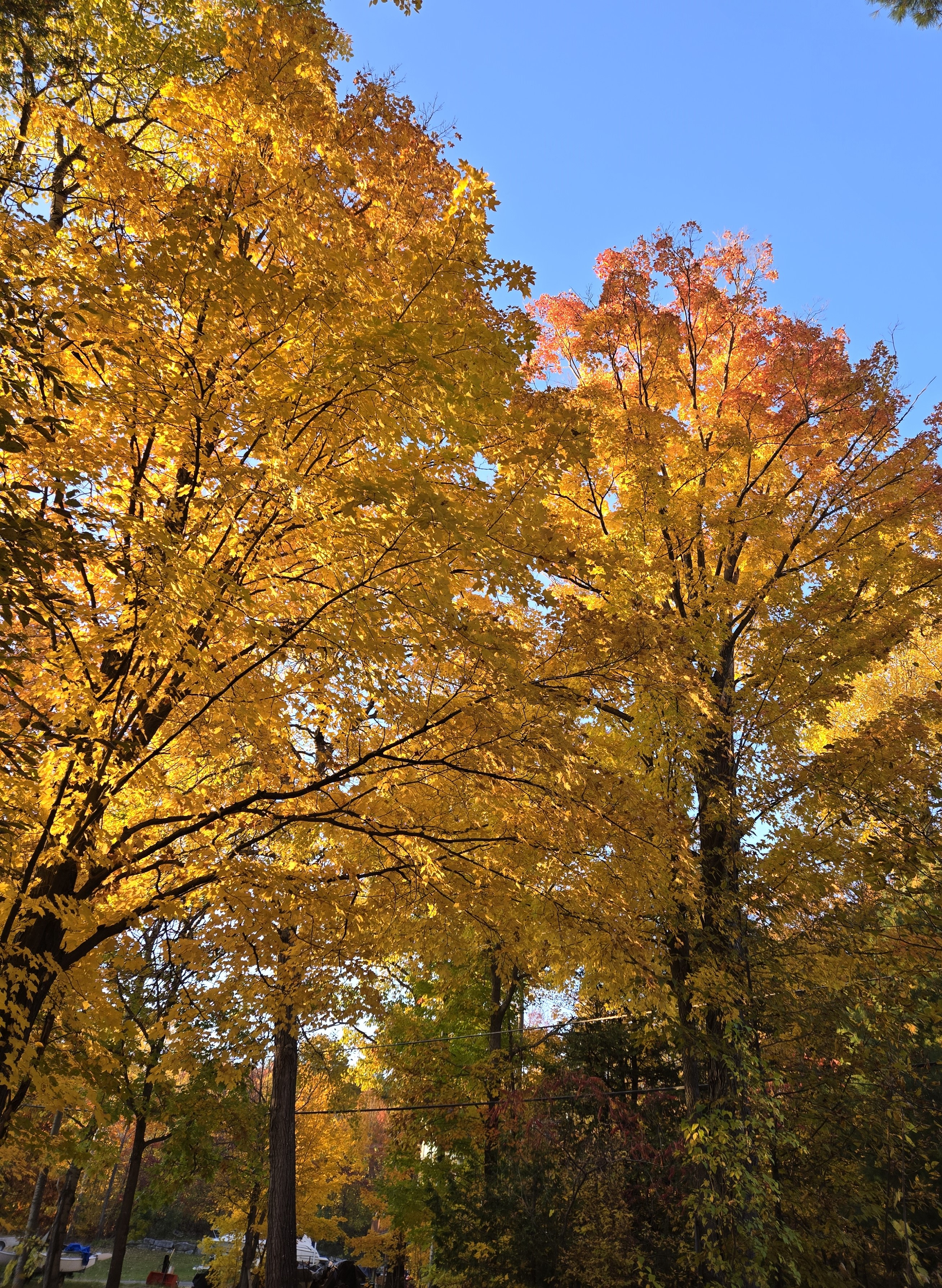
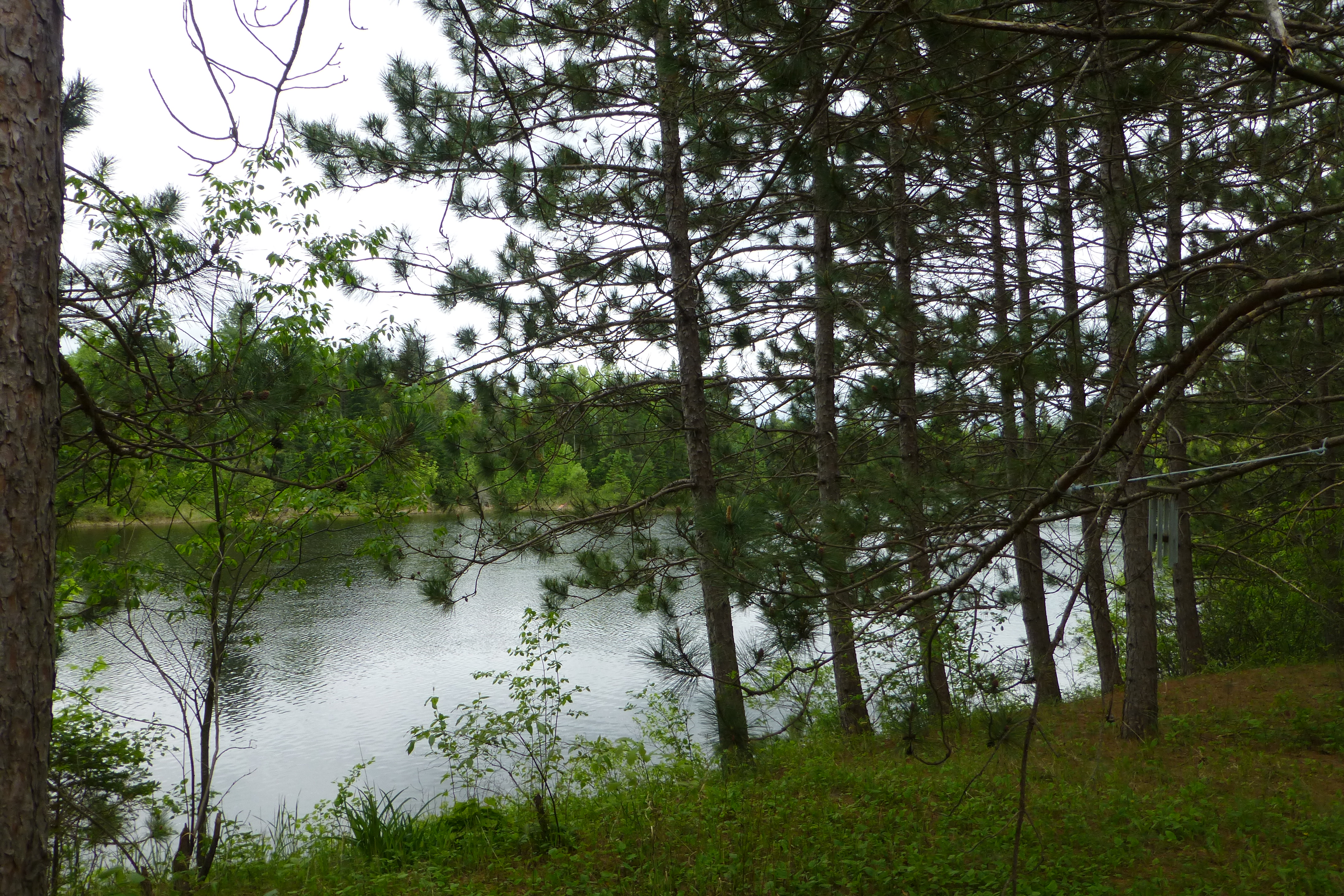
After a time of travel, attending summer gatherings, festivals and meetings, celebrating a wedding anniversary, a family birthday, and Thanksgiving, I return to the solitude of my life by the lake. My closest companions are the trees surrounding my home. Their welcome holds a silence that is ecstatic, leaves of autumn gold and vermilion quivering with the slightest breeze.

Surrounded by beauty that is too much to take in, I feel disoriented by the absence of verbal expression. In my mailbox, I find what I’m longing for: a gift of words in a book edited by Gail Worcelo, Shamanic Journey into Earth’s Wisdom (NewPerennials Publishing, Vermont, 2024)

Without taking time to unpack, I dive into the cosmovision of Thomas Berry.

Reflecting on Berry’s words in Dream of the Earth (1988), Worcelo writes, “a return must be made to our deeper knowing, to the very genetic coding found within our deepest spontaneities arising from our roots in a 13.7- billion-year story of the universe.”(4) Berry teaches that these spontaneities come to us through visionary experiences, not only in dreams, “but also through those intuitive, transrational processes that occur when we awaken to those numinous powers ever present in the world about us.”(6)

While the afternoon warmth lasts, I visit the lake. I sit on a log at the edge of the shore, gazing at the water. As though a hundred gentle breaths were blowing across the surface, small hills of water are lifting and falling, lifting and falling. In silent communion, I invite a word to come from this living beauty at my feet, expecting the message will be some version of the advice I often hear, to be self-giving, to pour myself out for others….

Yet that is not what rises in me. Instead, I hear one clear word. If it were not so gentle, I’d call it a command. “Receive”.

Startled, I look again at the surface. Are those ripples laughter at my surprise? This watery being of loveliness only asks me to receive her gift…. I gaze in wonder.

I begin walking back to my home, past trees still radiant in October sunlight. From each I hear the same message: “Receive, receive, receive….”

It will take another day before I make the connection. The advice offered to me when I asked Andrew Harvey how I was to share with others the hope I hold for the planet. “No words! Love them. Burnish your light.”

Now the lake and trees are showing me how to do this.

Reading further into the book, I begin to grasp that a shamanic journey is a process of deep listening to the wisdom of life around us. Who can teach me how to listen more deeply? I look to a poet who has shared the wisdom of her own shamanic journeys.

Beside the Lake, A Note to Self by Rosemary Wahtola Trommer

If you watch the heron as it stalks
amongst the tall green reeds, then pauses,
and in its pausing disappears, then you understand
something of the power of stillness.

And if you sit still long enough
to see the head of the snapping turtle
rise between the lily pads,
then you glean something of the rewards
that come with sitting still.

but if you sit expecting such rewards,
then perhaps sit longer and watch the cattails
as they waver and still, sway and still and still,
and feel how the urge in you to say something rises
and softens and softens until there is nothing to say

until that kind of stillness becomes
the greatest reward, until you feel
stillness hold you the way the lake
holds the lily pad, the way silence holds a song,
the way gratitude holds everything.

Thomas Merton knew how to listen to trees. I delve through my library, withdraw the book I seek: Writings on Nature: Thomas Merton:When the Trees Say Nothing, edited by Kathleen Deignan (Sorin Books, Notre Dame, IN 2002)

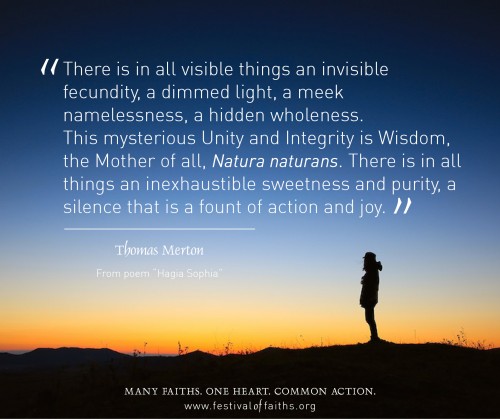
Deignan writes that Merton “sat in stillness and loved the wind in the forest and listened for a good long while to God”. There in the woods, he experienced himself at the center of the universe where at any moment the gate of heaven would open wide and he would perceive the undying heavenliness in the real nature of things. “Paradise is all around,” he heard the dawn deacon say: all we need do is enter in. (Deignan, 38)

And there was more for Merton in this paradise, as Deignan writes:

On each threshold of the encircling paradise awaited Sophia, “the mother of all,” the diffuse shining of God in creation. Merton understood her to be the personification of divinity, at once hidden and manifest in all things. She was the eros that throbbed through countless creatures that mated, bore, and nurtured the infinity of cells in the body of God in their shape-shifting dynamics of praise. Her beauty and magnetism drew all beings into life as communion, as thanksgiving, as festival, as glory. As the very love that unites the cosmos, Merton proclaimed Sophia “the Bride, the Feast, and the Wedding.” It was she whom he espoused in her forest pavilion. In her embrace he experienced overpowering peace and delight, and the sweet dark warmth of the whole world became his great love. Thus he learned the secret of intimate communion “sent from the depths of the divine fecundity.” (39)

Communing with Trees

Sophiawakens July 30, 2024

NID:SIZE:4.26M

A little over a year ago, I had a dream. As dreams sometimes do, it wove forgotten memories, old losses, present realities into one seamless narrative. In the dream, my younger self plans an escape from an intolerable situation. She knows exactly where she must go: to the place where pine trees, lake, the call of the whippoorwill in the evening air will embrace her…Yet, in the dream, she remembers with fresh grief that this place no longer exists for her.

Immediately the scene shifts. A magical woodland appears, trees whose lush green leaves, holding silvery drops of rain or dew, dance before her eyes. The trees speak to her as only a dream tree can; she hears their voices, not inside her, but out loud, clearly, in the breeze: “We are here with you now.”

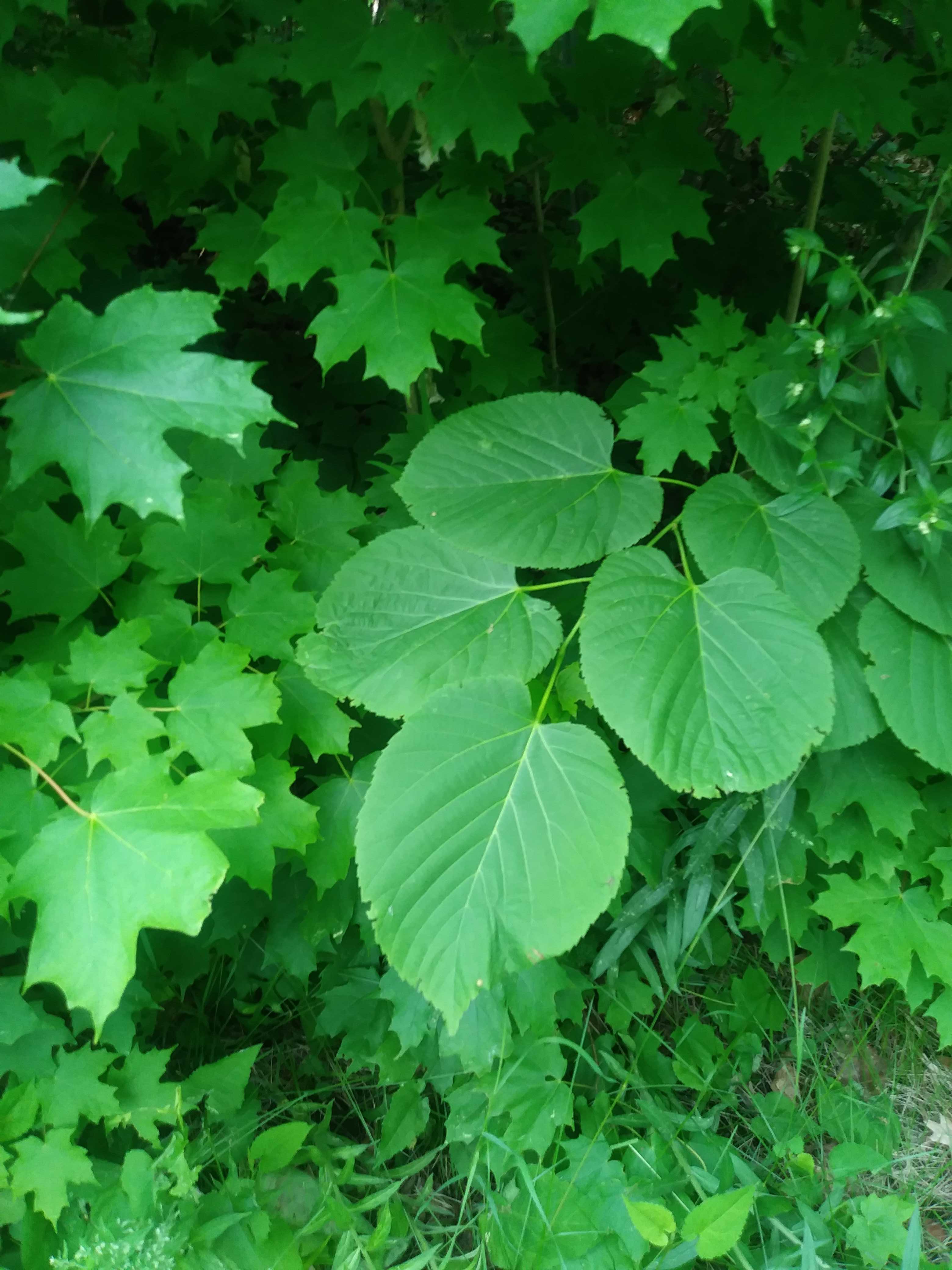
I waken, still bemused, walk into the kitchen. There, just beyond my window stands the woodland of my dream, just as it has appeared every June since I moved to this house by the lake. Only, until this moment, I did not understand that this woodland holds the beauty, the wonder, the presence that I thought lost to me forever.

What that dream wakened in me has not left me. Rather it has opened in me a new depth of understanding for the words of the poets of our time who have laboured to birth in us an awareness of the presence of spirit in all that we love on this planet. Slowly, I am coming to know how to listen, how to speak, in this communion with life.

Among contemporary poets who have sought to awaken us to the conscious presence of life around us, Mary Oliver is foremost. For decades, her life consisted of waking each morning to walk out into the world and be present to life in whatever form she encountered it. She described her work as “loving the world.”

I have selected two of her poems to share with you today. Each illustrates her gift, honed to a skill in communing with nature that is unparalleled in my estimation. In the first, she is with trees, in the second, with a river.

When I Am Among The Trees

by Mary Oliver

When I am among the trees,

especially the willows and the honey locust,

equally the beech, the oaks and the pines,

they give off such hints of gladness.

I would almost say that they save me, and daily.

I am so distant from the hope of myself,

in which I have goodness, and discernment,

and never hurry through the world

but walk slowly, and bow often.

Around me the trees stir in their leaves

and call out, “Stay awhile.”

The light flows from their branches.

And they call again, “It’s simple,” they say,

“and you too have come

into the world to do this, to go easy, to be filled

with light, and to shine.”

Bonnechere River Ontario, Canada

At the River Clarion

by Mary Oliver

1. I don’t know who God is exactly.
But I’ll tell you this.
I was sitting in the river named Clarion, on a water splashed stone
and all afternoon I listened to the voices of the river talking.
Whenever the water struck a stone it had something to say,
and the water itself, and even the mosses trailing under the water.
And slowly, very slowly, it became clear to me what they were saying.
Said the river: I am part of holiness.
And I too, said the stone. And I too, whispered the moss

beneath the water.

I’d been to the river before, a few times.
Don’t blame the river that nothing happened quickly.
You don’t hear such voices in an hour or a day.
You don’t hear them at all if selfhood has stuffed your ears.
And it’s difficult to hear anything anyway,

through all the traffic, the ambition.

2. If God exists he isn’t just butter and good luck.
He’s also the tick that killed my wonderful dog Luke.
Said the river: imagine everything you can imagine, then keep on going.

Imagine how the lily (who may also be a part of God) would sing to you if it could sing,
if you would pause to hear it.
And how are you so certain anyway that it doesn’t sing?

If God exists he isn’t just churches and mathematics.
He’s the forest, He’s the desert.
He’s the ice caps, that are dying.
He’s the ghetto and the Museum of Fine Arts.

He’s van Gogh and Allen Ginsberg and Robert Motherwell.
He’s the many desperate hands, cleaning and preparing their weapons.
He’s every one of us, potentially.
The leaf of grass, the genius, the politician, the poet.
And if this is true, isn’t it something very important?

Yes, it could be that I am a tiny piece of God, and each of you too, or at least
of his intention and his hope.
Which is a delight beyond measure.
I don’t know how you get to suspect such an idea.
I only know that the river kept singing.
It wasn’t a persuasion, it was all the river’s own constant joy
which was better by far than a lecture, which was comfortable, exciting, unforgettable.

3. Of course for each of us, there is the daily life.
Let us live it, gesture by gesture.
When we cut the ripe melon, should we not give it thanks?

And should we not thank the knife also?
We do not live in a simple world.

4. There was someone I loved who grew old and ill
One by one I watched the fires go out.
There was nothing I could do

except to remember
that we receive
then we give back.

5. My dog Luke lies in a grave in the forest, she is given back.
But the river Clarion still flows from wherever it comes from
to where it has been told to go.
I pray for the desperate earth.
I pray for the desperate world.
I do the little each person can do, it isn’t much.
Sometimes the river murmurs, sometimes it raves.

6. Along its shores were, may I say, very intense cardinal flowers.
And trees, and birds that have wings to uphold them, for heaven’s sakes–
the lucky ones: they have such deep natures,
they are so happily obedient.
While I sit here in a house filled with books,
ideas, doubts, hesitations.

7. And still, pressed deep into my mind, the river
keeps coming, touching me, passing by on its
long journey, its pale, infallible voice
singing.

The Fire and the Rose Are One

(TS Eliot Four Quartets)

The two friends are walking slowly along the road from Jerusalem, dragging their feet, not really sure why they’re going this way, not caring whether they ever arrive. The hopes they’d shared have collapsed. The dream has died. The one who gave them hope, who shaped the dream, is dead. Best to let the fellowship of three years die with him, along with the dream, with its deceptive promise.

Too weary to lift their eyes from the dusty track, they don’t notice that a stranger has been for some time keeping pace with them. Until he speaks. Asks them why they walk along, looking so sad…

The question startles them into stillness. They look at him in wonder. “Where have you been these past days? How could you not know? What are you, deaf, dumb and blind, or perhaps an idiot?”

The stranger is none of these things. He resumes his walk. Without knowing they are doing so, they begin to accompany him, listening to his words with disbelief, then with wonder, finally with astonishment stirring embers of hope.

This stranger reminds them of the writings of the prophets, of the stories they have known all their lives, without understanding what they meant. “Don’t you see that the suffering of the Christ was the very path to the new life he promised?”

When they finally turn from the road towards Emmaus. the stranger makes as though to go further. They beg him to stay with them for a meal. In the breaking of the bread, their eyes are opened and they know him, even as he vanishes from their sight…

They look at one another, each seeing a light of reborn joy in the face of his friend.

“Were not our hearts burning within us as he spoke to us, showing us what the scriptures meant?”

And even though it’s late, they set out at once to return to their friends in Jerusalem.

This story is two thousand years old, yet as relevant as today’s news: the latest landfall of Hurricane Beryl, the latest political intrigues, election results, economic downturns, the latest failed peace talks, the deaths from wars, from sinking ships filled with refugees, from weather-related scorching heat and flooding rains, from suicides, from drug overdoses…The dawning awareness that our planet is dying.

Today, should someone dare to express surprise at our sadness, we reply in words very like those of the walkers on the road to Emmaus: “Where have you been these past days? How could you not know? What are you, deaf, dumb, blind, or perhaps an idiot?”

A few days ago, I listened as someone dared to risk hearing that very response, dared to suggest something even more radical: that JOY is what’s needed in this present reality…someone I see as prophet and mystic in our time: Andrew Harvey.

In the past ten years on this blog, Sophiawakens, I’ve offered teachings of the prophets of our time: Teilhard de Chardin, visionary scientist in love with the Universe; Mary Oliver, magnificent poet in love with the earth and the life it nurtures; Thomas Berry and Brian Swimme following Teilhard’s lead to reveal the wonders of the Universe within and around us. The mystics of our time are often the physicists and cosmologists. As well, for the first time in human history, we have access to the sacred writings of all ages, all spiritualities, along with the writings and poetry of their mystics. Words of guidance are as close to us as the small screens on our phones.

Yet, like the two walking to Emmaus, we deserve the stranger’s words of chastisement:

“You foolish ones! So slow to believe the full message of the prophets!”

On July 3, in the first of seven weekly presentations on the Shift Network entitled “The Ultimate Rebellion Against Darkness and Despair”, Andrew Harvey spoke of joy:

We have this opportunity right now to share from the deepest part of ourselves at a crucial moment in our evolution about the real force of evolution that is joy….

All of the constructions we’ve ever had about life, about God, about society, about stability, about the lasting nature of life and of… the Earth, all of these structures are now being destroyed….

The intensity of what we’re living is opening us up to ever deeper divine resources within ourselves. As the illusions burn down, we discover that not only do they not destroy our identity, they reveal aspects of our identity far braver, far more beautiful, far wilder, far more loving, far more passionate, far more compassionate, far, far more joyful than we ever imagined we had. That’s the nature of this stupendous stretching of the entire psyche and spirit of the human race, this great birthing process that is happening.

Do you hear in Andrew’s words a distant echo of the writings of the great 14th century mystic Julian of Norwich? Julian’s hope-filled words, scarcely known before the twentieth century, were woven by TS Eliot into his Four Quartets:

Quick now, here, now, always—

A condition of complete simplicity

(Costing not less than everything)

And all shall be well and

All manner of thing shall be well

When the tongues of flame are in-folded

Into the crowned knot of fire

And the fire and the rose are one.

As we pass through the fire, let us hold the image of the rose in our hearts, trusting Julian’s words, trusting in the promise that, ultimately, in mystery beyond our power to imagine, All manner of thing shall be well.

One Dreamer, One Lifelong Desire

I managed to climb up to the point

where the Universe became apparent to me

as a great rising surge,

in which all the work that goes into serious inquiry,

all the will to create, all the acceptance of suffering,

converge ahead into a single dazzling spear-head –

now, at the end of my life,

I can stand on the peak I have scaled and continue

to look ever more closely into the future,

and there, with ever more assurance,

see the ascent of God.

(Pierre Teilhard de Chardin, The Heart of Matter)

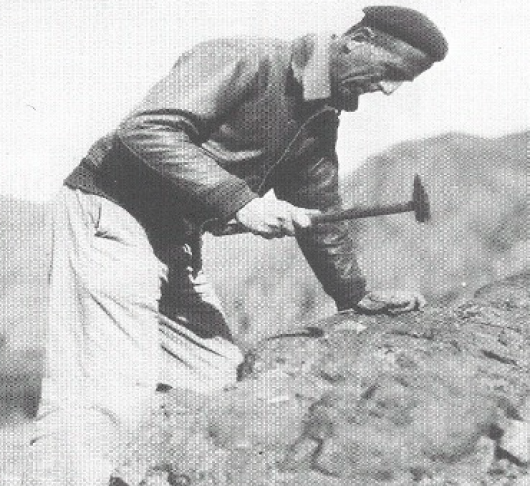
A child, born in France in 1881, too early acquainted with death and loss. begins a lifelong search for something that will last. With the soul of a poet, with eyes drawing in the beauty of nature as he walks with his father through the hills surrounding their home in Auvergne, the young Pierre Teilhard de Chardin is drawn to rocks as things that would endure…. This early allurement leads him into a scientific career that takes him to China where he is today honoured as its founder of paleontology, part of the group that unearthed the earliest human remains in China, known as “Peking Man”.

Drawn to the Jesuit Order, Pierre is sent for his early theological training to Hastings in England. Here, he is enchanted by the natural beauty of the green land around him. Here by the sea, he discovers ancient cliffs bearing fossils that carry the story of evolution. Following his ordination to the priesthood in 1911, Pierre returns to the Jesuit community in Paris. His assignment is to study geology and to apply for acceptance as a student in paleontology under Marcellin Boule at the Paris Museum of Natural History. Boule, probably the greatest scholar in the field, recognizes Teilhard’s talents. As a scientist, Pierre is on his way to great achievements.

If Science were his only love, Pierre’s story would perhaps have been one of intense work accompanied by a steady rise in fame. Yet Pierre’s heart holds another deep desire, a love for the Risen Christ whom he glimpses at the heart of the earth’s beauty, as the living spirit in all that exists. Vowed as a Jesuit within a Church that still, in the early twentieth century, refuses to accept the reality of Evolution, that sees the path to God as an upward climb away from the material to the spiritual, seeking a God who must be found by rising above the Earth and Nature, Pierre is like to child torn between separating parents both of whom he loves. He is to spend his life seeking to draw Matter and Spirit together.

His studies in Science at the Institut Catholique in Paris prepare him to return there as a professor following the First World War, where he serves as a stretcher bearer. His writings increase, sharing his vision of a planet permeated by the Spirit of God. He writes of a Universe filled with the love of the Risen Christ. Yet he is forbidden by his Jesuit Superiors and by leaders of the Church in Rome to publish the book length manuscript that holds the heart of his vision: “The Human Phenomenon”. He is forbidden to teach. He is exiled from his beloved France to live in the Jesuit Community in New York City where he dies on Easter Sunday, 1955.

Not long before his death, Pierre writes: “How is it possible that descending from the mountain and despite the glory that I carry in my eyes, I am so little changed for the better, so lacking in peace, so incapable of passing on to others through my conduct, the marvelous unity in which I feel immersed?….

“As I look about me, how is it I find myself entirely alone of my kind?…

“Why am I the only one who sees?” (“Recherche, travail, et adoration,” New York, March 1955; cited in Teilhard: A Biography by Mary Lukas and Ellen Lukas, McGraw-Hill, New York, 1977, 1981)

Had that been his ending, Pierre’s story would have been a tragedy. It was not the end.

Pierre’s circle of loving friends, several of whom were women: intelligent, capable, gifted, understood his vision. When his health began to fail, on the advice of a Jesuit friend, Teilhard entrusted his writings to a woman friend, a skilled editor…. Shortly after his death, Teilhard’s books began to appear like an explosion of shooting stars.

Just weeks ago, the film Teilhard: Visionary and Scientist, was released on PBS and is now available world wide with this link: https://www.pbs.org/video/teilhard-visionary-scientist-pt9dc1/

Filmmakers Frank Frost and his wife Mary Link spent thirteen years in massive fundraising efforts, allowing them to travel to China, to France and across the US for interviews, research and filming. The result is a work of art: a visually splendid achievement in storytelling and film-making. It is a gift from the Universe, from Teilhard himself, who spent his life shaping and writing of the vision that we, in our time, so desperately need:

Richard and Julian

Faith is the comfort of not needing to know” ( Richard Rohr)

Somewhat unsteadily, using a cane for support, Richard Rohr walked across the stage at the University of Notre Dame, settled into the armchair across from the interviewer. He gazed into the darkness where the packed auditorium of listeners awaited his words in silence. It was Rohr’s first public talk since Covid created a cocoon around our lives.

(Note; The talk referred to here ,“Christianity and the Re-emergence of the Non-dual Mind” is available for viewing on YOUTUBE)

Gentle, smiling, often self-deprecating, this elderly, grandfather-like figure cut to the heart of our 21st century reality. Holding it in the light of the Gospel, particularly the Beatitudes, Rohr showed us that in our eagerness for clarity, our fear of uncertainty, we’re caught in dualities.

“If you don’t understand non-dual thinking, everything slips into liberal of conservative”. Instead of clinging to our own way of thinking as the only right way, Rohr advises “let the whole horizon of reality all come towards you.”

We still haven’t grasped the message of Jesus, haven’t accepted that wisdom lies in that hazy place where we are at peace with not knowing, “Faith is the comfort of not needing to know.” The mystics of the early centuries of Christianity accepted, embraced this unknowing in contemplative presence.

Rohr’s own presence, that smile, that shake of the head at absurdity, was puzzled, a little sad….

He drew a paper from his pocket, unfolded it, began to read a poem to us, translated from Symeon, a tenth century theologian.

We awaken in Christ’s body

As Christ awakens our bodies,

and my poor hand is Christ, He enters

my foot, and is infinitely me.

I move my hand, and wonderfully

my hand becomes Christ, becomes all of Him

(for God is indivisibly

whole, seamless in His Godhead).

I move my foot, and at once

He appears like a flash of lightning.

Do my words seem blasphemous?–Then

open your heart to Him

and let your heart receive the one

who is opening to you so deeply.

For if we genuinely love Him,

we wake up inside Christ’s body

where all our body, all over

every most hidden part of it,

is realized in joy as Him,

and He makes, utterly, real,

and everything that is hurt, everything

that seemed to us dark, harsh, shameful,

maimed, ugly, irreparably

damaged, is in Him transformed

and recognized as whole, as lovely,

and radiant in His light

we awaken as the Beloved

in every last part of our body.

(I found the full poem in The Enlightened Heart, an anthology of poetry edited by Stephen Mitchell, Harper Perennial, 1993)

As the interview was drawing to a close, Rohr was asked, “How would you want to be remembered?”

“I’m about life.” Rohr replied. “It’s not about me. God allowed me to do everything wrong so God could do everything right…through me…in spite of me….it’s all mercy, within mercy, within mercy.”

What words would Rohr send in a text message to the world? “In the end it will be good.”

Painting of Julian of Norwich by Jane Joyner

I write this on the Feast Day of Julian of Norwich, the fourteenth century mystic who lived through three outbreaks of Black Plague, which reduced the population of England by one-half, the violence of the Peasant’s Revolt and the Western Schism which brought chaos to all of Christendom. Yet her writings are a distant echo of Rohr’s words about mercy, about all being well in the end. In her book, Revelations of Divine Love, Julian records her conversations with the risen Jesus which took place in a night of visions following her near-death experience at the age of thirty.

Acknowledging to Julian that, indeed, sin is everywhere, Christ assures her that “All shall be well, and all will be well, and you shall see for yourself that all manner of thing shall be well.” In the two decades of reflection that followed these visions, Julian came to trust that the meaning of this message was that everyone would be saved.

Julian too was texting to the world: “In the end it will be good.”

Today, on Julian’s Feast Day in the Anglican Calendar, I wondered what Julian herself would most want us to remember from her many teachings. Asking for her guidance, I combed through her Revelations of Divine Love seeking passages that seem most important to our lives, to our calling in these times when hope seems out of reach…

(All of the selections are from the Long Text of Julian’s Revelations in Showings, Colledge & Walsh translation, Paulist Press, New York, Toronto, 1978.)

The first passage is stunning in its intimacy and tenderness:

I saw that (Jesus) is to us everything which is good and comforting for our help. He is our clothing who wraps and enfolds us for love, embraces us and shelters us, surrounds us for his love, which is so tender that he may never desert us. And so in this sight I saw that he is everything which is good, as I understand. (Fifth Chapter)

The second continues the theme of intimate nearness, inviting us to respond in like manner:

For as the body is clad in the cloth, and the flesh in the skin, and the bones in the flesh, and the heart in the trunk, so are we, soul and body, clad and enclosed in the goodness of God. Yes, and more closely, for all these vanish and waste away; the goodness of God is always complete, and closer to us beyond any comparison. (Sixth Chapter)

And the third choice: He did not say: “You will not be troubled, you will not be belaboured, you will not be disquieted”; but he said: “You will not be overcome.” God wants us to pay attention to these words, and always to be strong in faithful trust, in well-being and in woe, for he loves us and delights in us, and so he wishes us to love him and delight in him, and trust greatly in him, and all will be well. (Sixty-Eighth Chapter)

(Reflections on Julian of Norwich to be continued…..)

The Easter Mystery Heart of the Universe

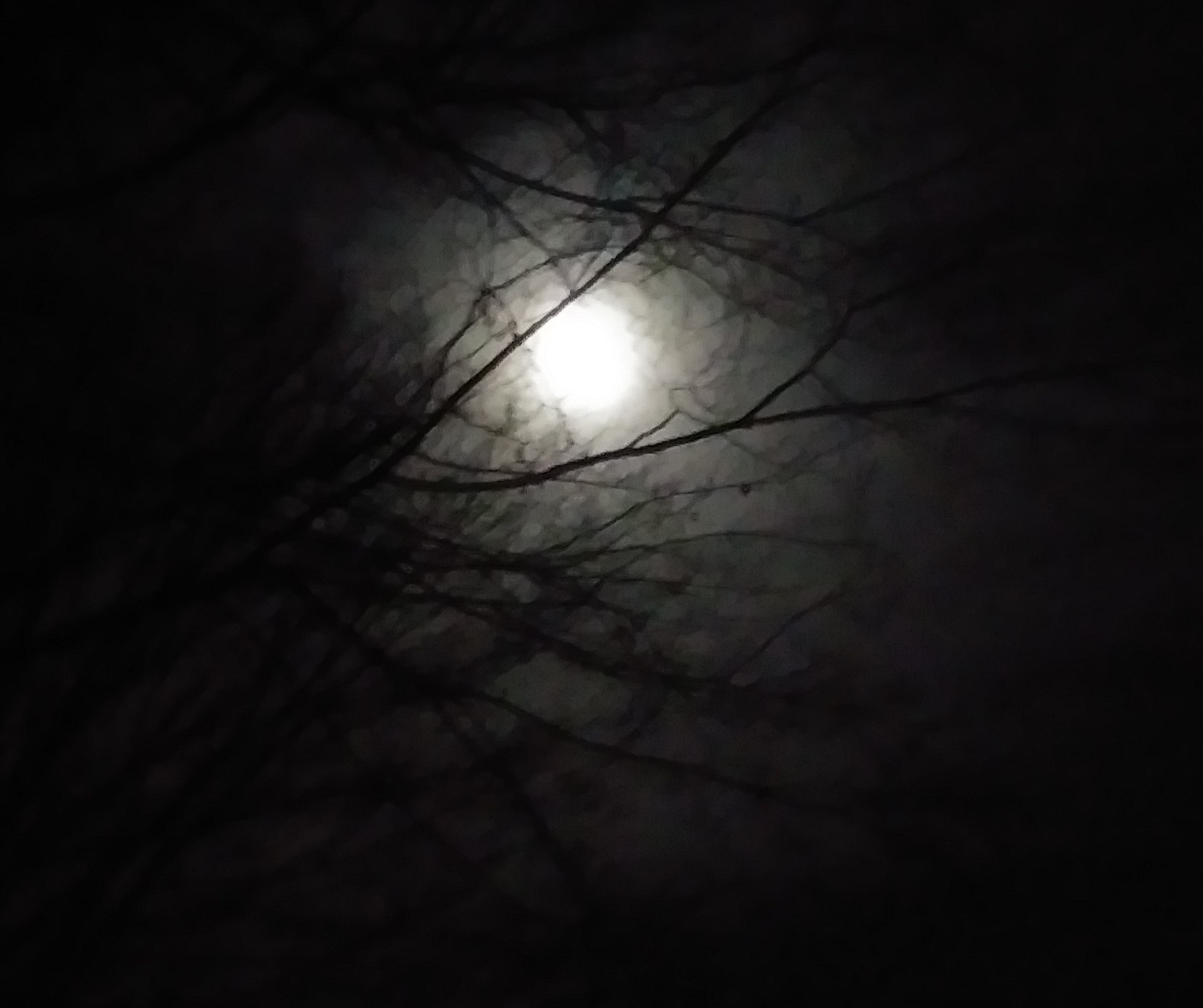
In the darkness before dawn on March 25th, the full Paschal Moon rose to announce the approach of Holy Week and Passover.

For years, decades, I entered Holy Week with a kind of dread, knowing I must engage once more in the agony of Jesus, his sufferings, his death, followed by the long tomb-time of his absence , before I could even remember the truth of Resurrection…. I would get up during the night after the Holy Thursday Eucharist to spend an hour remembering Jesus in the Garden of Gethsemane, his friends asleep around him, as he faced the certitude of his coming death.

It was a Mystery Play, perhaps not unlike the ancient Greek and Roman Mystery Rituals, but the emotions were manufactured. The darkness I experienced through these intense feelings of grief and loss was real, as was the physical discomfort of fasting. Yet some part of me knew it was play-acting: both the terrible loss of Good Friday and the exploding joy of Easter. Jesus IS risen and will never die again; the Christ is with us always. Then ten years ago, something shifted. I wakened in the deep heart of Holy Thursday night, drawn in prayer, not to the Garden of Gethsemane, but to the earth herself, in agony, dying. I sat through that hour with her suffering.

Later I came upon this lovely meditation by Susan Griffin which spoke to my heart:

As I go into the Earth, she pierces my heart. As I penetrate further, she unveils me. When I have reached her center, I am weeping openly. I have known her all my life, yet she reveals stories to me, and these stories are revelations and I am transformed. Each time I go to her, I am born like this. Her renewal washes over me endlessly, her wounds caress me. I become aware of all that has come between us, the blindness, of something sleeping between us. Now my body reaches out to her. They speak effortlessly, and I learn that at no instant does she fail me in her presence. She is as delicate as I am, I know her sentience, I feel her pain and my own pain comes into me, and my own pain grows large and I grasp this pain with my hands, and I open my mouth to this pain, I taste, I know and I know why she goes on, under great weight, with this great thirst, in drought, in starvation, with intelligence in every act does she survive disaster. This earth is my sister, I love her daily grace, her silent daring, and how loved I am, how we admire this strength in each other, all that we have lost, all that we have suffered, all that we know: we are stunned by this beauty, and I do not forget what she is to me, what I am to her. (Susan Griffin in The Body of Earth)

Since that time of awakening, I experience these Sacred Days of the Paschal Mystery, the Mystery of life/death/life that is at the Holy Heart of the Universe, in a new and deeper way. The suffering is not a remembrance of events in the life of Jesus, but rather a reawakening to the raw suffering, the unaccountable losses, the seeking for light and hope in darkness that is the Mystery Play of our lives, especially now in this year of 2024 on Planet Earth.

In a Sacred Dance Class a few years ago, we were invited to meditate on the Black Madonna. For the first time I really understood why we need a Sacred Feminine Presence that is more than sweetness and light, One who is also fierce, strong, capable of holding us in the darkness in which our lives are shrouded. The Dark Mother, Who was present in the very chaos in which our Universe was birthed, is strong enough to remain through eons of destruction and rebirth.

In the poetry of John O’Donohue we find words powerful enough to hold the agony as well as the ecstasy of the Paschal Mystery. In this poem I grasp the gift we’ve been given by Jesus in his suffering and death: the courage to endure the suffering within and around us.

May the Dark Mother hold each of us as we too stand in that nothingness, raising the chalice of kindness to bless.

Humanity’s Sacred Mission

I am sharing with you, dear reader of Sophiawakens, news of a follow up to the event I wrote about in my recent blog, “Awakening to Sophia.”

     
 Embrace the Sacred Mission
Dance with the Planet
Saturday, March 16th, 2024
9am PT, 12pm ET, 5pm CET

with Ervin Laszlo

From Ervin: We are dancing on the planet, but we are not dancing well. We are dancing on the planet, but not with the planet. We treat the planet as a passive backdrop to our dance, a supplier of the air, water, land, and other resources we claim as our possession. We are not treating it as a partner in our evolution.    We thought we could dance above and beyond the domains of life on Earth. This was a mistake, and we are now paying for it. It is time to realize that we can only dance safely and enduringly in partnership with our planet. We must urgently correct our steps and return to the dance our forebears often danced, but we have nearly forgotten.  Dancing with the planet is a dance to which we can return. We have the skills and the knowledge, the technologies and the information. Now we must come up with the will and the commitment. The way for us to achieve coherence is to adapt and cooperate. It is to live in peace and in readiness to join together in coherent ecological and social systems. Coherence creates an environment capable of sustaining all people on the planet in peace and prosperity.    We are cosmic beings endowed with articulate consciousness. We can apprehend our mission, and we can respond to it. We can and now must awaken to the urgent need to adopt the universe’s drive toward integral wholeness as our felt and acknowledged sacred mission.   Add your heart to this global pulse event, register here:
https://bit.ly/GCPulseMarch2024 Awakening to Humanity’s Sacred Mission Session 3 and 4 are now
available on YouTube.
 If you weren’t able to join us live for the Symposium, tune into Day Two sessions: Synergizing for Change and Peace Making, and stay tuned for more sessions to be released on YouTube. 
The entire Symposium broadcast can be viewed at your convenience on UNITY EARTH TV – https://unity.earth/symposium-2024-global-broadcast/Day Two, Session 3: Synergizing for Change
 Day Two, Session 4: Peace Making
Support world-changing work:please give generouslyto Purpose Earth by donating here –  https://www.purposeearth.org/givedonate All of the funds will go to small grass-roots organizations,mostly in the developing world. Ways to Stay Connected:Join the Weekly Call every Wednesday at 6pm EDT / 3pm PDT,
Zoom ID 606 000 1111, http://zoom.us/j/6060001111Join the Mighty Network at https://oneworld.earth?Join our WhatsApp Thread https://chat.whatsapp.com/Fq0zxKqYOGz2mQ96lmT78F Join our Telegram channel https://t.me/unityearth1111
UNITY EARTH Community Facebook Group https://www.facebook.com/groups/unityearth/ 
UNITY EARTH TV
https://unity.earth/tv/unity.earth   
shared by Anne Kathleen McLaughlin

Awakening to Sophia

The new is giving birth to the old… the task is to give birth to the old in a new time—to the primordial ancient in a world that is new. (Peter Kingsley)

On a golden October day in 2014, I began this weekly blog dedicated to giving new birth to the ancient knowing of the feminine principle of the Sacred whom some cultures have known by the name “Sophia.” Inspired by a growing sense of a Sacred Feminine Presence both within and around me, I chose the title, “Sophia Wakens.”

In May of that year on a sacred journey led by Jean Houston, I had visited Greece. Paintings and icons of Sophia adorned many of the churches. Our guide Calliope (Kapi) told us that Greek Christians have a deep reverence for the presence of Sophia, Wisdom.

“How do they see her in relation to Athena, the Greek Goddess of Wisdom?” I asked.

“They see her as a Continuation,” Kapi responded.

Later, as we stood at the site of the Eleusinian mysteries of Demeter and Persephone, about twenty kilometers from Athens, Kapi pointed to a small white church atop a hill. “That is a Church dedicated to Mary,” she said. “We find that a Church built to honour Mary almost always indicates that there is an ancient temple to the goddess below.”

In the ten years since that day, I have been slowly awakening to Sophia’s Presence in my life. I’ve found a kindred spirit in the writings of Thomas Merton (see Christopher Pramuk Sophia: The Hidden Christ of Thomas Merton, Liturgical Press, Collegeville Minnesota, USA 2009) Yet, for the most part, it has been a lonely journey. In my desire to know Sophia I have come to see her in other guises, as a presence in ancient fairy tales, in the goddess Brigid in Ireland, in Mary, Mother of Jesus, whom I have loved since I was twelve years old.

The one who has been seeking me has exercised infinite patience over these years…..until a few weeks ago when I attended a Symposium on Zoom: “Awakening to Humanity’s Sacred Mission”.

Inspired and sponsored by Ervin Laszlo, the experience was put together with the support of several earth-wide organizations dedicated to responding to the urgent needs of our planet at this time. With funding from “Project Earth”, the eight sessions over four days on ZOOM were offered free of cost to anyone who registered.

There were over 2400 registrants from 86 countries who either attended on screen or watched the recordings afterwards. Listening to the presenters, some of whom I knew, like Jude Currivan, author of the Story of Gaia, I felt a deep breath of “at homeness” fill me. In small break-out groups, as I listened to others speak of their personal missions, I recognized ”kindred spirits”. Comments spoken and posted by participants referenced their sense of belonging, of hope, of gratitude for this unprecedented experience of unanimity… and in a deep moment of guided meditation , it was the voice of Sophia that I heard, reminding me of my dedication to Her, asking simply, “Let me love you.”

Among the presenters were Indigenous leaders who brought their ancient wisdom of respect for the Earth, some bringing messages like the recent one received by the Kogi people, of the Amazon Rain forest. The Sacred Mother has spoken to them of the urgent need to act now to save the planet, warning that two years is the time limit for a turn-around of human behaviors that are destroying the living systems of the earth.

Chief Dwayne Perry, Inspirational Leader of the Ramapugh Nation, said, “we are the caretakers of the Earth and all who dwell therein…our Sacred Mission has already begun.”

Here is a sampling of the words of wisdom spoken during the Symposium:

“Something new is emerging and it starts with each one of us… this is the end of the beginning….Let’s dance with the planet and dance with each other…I have great hope in human nature….human nature is nature in the human form.” (Ervin Laszlo)

Madonna of Combermere

“We’ve done the Mystic thing,” said Canadian songwriter, Tatiana Speed, before singing, “Awake my ancient memory, let me remember who I am.”

Jarvis Smith, environmental activist in England, through years of deep listening, has received messages from the Earth Mother: “Wake up to living in gratitude for all I have given you….”What you call a crisis, I see as a way to bring people together. I can transform this.”

A renowned spiritual leader in India counselled: “It’s time to come down from the mountain, get up from your prayer cushion and your yoga mat.”

During a silent meditation, led by a gentle wise woman who invited us to ask, “What is my sacred mission?”, the clear response rose in me: “Embody Sophia (the Sacred Feminine)”. Later, we were invited to walk an imaginal labyrinth, to listen deeply, in the Quaker tradition, to share aloud, if what arises seems meant for the whole group. I, who love words, heard nothing. I felt the warmth of a loving embrace which I knew was from Sophia. Only then did I hear words, “Let me love you.” I waited, wondered, then understood this message was for the entire group, so I spoke it.

A week later on Sunday February 18th, Ervin Laszlo appeared on the ZOOM screen, his eyes alight with joy, purpose, enthusiasm: “Where do we go from here?” he asked, inviting “all those engaged and those who formed this (to) join together in a semi-formal alliance.” He added “I pledge my own full allegiance to this….I can offer copies of my new book to each member of the Alliance….I’m very keen on continuing this Alliance.” He encouraged us to “keep in touch….create a program… on Internet (focused on) the evolution of our species on this planet.

“We are one with each other and the world around us. There is no distinction between personal mission and Humanity’s mission: to advance life on this planet, to advance consciousness….What is good for the planet is good for us.

“Transformation needs to happen….the sense of mission expressed here….beings endowed with consciousness can bring a higher level… Humanity will continue.”

Facilitator Jon Ramer was visibly moved: “I’ve never seen something like this before…. I presume, Ervin, this invitation is to all humanity.”

These words are now written in my heart:

Brigid: Midwife for Planetary Rebirth -3

by Dolores Whelan

artwork by Andrea Redmond

A story from the Celtic tradition that illustrates the importance of the cailleach and her energy is the story of Niall of the Nine Hostages. Niall and his four brothers come to a well to get a drink of water. The well is being guarded by an old woman who represents the cailleach or hag. When the first brother goes to the well, she tells him that if he wants to drink the water, he must give her a kiss. He is horrified and refuses; she sends him away. The other three brothers go in turn on the same errand, and each refuses to kiss the hag. As the story goes:

Then it was Niall’s turn. Faced with the same challenge, he kissed the old hag and embraced her. When he looked again, she had changed into the most beautiful woman in the world. “What art thou?” said the boy. “King of Tara, I am Sovereignty . . . your seed shall be over every clan.”i

This story suggests that in order to have access to the life-enhancing energy represented by the water in the well, it is necessary for the young masculine to embrace this particular and perhaps unattractive aspect of the feminine energy. Why is this so? The cailleach represents the wisdom gathered by living in right relationship with the earth, something that requires reflection, stillness, and attentiveness. It knows more clearly what is needed and what is possible in each situation, and it is aware of the consequences of particular actions. It knows how to proceed slowly; it understands the value of times of waiting and times of allowing. It knows how to be and how to act.

So how can we, you and I, begin the journey back towards wholeness and balance?

Brigid in her cailleach form can help us to embrace these difficult and fearful aspects of our lives. The cauldron, a central image in both the Celtic and other traditions, is a vessel for transformation and transmutation. In many stories, the cauldron is first filled with unpalatable raw things, which then are used to create a nourishing soup using the transforming energy of the universe through the action of fire and water. The transformation of the contents of the cauldron is supervised by the cailleach energy, which works inwardly, quietly, and slowly to bring about an unforced and timely rebirth. The transformation of the cauldron’s contents concentrates their essence and offers them back in a new and more suitable form. From this process, we learn that the possibility of transformation and re-birth always exists, no matter how devitalised something appears to be. A new rebirth can be achieved when we submit ourselves and our concerns to the inward and slow transformational energy of the cauldron and the cailleach.

Philosopher Richard Kearney in his poem Bridget’s Well speaks of the importance of this inward and downward journey and suggests that it is the only way to access the life- giving and inspiring fire of Brigid that lies underneath the water.

“I will rest now at the bottom of Bridget’s well

I will follow the crow’s way

Footprint by footprint

In the mud down here

I won’t come up

Until I am calmed down

And the earth dries beneath me

And I have paced the caked ground

Until smooth all over

It can echo a deeper voice

Mirror a longer shadow” (2)

This poem suggests the importance of that deep journey to the well where the source of new life and the fire of passion is found. At Imbolc (Feb 1st) the tiny spark of new light discovered in the deep womb darkness of the winter solstice has grown sufficiently to safely emerge from that inner world and begin to transform winter into spring !

At this time Brigid appears as the fresh maiden of springtime emerging from the womb of the cailleach, queen of winter. Here Brigid embodies the energy that breathes life into the mouth of dead winter. The energy of Brigid at Imbolc is the energy of Yes, and it can only emerge from the place of stillness!

Brigid is also closely associated with the life giving aspect of fire, a fire that doesn’t burn but which can never be fully quenched. When this fire comes from a clear and deep space, as happens following the inward journey, it will be significant and filled with truth and potency. This life-giving fire will act within in individuals, within the land, in the relationships between the people and their land, fanning the fires of creative endeavour so that all of life forms can partake in the symphony of new life emerging each springtime! The fire discovered through this deep journey is an inner light which guides each of us to find our next step!

Richard Kearney in his poem “Brigit’s Well” also speaks of the re-emergence of a new fire born of a deeper place within

“Then the fire may come again

Beneath me, this time

Rising beyond me

No narcissus- flinted spark

Behind closed eyes

But a burning bush

A fire that always burns away

But never is burnt out” (3)

I believe that the archetypal energy of Brigid, the embodiment of the divine feminine, present within the essence of the Celtic tradition has the capacity to lead and support us in transforming the present wasteland into a new life sustaining society. For this to happen, it is necessary for us to understand that the archetypal energy that Brigid represents is a real aspect of the human psyche, one that has been largely dormant over the past few hundred years, but is now re-emerging. Each of us can become keeper of the Brigid flame by developing and living those qualities and values that distinguished her. As we align ourselves with her archetypal energies, she supports us courageously and safely to face the demons of this time. She teaches us how to stand still in a wobbling world, to act as a unifying force, to hold the space of possibility and so become agents of transformation. So we ask for

“The mantle of Brigid about us

The memory of Brigid within us

The protection of Brigid keeping us from harm from ignorance,

from heartlessness this day from dawn till dark” (4)

When we embrace her energy Brigid will hold us and guide us through this transition. I believe she is the one who has the power to awaken in each of us “An eye to see what is, the heart that feels what is, and the courage that dares to follow.” (5)


Footnotes for Parts 1-3:

1 Amergin Jan de Fouw Amergin Wolfhound Press Dublin 2000

2 Richard Kearney quoted in Stephen J. Collins The Irish Soul in Dialogue the Liffey Press Dublin 2001 p 147

3 Richard Kearney quoted in Stephen J. Collins The Irish Soul in Dialogue the Liffey Press Dublin 2001 p 147

4 Poem source unknown

5 Celtic triad found extensively in the literature

Brigid: Midwife for Planetary Rebirth-2

As we consider the qualities embodied by Brigid as reflected in the stories of her life as abbess of Kildare Ireland, it is obvious that these qualities are similar to those present in her incarnation as pre-Christian goddess.

Brigid by Jo Jayson

Brigid is considered a threshold person, one who can straddle both sides and remain detached. This quality, which is central in her life, is highlighted in the stories of her birth, which attest that she was born on the threshold of the house, neither within nor without; that her father was a noble man, her mother a slave; and that he was a pagan, her mother a Christian. From her origins, she has this ability to stand in the void and remain centred within it, while holding the creative tension between two opposite perspectives. Many stories from her life portray her as a person capable of resolving conflicts in a healthy manner. Being centred and aligned within herself, she is detached and can grasp the energies of both sides clearly thereby facilitating a resolution. She has the ability to stand still and remain focused, in spite of the uncertainty present in the outer world.

As a child and a young woman Brigid constantly challenged the accepted norms of her society, especially those expressed by her father when they opposed to her own values. This reflects Brigid as a person who lives her life from a place of deep inner knowing and inner authority.

She also refused to marry any of the suitors that her father arranged for her, because she had chosen a different life path and destiny. She would not compromise her soul journey!

Brigid’s generosity is legendary and is related in numerous stories of her giving away food and clothes to people who came to her monastery or whom she met along the way. This generosity was, it seems, based on her absolute faith in the abundance of the universe to provide all that was needed in each moment. Each time she gave away the butter or meat needed for the next meal it miraculously reappeared in time for that meal!

Brigid’s capacity to bring forth new life, to nourish, to create plenty in the crops or an abundance of the milk from cows, and to manifest or create ex nihilo is a reflection of the true abundance and with the prosperity of the society, living in relationship with the land , created by her. Her life and work thrived because of her deep trust and an absence of fear.

It is said that from the moment Brigid learned to know God her mind remained ever focused on God. She remained connected to God and the heavens while living on the earthly plane. Her power of manifestation was a result of this ability to be aligned heaven to earth. The strong connection between her inner and outer worlds allowed her to focus her energy onto a particular intention and ensure its manifestation.

The story how Brigid got the land for her monastery in Kildare is a wonderful example of her ability to manifest what is needed. She states clearly what she needs and asks the local lord for land. First he refused but she is not deterred by this. She pursues her request in a different way by asking “Give me what land my mantle will cover.” He says yes! When she placed the mantle on the ground it grew until it covered enough land for the monastery .This reflects a woman who can hold her intention clearly, even when on the surface it seems that her request will not be met!!

These inspiring stories of Brigid relate to her active life in the world, where she embodies and live true spiritual power!

But what and where is the source of this power?

To fully understand the power and the qualities that Brigid embodied, as reflected in the many stories about her life, we need to begin with an exploration of the role of Brigid as Cailleach, the aspect of the Divine Feminine that rules during the season of Samhain (winter) at the beginning of the Celtic year. This I believe is the wellspring from which Brigid’s power manifests in the world emerges.

What then is the energy associated with the hag, crone, or cailleach aspect of the divine feminine? The cailleach is the embodiment of the tough mother-love that challenges its children to stop acting in destructive ways. It is the energy that refuses to indulge in inappropriate personal or societal dreams. It is the energy that will bring death to those dreams and fantasies that are not aligned with our highest good. Yet, this cailleach energy also will support the emergence and manifestation in the world of the highest and deepest within us. It will hold us safely as we embrace the darkness within ourselves and our society. It is an energy that insists that we stand still, open our hearts, and feel our own pain and the pain of the earth. This is the energy that teaches us how to stay with the process when things are difficult. This energy will not allow us to run away!

Her way of being is a slow, inwardly focused way, with minimum outward activity: a way that values times of active waiting that pays attention and allows life to unfold.

An essential part of the journey that all the great heroes and heroines in world mythologies undertake includes facing and embracing the energy of surrender, darkness, and death. The hero or heroine learns the next step required in their outer world journey only by submitting to and being initiated into the dark world of the cailleach.

Through this initiation the mature masculine power can emerge and lead each one to find their true path. When this happens the action that follows will be in the service of the true feminine and bring forth wisdom and compassion creating new life, vitality, and sustainability. However because western society is currently dominated by the young masculine energy, present in both men and women, characterised by its “can do” attitude, there is an urgent need for each of us to make this heroic journey with the cailleach, so that we will become agents for the transformation of our society.