All posts by amclaughlin2014

Member of Community of Grey Sisters of Pembroke; Masters Degree in Religious Communication, Loyola University, Chicago; Author: Called to Egypt on the Back of the Wind (2013) Planted in the Sky (2006) both published by Borealis Press, Ottawa Canada www.borealispress.com Retreat facilitator: The Wooing of the Soul (2013) The Sophia Salons, beginning in February 2016, offer journeys to one's own inner wisdom for small groups of women. For information: amclaughlin@sympatico.ca

Teilhard: Pilgrim of the Future

I managed to climb up to the point where the

Universe became apparent to me as a great rising surge,

in which all the work that goes into serious enquiry,

all the will to create, all the acceptance of suffering,

converge ahead into a single dazzling spear-head –

now, at the end of my life,

I can stand on the peak I have scaled and continue

to look ever more closely into the future,

and there, with ever more assurance,

see the ascent of God.

Pierre Teilhard de Chardin, The Heart of the Matter, 52

Teilhard’s life journey along the mystic path was not for himself alone. His writings, published only after his death, are a gift to us, a travel guide of such depth and wisdom that even in our own complex, sometimes terrifying, often mystifying reality, his footsteps shed a light that we may follow into a future filled with hope. For this exploration of his climb to the peak where he could “look ever more closely into the future”, I rely on the July 2019 retreat experience led by Kathleen Duffy, SSJ, based on her book, Teilhard’s Mysticism (Orbis Books, Maryknoll, New York, 2014).

Teilhard left us a road map, a set of five circles, stages of his mystical growth.

These circles, which are more properly imaged as loops of a spiral that he revisits throughout his life, provided him with steeping stones into an ever-deepening reality, a reality informed as much by the science of his time as by his religious tradition. They plot his growth and development as he sinks ever more deeply into the heart of matter and into the heart of God….Stepping with him through each of these circles…we come to understand ….how we too can be drawn more and more deeply into that privileged point where the depths of our hearts and the heart of the cosmos converge with the heart of God. (Kathleen Duffy, Teilhard’s Mysticism 4, 5)
Of the first of these spiraling loops, the Circle of Presence, Teilhard writes:

There were moments, indeed, when it seemed to me that a sort of universal being was about to take shape suddenly in Nature before my very eyes. (The Heart of the Matter, 26)

Duffy tells us that “something as simple as a song, a sunbeam, a fragrance, or a glance would pierce his heart and heighten his awareness of an unexplained presence.” (23)

These encounters with beauty in sensations elicited by encounters with nature, with music, with persons, drew from Teilhard a wonder and a joy that illumined his life. At times they occurred in settings that hardly seem the stuff of poetry. In the midst of a long, arduous voyage to China, he wrote to his beloved cousin Marguerite:

Yesterday I could never tire of looking to the east where the sea was uniformly milky and green, with an opalescence that was still not transparent, lighter than the background of the sky. Suddenly on the horizon a thin diffuse cloud became tinged with pink; and then with the little oily ripples of the ocean still open on one side and turning to lilac on the other, the whole sea looked for a few seconds like watered silk. Then the light was gone and the stars began to be reflected around us as peacefully as in the water of a quiet pool. (quoted in Duffy, 25-6)

While serving as a stretcher bearer in the First World War, Teilhard

had occasion to look into the eyes of many a dying soldier. Just before the moment of death, a strange light would often appear in a soldier’s eyes. Teilhard was never sure whether the eyes were filled with “unspeakable agony or…with an excess of triumphant joy” (The Heart of Matter, p.65, trans. Rene Hague, 1978). Each time the light went out and the wounded soldier died, Teilhard was overcome with a deep sense of sadness. (Teilhard’s Mysticism 34-35)

Teilhard discovered light in other eyes when he came to know his cousin Marguerite as a kindred spirit with whom he could share the depths of his own soul. “A light glows for a moment in the depths of the eyes I love….And, under the glance that fell upon me, the shell in which my heart slumbered, burst open”. (Writings in Time of War, 117-8)

Of Teilhard’s relationship with Marguerite, Duffy writes: A new energy emerged from within, causing him to feel as vast and as rich as the universe. Marguerite had awakened the feminine aspect of his being. His love for her drew him out of himself, sensitized him, and stimulated his capacity for deeper and more intimate relationships. (Teilhard’s Mysticism 34)

Teilhard tells us that his encounters with beauty in the Circle of Presence, “drew me out of myself, into a wider harmony than that which delights the senses, into an ever richer and more spiritual rhythm (Writings in Time of War, 117).

Duffy comments: Having invaded his being and penetrated to its core, having pierced through to his depths, Beauty drew him into that single privileged point where Divine Presence exists equally everywhere, and where all diversities and all impurities yearn to melt away.(36)

In the Circle of Presence, Teilhard came to know that

underlying Earth’s surface charms a vivid Presence lies hidden within and penetrates all things, This was the only source that could give him light and the only air that he could ever breathe. He yearned to sharpen his sensibilities so that he could see ever more deeply into the heart of matter. Along the first circle, the palpable world had truly become for him a holy place, a divine milieu, permeated with a vast, formidable, and charming presence. (Teilhard’s Mysticism 38)
Teilhard understood that the duty of a mystic is to be aware of the inner rhythm of the world, and to listen with care for the heartbeat of a higher reality…. At this privileged place, he tells us, “the least of our desires and efforts…can…cause the marrow of the universe to vibrate.” (The Divine Milieu, p.115, 1960, in Teilhard’s Mysticism 32)

As Teilhard wrote in Human Energy: Indeed we are called by the music of the universe to reply, each with his own pure and incommunicable harmonic. (HE, p.150, in Teilhard’s Mysticism 32-33)
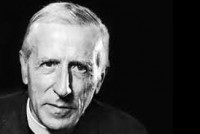

Teilhard: The Making of a Mystic

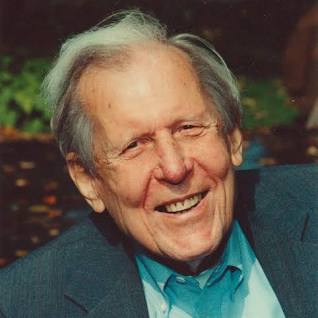
Teilhard de Chardin (Jesuit priest, paleontologist, France 1881-1955)

Sophiawakens for August 21, 2023

In the summer of 2019, just months before COVID would make such an event impossible, I travelled to Jericho House in Ontario’s Niagara Region for a Retreat on “Teilhard’s Mysticism”. Facilitator Kathleen Duffy, SSJ, brought her own love for Teilhard, her years of deep pondering on his life and writings, to our gathering. For five sun-soaked days and star-speckled nights, companioned by others who shared a vision of spirituality centred on a sacred earth, I walked, listened, spoke, learned and dreamed, inspired by the writings of Teilhard de Chardin. I came home, my writer’s quiver filled with fresh insights into the mystic path for our time.

Wondering how I might share this experience on my website, I was drawn back to the words of theologian Margaret Brennan, IHM:

Mystics are people who come in touch with the sacred source of who they really are and are able to realize and experience that in their lives.

Teilhard’s life path led him to the sacred source not only of himself but of the entire Universe. Beginning with his childhood enchantment with rocks, through his work delving into the depths of the earth as a paleontologist in China, and, while he volunteered as a stretcher bearer in the First World War, through watching the light that briefly illumined the eyes of a dying soldier, Teilhard grew into knowing a divine presence at the heart of all that exists. He wrote:

During my life, as a result of my entire life, the world gradually caught fire for me and burst into flames until it formed a great luminous mass lit from within.

The Diaphany of the Divine at the heart of a glowing Universe, as I have experienced it through contact with Earth – the Divine radiating from blazing Matter: this it is that I shall try to disclose and communicate. (The Divine Milieu, translated by Bernard Wall, New York, Harper and Row, Publishers, 1960)

Thinking back to Kathleen Duffy’s unfolding of Teilhard’s story, I see in that quote the significance of the word: “gradually”. Mystics are not born that way! For Teilhard the path was truly a “long and winding road”. I was touched by his struggles as a young Jesuit novice reading The Imitation of Christ by the fifteenth-century writer Thomas a Kempis. That spiritual handbook counselled that one must love ONLY Christ. Teilhard feared that his great love for the natural world would draw him away from his love for the Christ. His life experiences would gradually bring those two loves into a deep harmony so that he could finally write with deep joy:

Now Earth can certainly clasp me in her giant arms. She can swell me with her life or take me back into her dust. She can deck herself out for me with every charm, with every horror, with every mystery. She can intoxicate me with her perfume of tangibility and unity. She can cast me to my knees in expectation of what is maturing in her breast. But her enchantments can no longer do me harm, since she has become for me, over and above herself, the body of him who is and of him who is coming. (The Divine Milieu)

Of all that I learned of Teilhard during Kathleen Duffy’s Retreat, this sharing of his personal struggle and its resolution is what stirred me most. It reveals Teilhard as a mystic not only OF our time but FOR our time. He recognized the allurement of the Universe for us:

The great temptation of this century is (and will increasingly be) that we find the World of nature, of life, and of humankind greater, closer, more mysterious, more alive than the God of Scripture. (The Heart of Matter, translated by Rene Hague, New York, Harcourt Brace Jovanovich, Inc., 1978)

Yet that allurement was what he saw as most needed for spiritual healing:

Our age seems primarily to need a rejuvenation of supernatural forces, to be effected by driving roots deep into the nutritious energies of the Earth. Because it is not sufficiently moved by a truly human compassion, because it is not exalted by a sufficiently passionate admiration of the Universe, our religion is becoming enfeebled…(Writings in Time of War translated by Rene Hague, New York, Harper and Rowe, Publishers, 1968)

Teilhard looked at the earth with the eyes of a mystic, with the heart of a lover. In love with Holy Presence at the deep heart of all that exists, he could echo Rumi’s wonder-filled exclamation: “Is the one I love everywhere?”

Through Teilhard’s eyes, we can learn to see what mystic-poet Catherine de Vinck calls “the fire within the fire of all things”. Once we see that fire, we know the call that Teilhard knew to put our hearts at the service of the evolution towards love that is the call of the Universe, as well as our personal call within the universal call, for the two are inseparable.

Teilhard shows us that our deepest call is to love, that evolution is advanced by union on every imaginable level of being. And, as another poet, Robert Frost, observed: Earth’s the right place for love: I don’t know where it’s likely to go better.

Nothing that lives on our planet is outside of us. We can no longer accept lines of division between religions, between cultures, between nations, between species. This Universe is evolving as one. Our place within it, like Teilhard’s, is to be its eyes of wonder, its heart of love, its allurement toward union. In co-creative partnership with the Love at its heart, everything that we do contributes towards that great commingled work of the evolution of the Universe, the evolution of ourselves.

Teilhard and Sophia

Teilhard came to know Sophia as the cosmic Love that is holding
all things together.
( Kathleen Duffy)

Born in 1881, Teilhard lived, studied, worked and wrote mainly in the
first half of the twentieth century. As a scientist, he knew Darwin’s
work in Evolution; as a paleontologist, he spent time excavating the
story of evolution inscribed within the earth; as a mystic he was
captivated with the wonder of an unfinished universe being drawn from
within into a radiant future by a sacred presence of love.

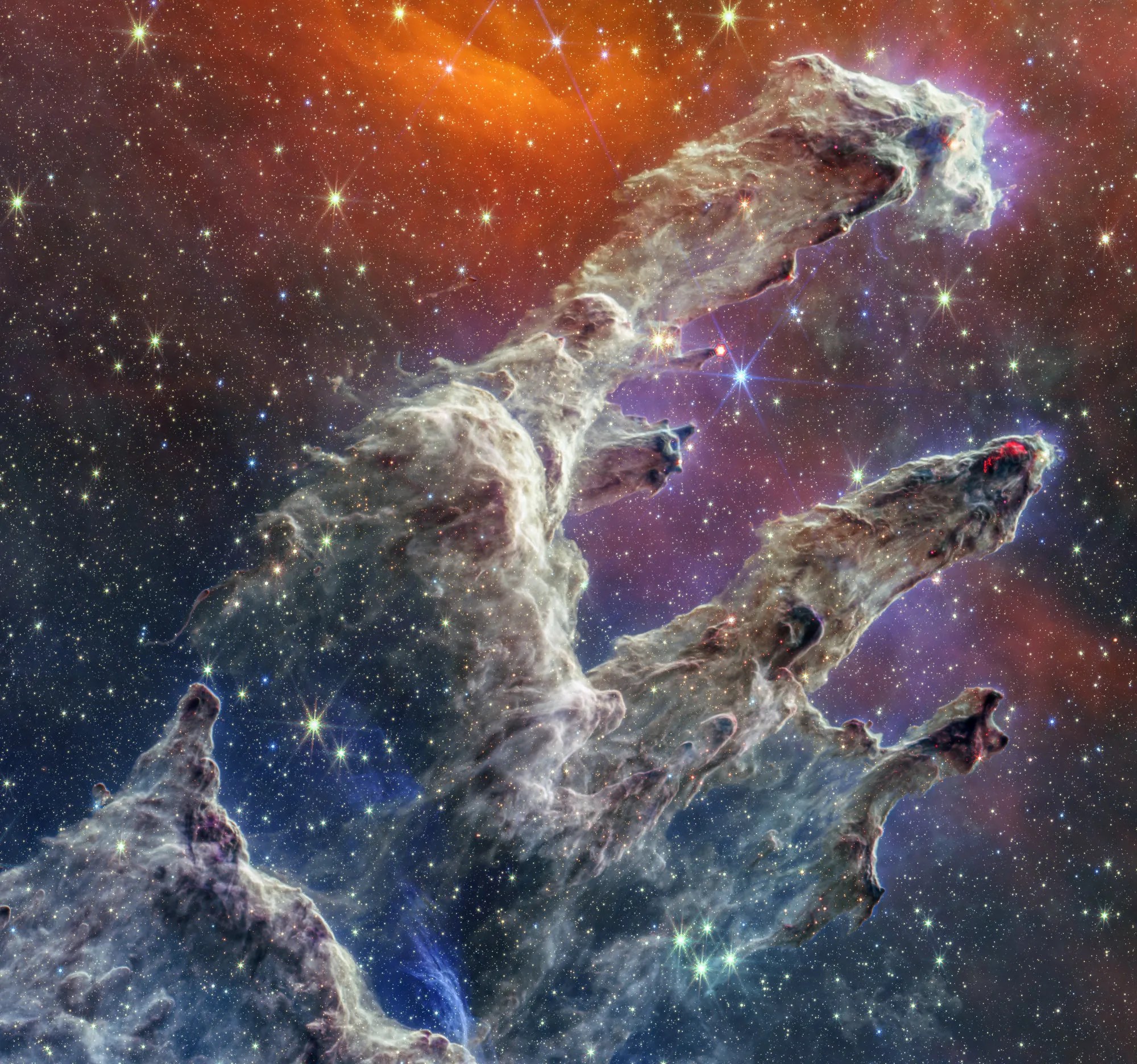
Image from the James Webb Telescope shows the early Universe with its uncombined elements in a swath that stretches across seven light years.

Teilhard was convinced that until theology fully embraced the concept
of an evolving universe, it would remain inadequate, crippled by its
outdated worldview. He wrote: “Who will at last give evolution its own
God?”

In the nearly seventy years since Teilhard’s death, science has taken
massive leaps of understanding, and theology is only beginning to catch
up. In From Teilhard to Omega (edited by Ilia Delio, Orbis Books,
Maryknoll, New York 2014), thirteen scholars take up Teilhard’s
challenge. This week, we look at “Sophia: Catalyst for Creative Union and Divine Love” by Kathleen Duffy, SSJ.

Though a dedicated scientist, Teilhard calls on his mystic and poetic
gifts to describe divine love at work in the cosmos. In his book
Writings in Time of War (translated by Rene Hague, London: Collins,
and New York: Harper & Row, 1968), Teilhard writes of a feminine
presence drawn from the wisdom literature of the Bible, particularly
the Book of Proverbs, (8: 22-31).

Teilhard’s poem opens at the beginning of time, at the moment when
Sophia is embedded into the primordial energy that is already
expanding into the space-time of the early universe. Only half formed
and still elusive, she emerges as from the mist, destined to grow in
beauty and grace (WTW, 192). As soon as the first traces of her
presence become apparent, she assumes her mandate to nurture
creation, to challenge it, to unify it, to beautify it, and ultimately to
lead the universe back to God. With this mission as her guide, she
attends to her work of transforming the world, a world alive with
potential.
(Duffy p. 27)

Duffy reweaves Teilhard’s poem, working through its shining threads
new insights from science, wisdom literature and the work of many
“who have contemplated the divine creativity at work at the heart of
matter”. Duffy names the feminine presence in Teilhard’s poem
“Sophia”, from the Greek word for Wisdom.

“Who then is Sophia?” Duffy asks. Her magnificent response to this
question is worth the price of the whole book. Here are segments:
She is the presence of God poured out in self-giving love, closer to us
than we are to ourselves, ever arousing the soul to passion for the
Divine. From the very depths of matter, she reveals herself to us as
the … very nature of God residing within the core of the cosmic
landscape.

Attempting always to capture our attention, Sophia peers out at us
from behind the stars, overwhelms us with the radiance of a glorious
sunset, and caresses us with a gentle breeze…

Sunset at Stella Maris

Shining through the eyes of the ones we love, she sets our world ablaze.
Sophia is the mercy of God in us….She sits at the crossroads of our
lives, ever imploring us to work for peace, to engage in fruitful
dialogue, and to find new ways of connecting with the other. She longs
to open our eyes to the presence of pain and suffering in the world, to
transform our hearts and to move us to action. (
pp. 31-32)

Duffy says that Teilhard experienced this presence “with nature, with
other persons, and with the Divine”:
He began gradually to recognize her everywhere — in the rocks that
he chiseled, in the seascapes and landscapes that he contemplated, and
in the faces of the dying soldiers to whom he ministered during the
war….Teilhard came to know Sophia as the cosmic Love that is holding
all things together.
(p. 33)

Teilhard came to understand that Sophia can be known “only in
embodied human actions”.

Duffy concludes her illuminative essay with these words:
Sophia was the source of Teilhard’s life…. Her constant care for
creation during so many billions of years gave him confidence she would
continue to be faithful… Teilhard vowed to steep himself in the sea of
matter, to bathe in its fiery water, to plunge into Earth where it is
deepest and most violent, to struggle in its currents, and to drink of its
waters. Filled with impassioned love for Sophia, he dedicated himself
body and soul to the ongoing work needed to transform the cosmos to a
new level of consciousness and to transformative love.
(p. 34)

That final sentence might serve as a calling to each of us.

Teilhard’s Unfinished Universe

“For Teilhard, autumn rather than spring was the happiest time of year,” writes John Haught in his essay, “Teilhard de Chardin: Theology for an Unfinished Universe.”(From Teilhard to Omega: Co-creating an Unfinished Universe Ilia Delio, ed. Orbis Books, Maryknoll, New York, 2014) “It is almost as though the shedding of leaves opened his soul to the limitless space of the up-ahead and the not-yet, liberating him from the siren charms of terrestrial spring and summer.”

A scientist, a mystic, rather than a theologian, Teilhard deplored the way that theology continued to reflect on God as though the scientific fact of a still –emerging universe was either unknown or irrelevant. Seventy years after Teilhard’s death, theologians are still engaged in the work of re-imagining a God who calls us forward into an as-yet-unknown reality. And yet, even a limited grasp, a glimpse, of what Teilhard saw of the “up- ahead and the not-yet” is enough to inspire hope. For the next several weeks, I’ll offer that glimpse with Reflections on Teilhard’s thoughts about our “unfinished universe” drawn from Ilia Delio’s collection of essays.

Neither scientist nor theologian, I am a storyteller. I know that a change in the story has power to alter and illuminate our lives. Changing the story that once shaped our lives changes everything. If we live in a story of a completed universe where once upon a perfect time our first parents, ecstatically happy in a garden of unimagined beauty, destroyed everything by sin, what have we to hope for? The best is already irretrievably lost. Under sentence of their guilt, we can only struggle through our lives, seeking forgiveness, trusting in redemption, saved only at a terrible cost to the One who came to suffer and die for us. The suffering around us still speaks to us of punishment for that first sin, and the burden of continuing to pay for it with our lives…. Despair and guilt are constant companions. Hope in that story rests in release from the suffering of life into death.

Yet if we live the story as Teilhard saw it, seeing ourselves in an unfinished universe that is still coming into being, everything changes. In a cosmos that is still a work in progress, we are called to be co-creators, moving with the universe into a future filled with hope. Our human hearts long for joy, and we love to hear stories where suffering and struggle lead to happiness, to fulfillment, to love. The possibility that there could be peace, reconciliation, compassion, mercy and justice to an increasing degree on our planet is a profound incentive for us to work with all our energy for the growth of these values.

The call to co-create in an unfinished universe broadens and deepens our Christian vocation:

Our sense of the creator, the work of the Holy Spirit, and the redemptive significance of Christ can grow by immense orders of magnitude. The Love that rules the stars will now have to be seen as embracing two hundred billion galaxies, a cosmic epic of fourteen billion years’ duration, and perhaps even a multiverse. Our thoughts about Christ and redemption will have to extend over the full breadth of cosmic time and space. (p.13)

Haught believes that “if hope is to have wings and life to have zest,” we need a new theological vision that “opens up a new future for the world.” For Teilhard that future was convergence into God. His hope was founded in the future for he grasped the evolutionary truth that the past has been an increasing complexity of life endowed with “spirit”. Haught writes:

At the extreme term of the convergent movement of the universe from past multiplicity toward unity up ahead, Teilhard locates “God-Omega”. Only by being synthesized into the unifying creativity and love of God does the world become fully intelligible. (p.18)

Teilhard saw God as creating the world by drawing it from up ahead, so that the really real is to be sought in the not yet. And this means that:

The question of suffering, while still intractable, opens up a new horizon of hope when viewed in terms of an unfinished and hence still unperfected universe. (p.19)

Haught believes that the concept of an unfinished universe can strengthen hope and love:

the fullest release of human love is realistically possible only if the created world still has possibilities that have never before been realized….Only if the beloved still has a future can there be an unreserved commitment to the practice of charity, justice and compassion. (p.19)

Teilhard’s embrace of an emerging universe is one of the reasons why his writings “often lift the hearts of his scientifically educated readers and make room for a kind of hope…that they had never experienced before when reading and meditating on other theological and spiritual works.” (p. 20)

Encountering Teilhard de Chardin


For the past three weeks, as soaring temperatures and record rainfalls
pummel the planet, we’ve been seeking hope in the visionary writings of
contemporary ecotheologian Thomas Berry, and in the words of Brian
Swimme and other scientists who are opening our minds and hearts to the intelligence of the earth herself in this time of planetary crisis.

Today we journey back in time to the brilliant paleontologist, thinker, and Jesuit Priest whose lifework was the foundation and inspiration for Thomas Berry, Brian Swimme, and so many others. Born in France in 1881, young Pierre Teilhard de Chardin would walk with his father in the hills near their home, fascinated by the rocks scattered around him.

Now we will see Teilhard through the eyes of someone who knew him,
walked with him for a time, engaged in conversation with him,
encountering his transformative view of reality. In her autobiography, A
Mythic Life (Harper Collins, New York, 1996) Jean Houston gives us a
perspective on Teilhard that is deeply personal and insightful. The great
scientist and mystic becomes for us, through Jean’s experience, a warm,
enchanting human presence.

At the time of their tumultuous first meeting in the early 1950’s, Teilhard
was living in a Jesuit Residence in New York City, having been exiled from his native France, silenced, forbidden to write or to teach his advanced ideas about evolution. Jean, a high school student, heartbroken over her parents’ divorce, had taken to running everywhere. Then, one day…

on 84th Street and Park Avenue, I ran into an old man and knocked the wind out of him. This was serious. I was a great big overgrown girl, and he was a rather frail gentleman in his seventies. But he laughed as I helped him to his feet and asked me in French-accented speech, “Are you planning to run like that for the rest of your life?”
“Yes, sir,” I replied, thinking of my unhappiness. “It sure looks that way.”
“Well, bon voyage!” he said.
“Bon voyage!” I answered and sped on my way.

About a week later, I was walking down Park Avenue with my fox terrier, Champ, and again I met the old gentleman.
“Ah,” he greeted me, “my friend the runner, and with a fox terrier. I knew one like that many years ago in France. Where are you going?”
“Well, sir,” I replied, “I’m taking Champ to Central Park. I go there most
afternoons to … think about things.”
“I will go with you sometimes,” he informed me. “I will take my constitutional.”
And thereafter, for about a year and a half, the old gentleman and I would meet and walk together as often as several times a week in Central Park. He had a long French name but asked me to call him by the first part of it, which as far as I could make out was Mr. Tayer.
The walks were magical and full of delight. Mr. Tayer seemed to have absolutely no self-consciousness, and he was always being carried away by wonder and astonishment over the simplest things. He was constantly and literally falling into love. I remember one time he suddenly fell on his knees in Central Park, his long Gallic nose raking the ground, and exclaimed to me, “Jeanne, look at the caterpillar. Ahhhhh!” I joined him on the ground to see what had evoked so profound a response. “How beautiful it is,” he remarked, “this little green being with its wonderful funny little feet. Exquisite! Little furry body, little green feet on the road to metamorphosis.”

He then regarded me with interest.
“Jeanne, can you feel yourself to be a caterpillar?”
“Oh, yes,” I replied with the baleful knowing of a gangly, pimply-faced teenager.

“Then think of your own metamorphosis,” he suggested. “What will you be when you become a butterfly. Un papillon, eh? What is the butterfly of Jeanne?”
What a great question for a fourteen-year-old girl, a question for puberty rites,
initiations into adulthood, and other new ways of being. His comic-tragic face
nodded helpfully until I could answer.
“I …don’t really know anymore, Mr. Tayer.”
“Yes, you do know. It is inside of you, like the butterfly is inside of the caterpillar.”

He then used a word that I heard for the first time, a word that became essential to my later work. “What is the entelechy of Jeanne? A great word, a Greek word, entelechy. It means the dynamic purpose that is coded in you. It is the entelechy of this acorn on the ground to be an oak tree. It is the entelechy of that baby over there to be grown-up human being. It is the entelechy of the caterpillar to undergo metamorphosis and become a butterfly. So what is the butterfly, the entelechy of Jeanne? You know, you really do.”
“Well… I think that…” I looked up at the clouds, and it seemed that I could see in them the shapes of many countries. A fractal of my future emerged in the cumulus nimbus floating overhead. “I think that I will travel all over the world and … and… help people find their en-tel-echy.”

Mr. Tayer seemed pleased. “Ah, Jeanne, look back at the clouds! God’s calligraphy in the sky! All that transforming, moving, changing, dissolving, becoming. Jeanne, become a cloud and become all the forms that ever were.”
(A Mythic Life pp. 141-143)

Years later, as Jean looked back on Teilhard’s effect on her life, as well as
that of a few other such beings, she would write:
To be looked at by these people is to be gifted with the look that engenders. You feel yourself primed at the depths by such seeing. Something so tremendous and yet so subtle wakes up inside that you are able to release the defeats and denigrations of years. If I were to describe it further, I would have to speak of unconditional love joined to a whimsical regarding of you as the cluttered house that hides the holy one. (The Possible Human, Jeremy P. Tarcher/Putnam, New York, 1982 p.123)

Hope for Our Time: Science, Spirituality, Noosphere


Throughout my life, by means of my life,
the world has little by little caught fire in my sight until,
aflame all around me,
it has become almost luminous from within.
Such has been my experience in contact with the Earth.
The diaphany of the Divine at the heart of the universe on fire.
Pierre Teilhard de Chardin, The Divine Milieu

Two weeks ago, the climate crisis within Canada, as well as across the planet, urged me to seek the deep roots of our present peril, to share what wisdom I could find to guide us in this new reality. I turned to the writings of ecotheologian Thomas Berry who saw clearly the heartbreaking losses of biodiversity in planetary life and yet called us to hope. Berry, who died in 2009, believed that “we are supported by the ultimate powers of the universe as they make themselves present to us…. Also the planet Earth and the life communities of the earth are speaking to us through the deepest elements of our nature.” (Thomas
Berry The Dream of the Earth (Sierra Club, 1988)

Last week, I sought out light-bearers of our time whose discoveries and patient explorations, related to water, forests and plants, are awakening hope, helping us to understand what “the life communities of the earth” are teaching us.

Yet by the end of last week, with planetary temperatures still soaring, with fires still burning out of control in BC, with Nova Scotia awash in a torrential rainfall that destroyed bridges and inundated roads, with the tragedy of human lives lost in BC’s fires and Nova Scotia’s floods, holding hope was becoming difficult.

By Saturday morning, I was dancing very near despair… Though I could not grasp how it could be so, I wanted to trust Thomas Berry’s belief that “we are supported by the ultimate powers of the universe.”

That support arrived on Saturday afternoon in the form of a preview from The Shift Network for a Zoom course: “Science, Spirituality and the Noosphere.” It will be co-taught by Theologian Matthew Fox, (author of The Coming of the Cosmic Christ: The Healing of Mother Earth and the Birth of a Global Renaissance and Scientist Brian Swimme (co-author with Thomas Berry of The Universe Story and with Mary Evelyn Tucker, Journey of the Universe).

The Noosphere is the concept of Thomas Berry’s much-admired forbearer, Priest and Paleontologist Pierre Teilhard de Chardin.

In 1923, Teilhard formulated this concept as a way of describing a sphere of human thought spread across the earth. In his lifetime, Teilhard lamented the division, the distrust, the conflict that existed between scientists and theologians. He understood the great need we had for both. His words are a cry of the heart: “Who will at last give evolution its own God?”

Even as I write this, I am in awe at the synchronicity of these happenings: in the 100th anniversary year of Teilhard’s prophetic intuition, a scientist and a theologian are co-teaching a ZOOM course that illumines Teilhard’s thought…

I offer you now a sampling from my notes, written as I listened to
Matthew Fox and Brian Swimme in conversation, introducing themes
from their upcoming course on the Shift Network, Tuesdays, August 8th to September 19th: “Science, Spirituality and the Noosphere.”
May their insights lift your heart and spirit as they lift mine.

Matthew: The 12th Century Renaissance worked because, unlike that of the 16th Century, it came from the grassroots including women and youth; it was animated by a rediscovery of science. The Renaissance we need now will be a rebirth based on spirituality, breaking out of dying institutions, discovering a fair, better balanced life for our time.

Brian: What’s dying is our seeing the universe as a machine; it is a birthing universe, alive, with a form of cosmic intelligence that manifests in the structure of the universe. The great discovery, thanks to the Hubble Telescope, is that “the Universe is expanding in all directions!” Stephen Hawking discovered that the rate of expansion from the moment it burst forth was exactly what it had to be for life to emerge. “From the beginning, the Universe knew where it was going.”

Matthew: The scientific discovery of an intelligent universe was intuited by the mystics. Julian of Norwich affirms that “we’ve been loved from before the beginning”.
We have to combat the doctrine of “Original sin”. The expansion of the Universe is an invitation to humans to grow, to expand in love. This call to expand as humanity changes our behaviour in the context of cosmology.

How amazing that we’ve learned to take photos of the Universe with the Hubble and Webb telescopes. “This is how Renaissance happens.”

Daily there are new discoveries about our origins and our history. We see the failure of our institutions: religious, educational, economic, political…
“We’ve been using our creativity to destroy one another rather than to love one another.”

Brian: One hundred years ago Teilhard described “the Noosphere”. The planetary mind. Humanity is giving birth to a form of mind we still don’t fully understand.
It’s something more wonderful than has ever appeared in history, a “super organism” spread over the surface of the earth, the emergence of “a thinking earth”, determining the shaping of the planet.

Matthew: There’s a spiritual nature to the Noosphere. Teilhard was a scientist and a mystic. It’s what binds us to the ALL that envelops us. Humanity is discovering what’s beyond us through nature, the planet, art and poetry.
The earth is part of our connection to the whole. Now that we can see the earth from outside the earth, we are invited to wake up!

Moving beyond despair and pessimism, we have the passion to remake the structures. “Things are exploding in human consciousness.”
Though there may be life on other planets, they are very far away! We are HERE with intelligence, curiosity, creativity and with the potential for creating Peace as well as War. We can create JOY. Thomas Berry saw that the whole purpose of the Universe was CELEBRATION!

Brian: At the Quantum level, elementary particles are constantly disappearing and rising, moving into and out of existence. This is also true of larger life though the change is too gradual for us to see it. Mountain ranges are dancing incessantly, transported into living things, transforming. Rocks become gazelles and oak trees. We’re part of this movement and AWARE how things can be guided to a different future. It’s who we are. We are the planet aware of itself and can focus our creativity into newness.

Matthew: The great wake-up call (floods, hurricanes, fires) is happening at the same time as we are understanding the greater reality. Human morality has to reflect the reality of the physical universe, the laws that make it work: Interdependence. We need to create systems of compassion, with awareness of the Sacred. Then there is joy and the Sacred awakens Celebration!

An Honor, A Task

A certain day became a presence to me;

there it was, confronting me—a sky, air, light:

a being. And before it started to descend

from the height of noon, it leaned over

and struck my shoulder as if with

the flat of a sword, granting me

honor and a task. The day’s blow

rang out, metallic—or it was I, a bell awakened,

and what I heard was my whole self

saying and singing what it knew: I can.

Denise Levertov: “Variation on a Theme by Rilke”

It’s morning. More to the point, it’s Monday morning, the day I‘d set aside to write my weekly Reflection on the Sophia blog.

My mind is empty of inspiration, crowded out by feelings that hover dangerously near helplessness and despair as we continue a planetary rush towards destruction. This past week brought record breaking heat into the 40’s Celsius across the US and Europe. The Acropolis in Greece was closed to tourists, people were urged to avoid the burning hot sands of Spain’s beaches, while in Rome, visitors were dousing their heads in the famous fountains…. In South Korea floods from unprecedented rainfalls were washing out bridges, cars were caught in tunnels, their passengers drowning in the sweep of water. Nearly every report included someone commenting that these events are our new reality on Planet Earth.

As I sat in prayer this morning, wordlessly pleading to Sophia, Mother Wisdom, for inspiration, a few lines from a long-forgotten poem rose in me. “A certain day became a presence…” With no other guidance on offer, I set about locating that poem, written by the British poet Denise Levertov. I lifted the heavy 1063-page volume from my bookshelf, turned to the index of first lines… and there it was, just as you see it at the top of this page…

However, as is often the case with such gifts from Sophia, the work had just begun…

I invite you, as i did, to revisit the poem, to enter into it imaginally, feeling yourself breathing the air as Levertov describes it, air that is a sky of light, (not a curtain of smoke!).

A being is descending towards you from the height of noon… this being bends towards you, strikes you on the shoulder with the flat hilt of a sword, making you a knight like one of Arthur’s noble company….

granting you both “honor and a task”.

And you become the “bell awakened”

… you hear your “whole self saying and singing what it knew,”

what it now knows…”I can

What follows for you now?

What do you already know about your role?

What does “I can” open in your imagination?

What would a “Change of Consciousness” mean for you?

Last week, I wrote of Thomas Berry, the brilliant, inspired, ecotheologian who, in the last decades of his long life, wrote of the causes of the looming planetary disasters, adding that our current efforts at curbing fossil fuels along with recycling, re-purposing, and simplifying our material lives…are inadequate to stem the tide of destruction. Berry insisted that what we needed most was “a change of consciousness”.

Today I begin my task with Berry’s advice, searching my memory for people I’ve heard about, read about, or known, who, while pursuing a “change of consciousness” for themselves are opening a new path for others. The first memory that arises is of the Japanese scientist-researcher who explores the effect of thoughts and words on water. His photographs of the water crystals show stunning beauty as a result of being exposed to loving thoughts and words. Exposure to dark, ugly thoughts and words results in misshapen, ugly crystal formation.

Dr. Emoto reminds us that as our human bodies are composed mostly of water, we too can be affected by the words and thoughts we allow to influence us.

From water, my thoughts move to plants, to researchers exploring the intelligence of plants. My friend Corinne facilitates workshops on plants, sharing her understanding that plants want to assist us in our task of healing life on the planet. With a sensitive hearing device, Corinne shows me how to listen to the distinctive music created by individual plants.

And this opens another memory. Efforts to purify huge bodies of water like the Thames River in England and other European rivers as well as rivers in watersheds in North America, choked off by dams, have surprised planners and scientists by significantly reducing the time estimated for the task. One person involved in the clean- up of a river that flows from BC to Washington State said it was as though the river itself was assisting in the task.

That reminds me of my friend Mary, who for over two decades spent her summers helping to purify the lake water at our summer place, polluted by the remains of logs once transported through its water system.

” How do you know what to do?” I ask her. It seems to me an impossible task.

“I ask the water,” Mary replies.

I think of Suzanne Simard, a Canadian researcher and Professor of Forest Ecology in the University of British Columbia’s Faculty of Forestry. Combining exhaustive research and a lifetime of careful observation of the BC forests, Suzanne uses an intuitive understanding to embrace the living intelligence of trees. In her book Finding the Mother Tree: Discovering the Wisdom of the Forest (Penguin Publishers, Canada 2022) Suzanne describes “the wood-wide web”, an astonishing underground network linking trees of different species with nurture, medicine and information. A photo in her book shows a Sitka Spruce Mother Tree on Haida Gwaii in BC. The caption reads: “The Hemlock saplings in its understory are regenerating on decomposing nurse logs, which protect the new regeneration from predators, pathogens and drought.” When logging companies destroy old growth trees, they also destroy the information stored in the trees’ roots, which would have been capable of passing on centuries of experience dealing with climate catastrophes.

By the time I complete my day’s work exploring what a new consciousness might involve, I begin to glimpse the magnitude as well as the simplicity of what Thomas Berry is advising. Like his much-admired spiritual forebearer, the Jesuit Priest and Paleontologist Pierre Teilhard de Chardin, Thomas Berry understands that a divine presence permeates all that lives.

By means of all created things, without exception,

the divine assails us, penetrates us and molds us.

We imagined it as distant and inaccessible,

whereas in fact we live steeped in its burning layers.

(Teilhard de Chardin, A Book of Hours, edited by Kathleen Deignan and Libby Osgood, Orbis Books, Maryknoll, NY, 2022

How would this new consciousness affect the ecological crisis that assails us?

We only save what we love,

and we only love that which we recognize as sacred.


Seeking Our Future in Ancient Wisdom

Sophiawakens for July 10, 2023

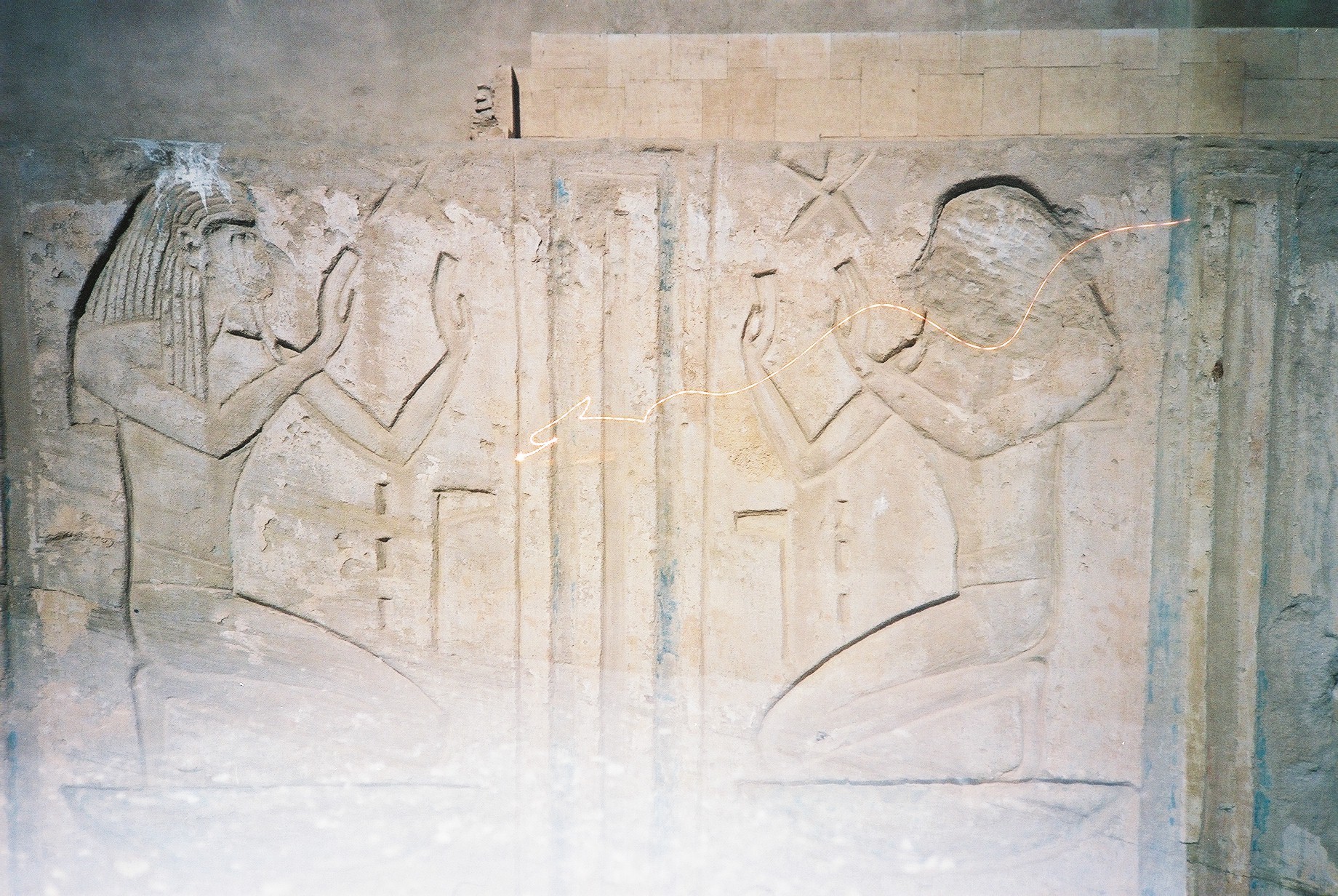
Carving in Egyptian Temple

If we want to understand the deep roots of our present environmental and spiritual crisis, we can find them in the loss of three important elements: the feminine image of spirit, the direct shamanic path of communion with spirit through visionary and shamanic experience, and the sacred marriage of the masculine and feminine aspect of the God-head and the Divine Ground…. The monotheism of the three Patriarchal religions has led to the situation today where the Earth is no longer viewed as sacred and we are confronted with the catastrophic effects of the loss of the Divine Feminine. (Anne Baring, pioneer of the Divine Feminine in our time, speaking on “Madonna Rises”, Ubiquity University, ZOOM program, August, 2020.)

Listening to this morning’s news on CBC Radio, Canada’s National Broadcaster, two stories caught my ear. The first was a report on the ice melting at a speeded-up rate in Antarctica, with a reference to the past month as the hottest June ever recorded “on Planet Earth”. My spirits rose. This was the first weather-related event I’ve ever heard spoken about as affecting our entire home planet. Have we finally understood we all share only one fragile, achingly beautiful, planetary home? That momentary euphoria was quickly replaced by news of yet another serious threat to the planet. With the justification of creating new technologies to offset planetary warming, mining companies are seeking freedom to pierce the deep seabed of the Pacific Ocean to access nickel and other minerals …

My body responded with a visceral knowing that this is wrong…

As out of control forest fires continue to ravage vast hectares of Canada’s forests, threatening air quality across North America, as rain creates flooding in the US East Coast putting nine million people under flood alert, we shake our heads and blame “Climate change.” Yet the “deep roots” that Anne Baring spoke of need to be understood if we are to survive as a species on Planet Earth. An Indigenous voice I heard on CBC Radio spoke of the real cause of the forest fire crisis in BC as a result of the forestry practices of “Clear cutting”….. Has no one warned us of this looming catastrophe?

Two years ago, the UN Secretary General Antonio Guterres said that we are sleepwalking our way into the destruction of our planet. For years David Suzuki on “The Nature of Things” has been telling us that what we do to our planet we do to ourselves. As early as 1988, eco-theologian Thomas Berry wrote: “Through human presence the forests of the earth are destroyed, fertile soils becomes toxic, and then wash away in the rain or blow away in the wind. Mountains of human-derived waste grow ever higher. Wetlands are filled in. Each year approximately ten thousand species disappear forever.”

Berry was clear that what was needed was “not simply adaptation to a reduced supply of fuels or some modification in our system of social or economic controls” but something far greater: “a radical change in our mode of consciousness. Our challenge is to create a new language, even a new sense of what it is to be human.” Berry’s words pierce our bubble of hope in new technologies to solve our problems: “(W)e are just emerging from a technological entrancement. During this period the human mind has been placed within the narrowest confines it has experienced since consciousness emerged from its Paleolithic phase.”

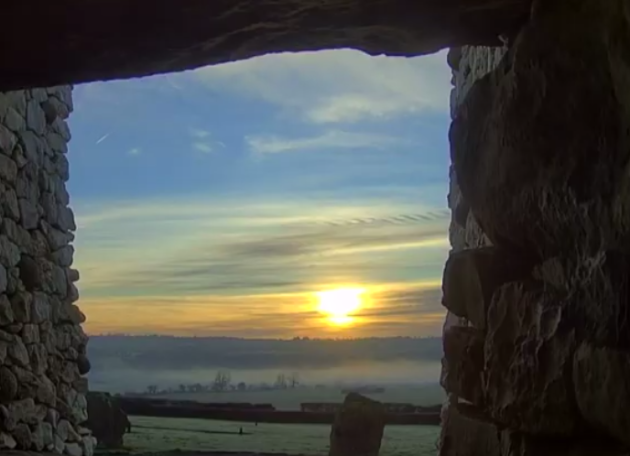
Winter Solstice at Newgrange , Ireland

Though we imagine humanity in our time to be vastly superior to earlier cultures, Berry noted, “Even the most primitive tribes have a larger vision of the universe, of our place and functioning within it, a vision that extends to the celestial regions of space and to interior depths of the human in a manner far exceeding the parameters of our own world of technological confinement.” In their celebrations of the seasons, of the earth’s natural rhythms, in creating spiritual centers “where the meeting of the divine, the natural and the human could take place”, our ancestors showed us how to live in partnership with our planet, not as its enemies and despoilers.

“What we need, what we are ultimately groping toward, is the sensitivity required to understand and respond to the psychic energies deep in the very structure of reality itself…This is the ultimate lesson in physics, biology, and all the sciences, as it is the ultimate wisdom of tribal peoples and the fundamental teaching of the great civilizations.”

Berry advised that we need to maintain “our intimate presence to the functioning of the earth community and to the emergent processes of the universe itself…. (t)he present situation is so extreme that we need to get beyond our existing cultural formation, back to the primary tendencies of our nature itself…”

Ecotheologian Thomas Berry

Thomas Berry, who died in 2009, did not leave us without hope: “(W) e are not left simply to our own rational contrivances. We are supported by the ultimate powers of the universe as they make themselves present to us through the spontaneities within our own beings….the universe is revealing itself to us in a special manner just now. Also the planet Earth and the life communities of the earth are speaking to us through the deepest elements of our nature.” (quotes from Thomas Berry in The Dream of the Earth: Our Way to the Future, Sierra Club, 1988, contained in the Foreword to The Dreamer of the Earth, Inner Traditions, Rochester Vermont, 2011, edited by Ervin Laszlo and Allan Combs)

Elinor Gadon, in her book, The Once and Future Goddess, as Anne Baring would later do, places at the heart of our present ecological crisis the loss of the wisdom of earlier cultures. In her closing chapter,The Promise of the Goddess: The Healing of our Culture” Gadon writes: “The taming of the Goddess under patriarchy led to the gradual erosion of sexuality, the cyclical regenerative powers of the cosmos…. The promised healing is that in honoring all that lives –women, the earth, its manifold creatures—we will no longer need to control, oppress, despoil our planet, to make war.

“We cannot—would not—wish to return to some golden prehistoric age, but in reclaiming our lost heritage we can build upon the values encoded in the prehistoric survivals. We do not have to look outside ourselves, outside our planet. What is needed is not new discoveries or technologies—only the willingness to change, to open up our hearts and honor what we already are.” (The Once and Future Goddess by Elinor Gadon, Harper Collins, New York, 1989)

Celebrating Julian of Norwich

On a February day in 1992 in the reconstructed anchorhold within the tiny Church of St. Julian in Norwich. I read : Thou art enough to me.

Looking back to that moment now, I wonder that I did not immediately turn around and exit by the door through which I’d just entered. Those five words struck me to the heart, challenging me to make a complete turn-around in my life, to let go of what I had until that moment considered necessary. I had left a place, a ministry. a friendship that had been the threefold source of my life’s happiness. Now I faced a future without all three. There was no way that I could accept that Julian’s unseen “Thou” could be enough.

I see now that I understood almost nothing of the One Julian addressed as “Thou” and even less of the meaning of “enough”. Yet in the year that followed, as I prepared to offer Julian’s words to others through James Janda’s play, I found the context for both:

For this is the loving yearning of the soul through the touch of the Holy Spirit, from the understanding which I have in this revelation: “God, of your goodness give me yourself, for you are enough for me, and I can ask for nothing which is less which can give you full worship. And if I ask anything which is less, always I am in want; but only in you do I have everything.” (Colledge and Walsh, Chpt. 5, p. 184)

Let’s look at the same passage in a different translation. Marion Glasscoe’s Julian of Norwich: A Revelation of Love is my personal favourite among the dozens of newer renderings of Julian’s “Showings” because it comes closest to the Middle English of Julian’s time (making my spell-check go into orbit!): For this is the kinde yernings of the soule by the touching of the Holy Ghost, as be the understondyng that I have in this shewing: “ God, of thy goodnesse, give me thyselfe; for thou art enow to me and I may nothing aske that is less that may be full worshippe to thee. And if I aske anything that is lesse, ever me wantith, but only in thee I have all.” (Glasscoe Chpt.5 pp.7-8)

Julian is not asking us to set aside our desires; she is not saying that to find God we must relinquish everything that we long for. Quite the opposite. Julian is saying that the deepest yearning of our souls will only be satisfied when we know the One who both made us to yearn and can alone fill that yearning. What Julian found for herself, she wants us to know:Only in you (the one to whom we entrust our longings) do I have everything, or in the Glasscoe translation: only in thee I have all.

This is a startling revelation for Julian, for each of us. As she says in Janda`s play:

Some of us believe that God is Almighty

And may do all,

And that God is All-Wisdom,

And can do all,

But that God is All-Love and will do all…..

There we stop short.

The second week of May holds two days that celebrate Julian of Norwich. A dispute over Roman numerals dating her night of visions of the Risen Christ led to this happy outcome: the Anglican Communion celebrates this amazing 14th century woman on May 8th (VIII) while the Catholic Church honours her on May 13 (XIII). ( I celebrate both!)

In her Revelations of Divine Love, Julian writes to us, her readers, as “kindred spirits.” How could she have imagined that it would be half a millennium before her writings became widely known!

Artwork of Julian by Jane Joyner

The Presence of Love that we in the 21st Century are coming to know as permeating all of life in the metaverse, as well as in the depths of our own souls, our very being, may be differently imaged for us than it was for Julian. Yet our experience of that all-pervading Love within our lives is very like Julian’s. However we name that Love, however we call upon it, we can know ourselves held safe in its embrace. Our deepest yearnings are for Love, for knowing our life has meaning, that we matter to that Love, that our longings are not only understood, but even prompted by that same Love. Our task then, is to journey within those longings to find how they are drawing us into the embrace of the One who can satisfy them, who can fill us with the kind of joy that might lead us one day to say with Julian: Thou art enough to me.

In that same passage, Julian goes on to say:

And these words of the goodness of God are very dear to the soul, and very close to touching our Lord’s will, for his goodness fills all his creatures and all his blessed works full, and endlessly overflows in them. For he is everlastingness, and he made us only for himself, and restored us by his precious Passion and always preserves us in his blessed love; and all this of his goodness.

(Colledge and Walsh, Chpt. 5, p. 184)

We know that, for Julian, the Love “that moves the sun and all the other stars” (as Dante writes) was contained in the person of Jesus. I trust that Julian would allow me to rephrase her references to “God” in the way I now understand the Presence of Love in its feminine form as Sophia, the one who tells us in the Hebrew Scriptures:

“Yahweh created me, when his purpose first unfolded;

before the oldest of his works….

The deep was not, when I was born;

there were no springs to gush with water….”

(excerpts from Proverbs 8 in The Jerusalem Bible)

Kathleen Duffy writes that Sophia “seeks to capture our attention as she peers out from behind the stars, overwhelms us with the glorious radiance of a sunset, and caresses us with a gentle breeze.”

(Sophia) wishes to be seen, and She wishes to be sought,

and She wishes to be expected, and She wishes to be trusted.

If we have a desire to honour Julian on her feast days, perhaps the best way is to grow in awareness of the Love that holds us, even as it held Julian as she lived through outbreaks of black plague, religious and political wars, and yet trusted in that Love. These are the first words I read from Julian, on that same visit in February, 1992: “He did not say: ‘You shall not be tempest-tossed; you shall not be work-weary; you shall not be discomforted.’ But he said, ”You shall not be overcome.’ God wants us to heed these words so that we shall always be strong in trust, both in sorrow and in joy.” (Enfolded in Love: Daily Readings with Julian of Norwich)

Bealtaine 2023

The Month of May, most beautiful of all the year, when flowers abound, trees put forth leaves and the air itself is perfumed, was originally named for the Goddess Maia. Other Goddesses in the Celtic, Greek and Roman traditions were also celebrated in May. In the Catholic Tradition May is known as the month of Mary, Mother of Jesus.

Veiled in Mystery, and yet nearer to us than we are to ourselves, the Presence of Love that we are coming to know as the Sacred Feminine wants to be found. “Wild Woman” leaves a trail for us to follow: Perhaps we found her tracks across fresh snow in a dream. Or psychically, we noticed a bent twig here and there, pebbles overturned so that their wet sides faced upwards …we knew that something blessed had passed our way. We sensed within our psyches the sound of a familiar breath from afar, we felt tremors in the ground…we innately knew that something powerful, someone important, some wild freedom within us was on the move.” (C.P. EstesWomen Who Run with the Wolves, Random House, New York, 1992, p.457)

Pursuing this presence, lured by her tracks, we come upon not thick books, but rather small hints: the story of a brief encounter, the way that someone’s life has been upturned into joy by her, powerful clues put together by the wise about the way She manifests.

One such small clue has been a beacon in my own search for years. Jean Shinoda Bolen, Jungian analyst, author of Goddesses in Every Woman, wrote of a moment in her own life. One of her patients had unexpectedly died. She was filled with grief that had to be kept under wraps while she attended to the needs of another patient:

No one supposed that I needed any comforting, including me, until this woman who was my analysand sensed something and reached out with compassion to ask if I was all right. And when my eyes moistened with sudden tears, she broke out of role, got out of the patient’s chair to come over to mine, and held me. At that moment, I felt a much larger presence was there with the two of us. When this woman put her arms around me, I felt as if we were both being cradled in the arms of an invisible, divine presence. I was profoundly comforted and felt a deep ache in the center of my chest. This was before I had ever heard of a heart chakra, which I know now opened widely then. I now also know that this is a way that the Goddess (of whom I had no inkling) may manifest. It differed from the mystical experience I had had of God. Then, no other human presence was necessary… Here, in contrast, the compassion and arms of a woman were the means through which a numinous maternal presence was felt….

I now think of this profound moment as a Grail experience in which the Goddess was the Grail that held us. This, and what others have told me about their experiences of the Goddess in their lives, has made me think of the Goddess as a nurturer and comforter whose presence is evoked through human touch.

After recounting experiences of other women with whom she had been leading rituals and meditation, Bolen concludes: In these moments, when each of us felt held in the arms of the Mother Goddess, a compassionate woman mediated the experience, leading me to understand that this feminine divinity comes through the body and heart of a human woman, created in Her image. (Jean Shinoda Bolen, Crossing to Avalon, Harper Collins, New York1994(73-74, 77)

Almost 20 years after Women Who Run with the Wolves was published, Clarissa Pinkola Estes brought forth a new book: Untie the Strong Woman, SoundsTrue, BoulderColorado, 2011. The powerful mysterious feminine presence is seen by Estes as aligned with titles and qualities given in the Christian story to Mary, yet part of a much longer heritage.

In her opening paragraphs, Estes traces the lineage of THE GREAT MOTHER:

She is known by many names and many images and has appeared in different epochs of time to people across the world, in exactly the shapes and images the soul would most readily understand her, apprehend her, be able to embrace her and be embraced by her.She wears a thousand names, thousands of skin tones, thousands of costumes to represent her being patroness of deserts, mountains, stars, streams and oceans. If there are more than six billion people on earth, then thereby she comes to us in literally billions of images. Yet at her center is only one great Immaculate Heart.

Since we staggered out of the Mist eons ago, we have had irrevocable claim to Great Mother. Since time out of mind, nowhere is there a feminine force of more compassion and understanding about the oddities and lovability of the wild and wondrous variations to be found in human beings.

Nowhere is there found a greater exemplar, teacher, mentor than she who is called amongst many other true names, Seat of Wisdom.(C.P. Estes, Untie the Strong Woman, 2)

The Memorare, an ancient prayer calling on Mary in time of need, was learnt by many of us as children. It takes on richness and depth in this adaptation by Estes:

Have you forgotten? I am Your Mother. You are under my protection.” There is a promise Holy Mother makes to us, that any soul needing comfort, vision, guidance, or strength can cry out to her, flee to her protection, and Blessed Mother will immediately arrive with veils flying. She will place us under her mantle for refuge, and give us the warmth of her most compassionate touch, and strong guidance about how to go by the soul’s lights. (Untie the Strong Woman, inside cover)

How might our lives be different if we remembered,

if we then trusted in this promise?