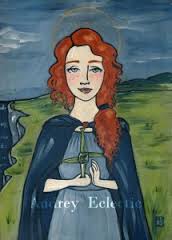
Category Archives: Brigid as Face of Sacred feminine

Brigid: Wise Guide for Spiritual Seekers

February 10, 2025

Brigid’s Day is celebrated on February 1st, the ancient Celtic Festival of Imbolc . Known as the one who ”breathes life into the mouth of dead winter,. Brigid has left us no written word. Her earliest biography was written a hundred years after her death by Cogitos, one of the monks of Kildare, the double monastery where Brigid was Abbess of both men and women in fifth century Ireland.

Brigid of Ireland

Ireland is a land of story. The stories woven through and around Brigid’s life are interlaced with the stories of the Ancient Goddess Brigid so that the two have come to be one sacred archetypal presence. This is best illustrated in words overheard a few years ago at a ceremony at Brigid’s Well in Kildare: “Sure and wasn’t she a goddess before ever she was a saint.”

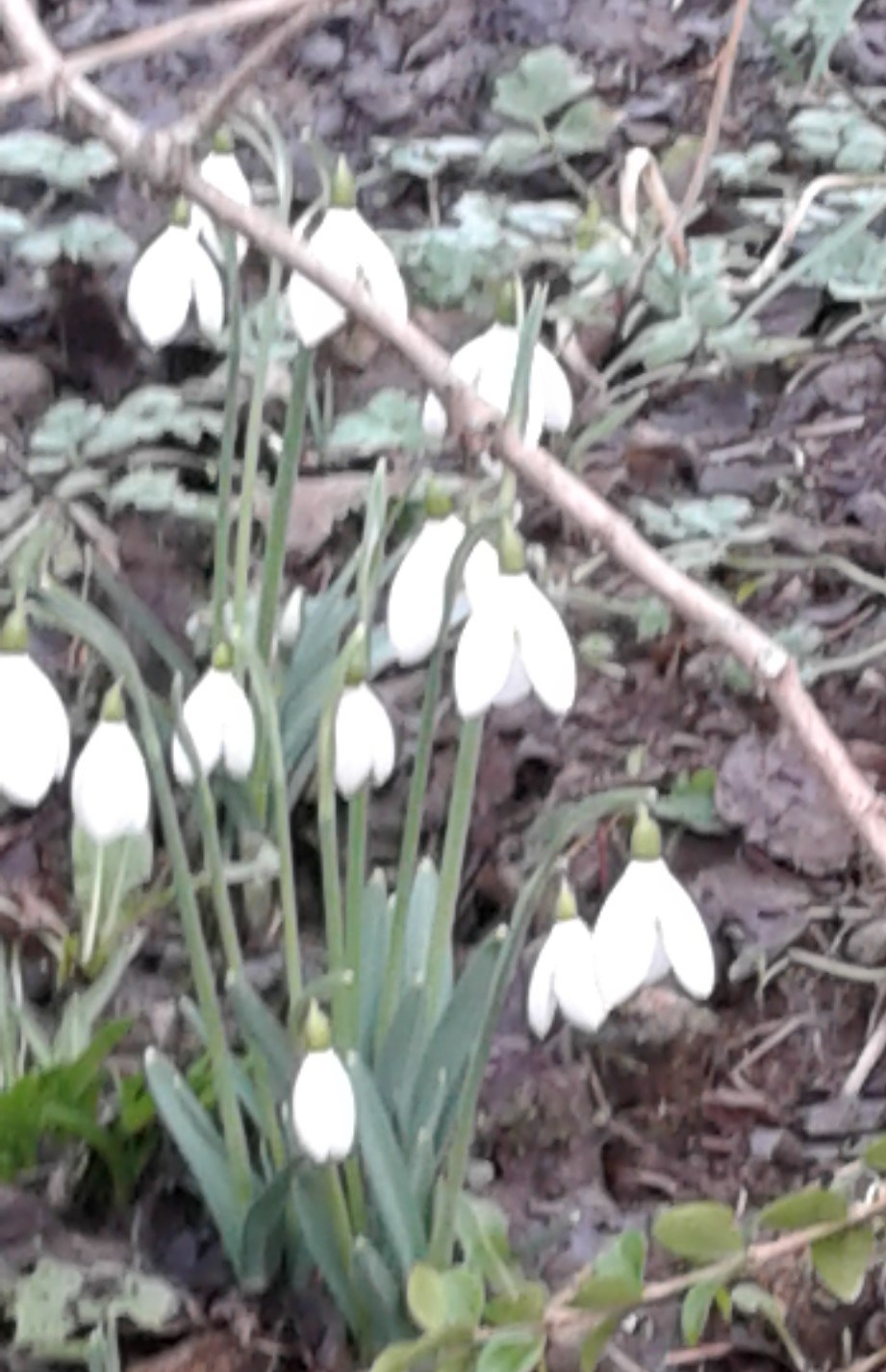
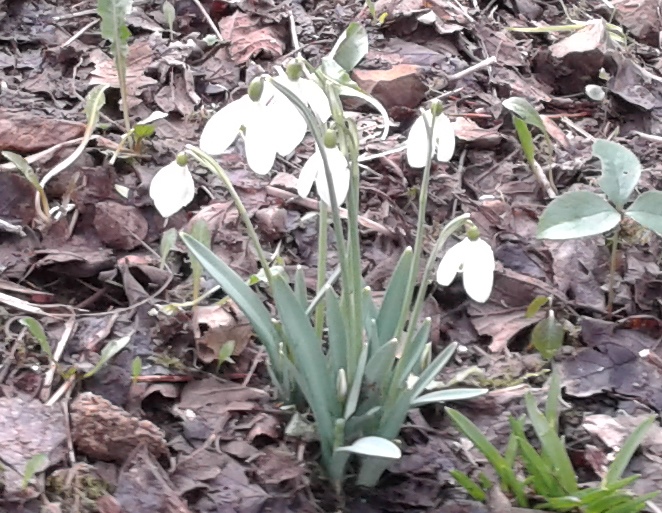
                                                                                                                                                                                                                                                                              In the winter of 2018, I was in Ireland for Imbolc, the Feast Day of Brigid.  Staying in the home of Dolores Whelan, I found in her garden small snowdrops blooming For a Canadian, such flowers in late January appeared miraculous.

snowdrops for Brigid’s Day

Dolores, who is my primary teacher in the ways of Brigid, showed me the hill of Faughart, clearly visible from the upper story window of her home. Faughart is known in legend as the birthplace of Brigid. I had the joy of being present at the Oratory in Faughart on February 1st, Brigid’s Day, for a Ritual of Music and Readings.

In her article, “Brigid of Faughart – Wise Guide for Modern Soul Seekers”, Dolores Whelan writes of coming to know Brigid:

Faughart, near Dundalk ,Co Louth, Ireland is an ancient place filled with a history that is both gentle and fierce. It is a place associated with battles, boundaries and travel. The Sli Midhluachra, one of the five ancient roads of Ireland, runs through the hill of Faughart on its way from the Hill of Tara to Armagh and then to the north coast of Ireland, making it a strategically important place.

However, Faughart is also a place of deep peace, tranquility, beauty and healing, being associated from ancient times with Brigid, Pre-Christian Goddess and Christian Saint. Brigid holds the energy of the Divine Feminine within the Celtic Spiritual tradition. Faughart is the place associated with Brigid, the compassionate woman who heals, advises and nurtures all who come to her in times of need.

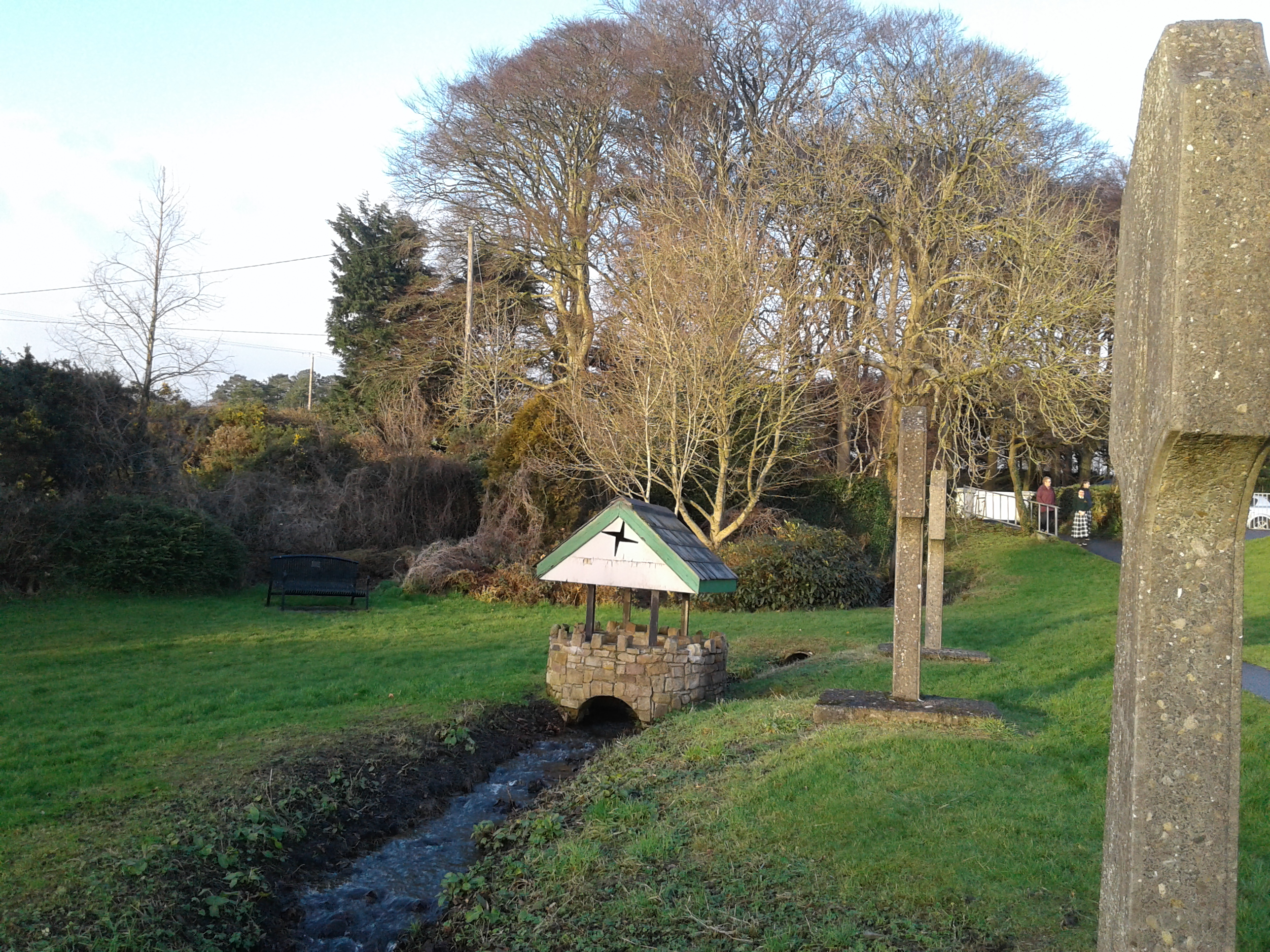
People are drawn to her shrine at Faughart because of the deep peace they experience there. Brigid’s peaceful presence can be experienced in this landscape where the ancient beech trees radiate old knowledge and hold a compassionate space for us all.

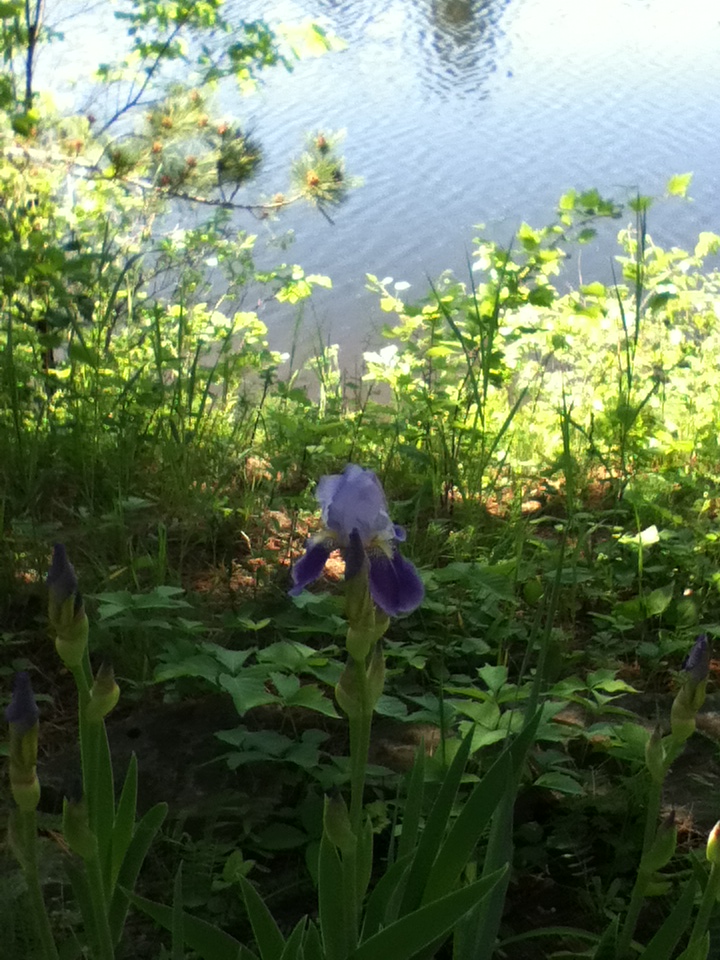
land, trees, water near Brigid’s Shrine, Faughart, Ireland

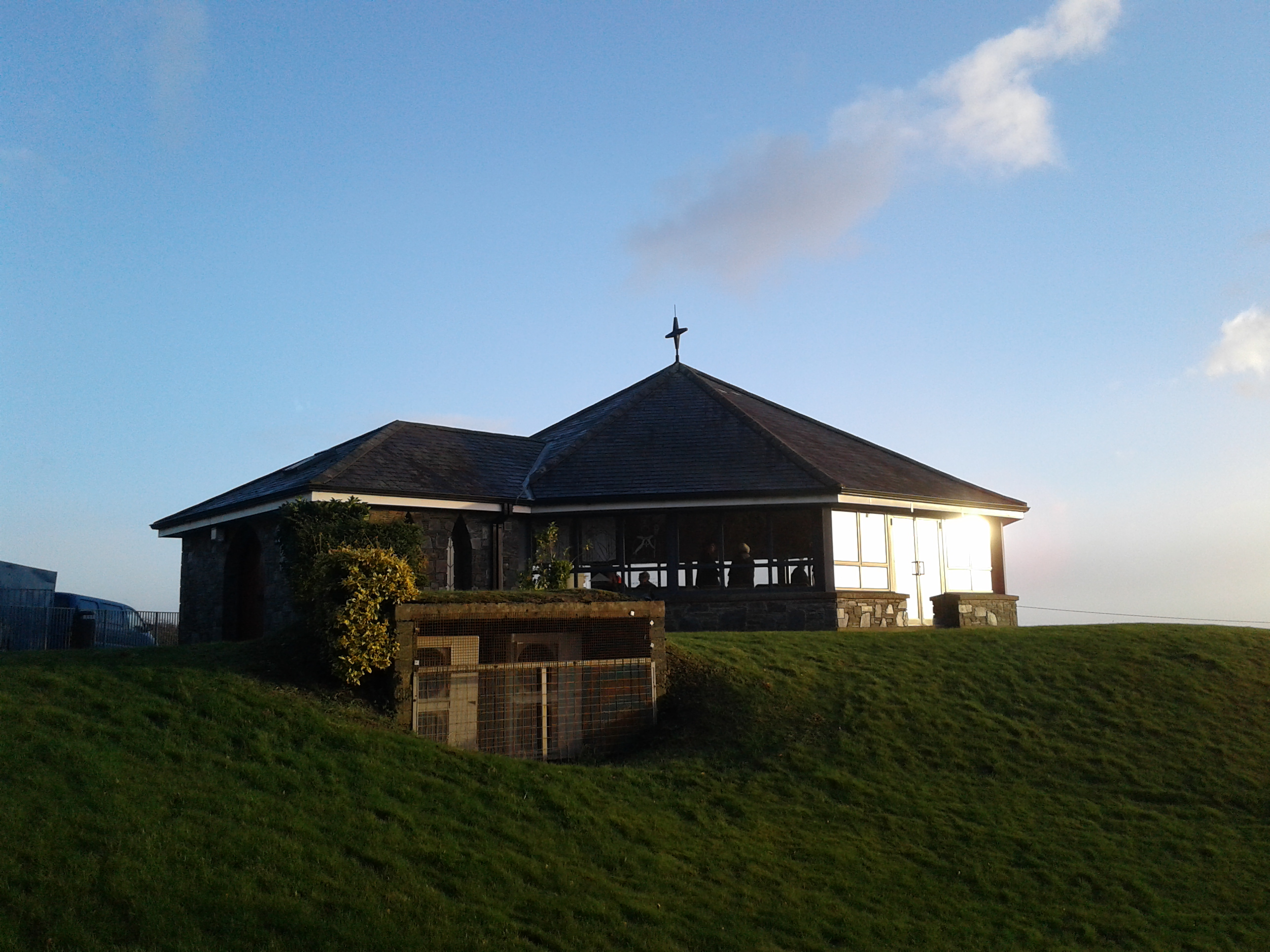
On La feile Bhride (Feb 1st) people come in their multitudes! On this special day the shrine at Faughart is thronged with pilgrims who come to invoke Brigid’s blessing on their emerging lives. Brigid is associated with springtime and new life emerging. She is the one who “breathes life into the mouth of dead winter.”

Shrine at Faughart on Brigid’s Feast

I first went to Faughart in 1992 and was amazed by the beautiful energy present there. At that time, I had begun to study the Celtic spiritual tradition, something from which I and so many other people had been disconnected over many centuries. My quest at that time and since then has been to recover some of the riches and wisdom of that ancient tradition. And to ask the question:  “How could this wisdom be integrated into the lives of us modern humans in ways which would create a more balanced and peaceful life for all of the beings on planet Earth”?

While at Faughart in 1992 something deep and ancient stirred in my heart and I have been on a journey with Brigid ever since. In 1993 I went to The Brigid Festival in Kildare, organised by Mary Minehan, Phil O’Shea, and Rita Minehan (Solas Bhride). At this festival these women, in a daring Brigid-like action, re-kindled the flame of Brigid in Kildare. The flame of Brigid had been quenched at the time of the suppressions of the monasteries around the 12th century.

As this took place an ancient part of my soul understood the significance of this prophetic act. My journey into the Celtic spiritual tradition changed and evolved over time, becoming a deeply significant part of my life’s purpose.

It is said that from the moment Brigid learned to know God that her mind remained ever focused on God/Divine. This allowed her to remain connected to God and the heavens while living on the earthly plane. Her great power of manifestation was a result of this ability to be aligned heaven to earth. The strong connection between her inner and outer worlds allowed her to focus her energy onto a particular intention so clearly as to ensure its manifestation in the physical world.

Brigid had the capacity to bring forth new life, to nourish, to create plenty in the crops or an abundance of the milk from cows, and to manifest or create ex nihilo. This gift reflected the true abundance and prosperity that was present in the society she created, a society living in right relationship with the land. Her life and work thrived due to her deep trust in life and because there was a total absence of fear within her.

Slowly, I began to understand that Brigid, the Pre-Christian Goddess and Celtic Christian saint who lived in the 5thCentury in Faughart and Kildare, who embodied wonderful qualities of compassion, courage, independence and spiritual strength was not only a historical figure! I realised that those energies and qualities exemplified by her in her lifetime are still alive in the world and available to me and to all humanity. What a gift it was to realise this! And so the task became how could I access those qualities in myself, embrace them and use them to challenge the dominant thinking of our culture and become like Brigid, a catalyst for change in society.

Brigid challenges each of us to have that same courage; to live our lives with the passion and commitment that comes from trusting our own inner truth and living the integrity of our unique soul journey. She invites us, like her, to breathe life into the mouth of dead winter everywhere we find it in ourselves and in our society. She represents for me the spiritual warrior energy reflected in this ancient triad “The eye to see what is, the heart to feel what is, and the courage that dares to follow.”

Deep thanks to Dolores Whelan for this compelling, insightful reflection on Brigid’s gifts for our time.

To read more from Dolores, go to her website: http://doloreswhelan.ie

Coming to Know Brigid in the 21st Century

Brigid, once only a name to me, has becomes a wise and loving companion, one to whom I turn morning and evening for light and guidance in my life. This fifth century Irish Saint, Abbess of a Monastery in Kildare where men and women lived a consecrated life, first began to interest me when I read Dolores Whelan’s book Ever Ancient, Ever New: Celtic Spirituality in the 21st Century (The Columba Press, Dublin 2006), Dolores writes of Brigid’s ability to manifest abundance, of her generosity and kindness. In these qualities, sometimes shown in miraculous ways, Brigid continues the tradition of loving actions manifested by the pre-Christian goddess Brigid.

Legend says Brigid’s mother gave birth to her on the doorstep of her home, so that Brigid has became known as a threshold person, able to see both sides of an issue while remaining aligned within. Her capacity for peacefully resolving conflicts is a frequent theme in the stories told of her.

Dolores writes that Brigid “has the ability to stand in the gap and remain centred within the uncertainty present in the outer world.” Further,“being centred and aligned with ones deep inner knowing is a quality that each of us can and must develop at this time.” (72)

Another strong gift of Brigid is her capacity for focus. Brigid is said to have told St. Brendan: “Since the first day I set my mind on God I have never taken it away from him and I never will.” (73)

Through Dolores’ writings, I have come to know that Brigid’s qualities are not meant not only to inspire. They are meant to be imitated. Gradually, as I begin to take her way of being into my life, Brigid is becoming a real and active presence for me.

When in February 2014, I invited Dolores Whelan to come to Canada to offer a weekend session on Brigid at Galilee Centre in Arnprior, I met a woman who consciously embodied Brigid’s qualities. When a scheduling conflict arose, Dolores refused to have our weekend plans sidetracked to accommodate another agenda. “I’ve had a Brigid moment,” Dolores told me as she declared we would stay with the planned schedule. “That’s what these women (our 21 participants) have come for.”

In February of 2018, I travelled to Ireland to celebrate the Festival of Brigid. I stayed in Dolores’ home and was enchanted to see, on February 1st, snowdrops blooming in Dolores’ front garden.

?????????????

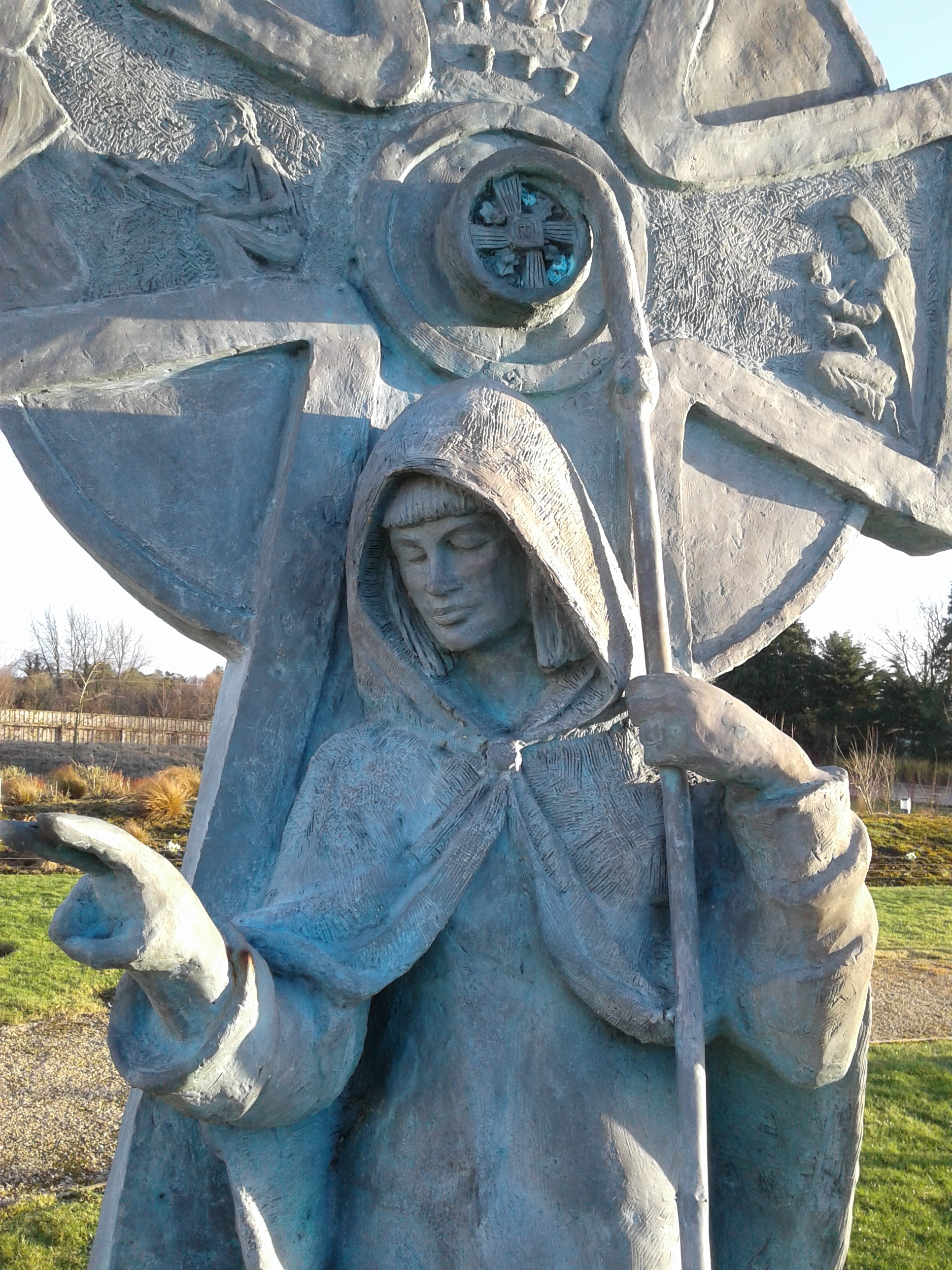
While in Ireland, I visited the beautiful Solas Bhride Centre outside Kildare. I stood before an enormous stone statue of Brigid, her hand raised to signify a Bishop’s Blessing.. I had to bend backwards to look up at her face as I asked her to guide my work in Spirituality. I was deeply moved to hear within me her words of response, as her hand, raised in blessing, seemed to gesture me onwards: Keep on your journey. Go on with your work. Don’t look back.

Brigid’s words continue to inspire me. They goad me on with my writing, my work of teaching, leading retreats and workshops on Spirituality. I continue to make Brigid’s inspiration known through my book “Singing the Dawn” (Borealis Press, 2022). http://www.borealispress.com/BookDetail/rid/1137/Singing%20the%20Dawn

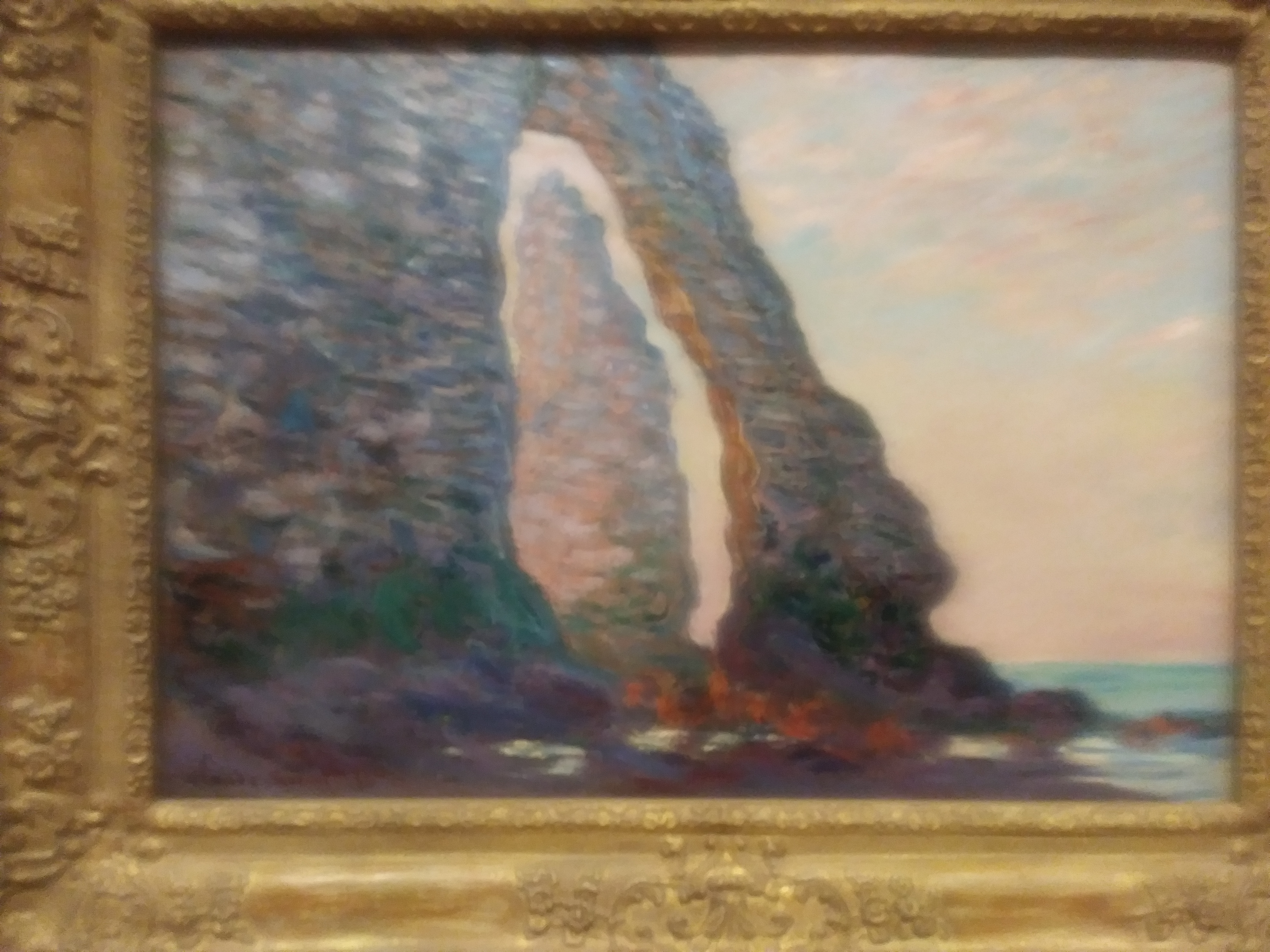
Cover image for “Singing the Dawn” : “Rock Needle Seen through the Porte d’Aval, Etretat, 1886 by Claude Monet
photo from National Gallery of Canada by Anne Kathleen McLaughlin

This novel celebrates Brigid’s inspiration for 21st century women who live in the light of her qualities.

For the past year I have had the grace of spending time each morning and evening with a set of sound recordings:“Healing Journeys with Brigid” created through the voice and violin of Kate Fitzpatrick. https://mythicvoice.ie/brigids-light/

I met Kate in 2018 while I was in Ireland. I find her guided meditations a wonderful way to come close to Brigid who has become a practical support in my daily life. For example, when I requested her help with an Internet breakdown last week, a snow-covered Bell Technician was at my door to repair the outdoor cable and restore my Internet connection within hours of my call for help. Now, that is miraculous!

Yet, Brigid’s guidance goes deeper. During a time of uncertainty, I heard Brigid counsel me to “focus on Sophia.” At times her clear guidance shows me where I have lost direction, or how to seek reconciliation within a difficult relationship, or to offer support to someone struggling.

Revisiting notes I made after working with Kate Fitzpatrick’s visualizations with Brigid, I read:

“Following a wakeful night, I allow Brigid to cleanse my heart, pouring. water over me from the stream that flows beside her. Brigid suggests that rather than blaming myself for taking on too much work, I might focus on how to recover energy after these experiences. Brigid’s advice brings memories of days I spent in Julian’s rose garden in Norwich, resting in beauty and peace after performing the play Julian.”

What I am now experiencing in this quiet companionship with Brigid is the healing I need: a practice of going into stillness before I begin an important task, so that my breathing, my heartbeats, my body become calm..Then I begin my work in a state of deep listening.

This mysterious and loving companionship is one I am coming to recognize as an aspect of Sophia, the Sacred Feminine Presence, to whom my life is consecrated.

Brigid: Midwife for Planetary Rebirth -3

by Dolores Whelan

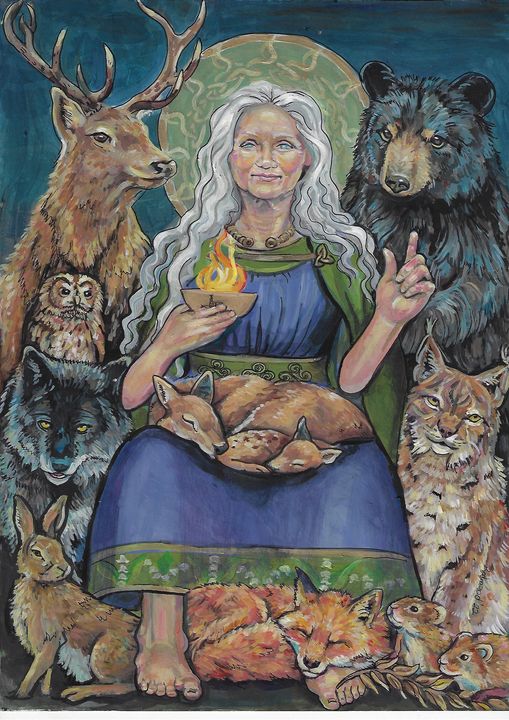
artwork by Andrea Redmond

A story from the Celtic tradition that illustrates the importance of the cailleach and her energy is the story of Niall of the Nine Hostages. Niall and his four brothers come to a well to get a drink of water. The well is being guarded by an old woman who represents the cailleach or hag. When the first brother goes to the well, she tells him that if he wants to drink the water, he must give her a kiss. He is horrified and refuses; she sends him away. The other three brothers go in turn on the same errand, and each refuses to kiss the hag. As the story goes:

Then it was Niall’s turn. Faced with the same challenge, he kissed the old hag and embraced her. When he looked again, she had changed into the most beautiful woman in the world. “What art thou?” said the boy. “King of Tara, I am Sovereignty . . . your seed shall be over every clan.”i

This story suggests that in order to have access to the life-enhancing energy represented by the water in the well, it is necessary for the young masculine to embrace this particular and perhaps unattractive aspect of the feminine energy. Why is this so? The cailleach represents the wisdom gathered by living in right relationship with the earth, something that requires reflection, stillness, and attentiveness. It knows more clearly what is needed and what is possible in each situation, and it is aware of the consequences of particular actions. It knows how to proceed slowly; it understands the value of times of waiting and times of allowing. It knows how to be and how to act.

So how can we, you and I, begin the journey back towards wholeness and balance?

Brigid in her cailleach form can help us to embrace these difficult and fearful aspects of our lives. The cauldron, a central image in both the Celtic and other traditions, is a vessel for transformation and transmutation. In many stories, the cauldron is first filled with unpalatable raw things, which then are used to create a nourishing soup using the transforming energy of the universe through the action of fire and water. The transformation of the contents of the cauldron is supervised by the cailleach energy, which works inwardly, quietly, and slowly to bring about an unforced and timely rebirth. The transformation of the cauldron’s contents concentrates their essence and offers them back in a new and more suitable form. From this process, we learn that the possibility of transformation and re-birth always exists, no matter how devitalised something appears to be. A new rebirth can be achieved when we submit ourselves and our concerns to the inward and slow transformational energy of the cauldron and the cailleach.

Philosopher Richard Kearney in his poem Bridget’s Well speaks of the importance of this inward and downward journey and suggests that it is the only way to access the life- giving and inspiring fire of Brigid that lies underneath the water.

“I will rest now at the bottom of Bridget’s well

I will follow the crow’s way

Footprint by footprint

In the mud down here

I won’t come up

Until I am calmed down

And the earth dries beneath me

And I have paced the caked ground

Until smooth all over

It can echo a deeper voice

Mirror a longer shadow” (2)

This poem suggests the importance of that deep journey to the well where the source of new life and the fire of passion is found. At Imbolc (Feb 1st) the tiny spark of new light discovered in the deep womb darkness of the winter solstice has grown sufficiently to safely emerge from that inner world and begin to transform winter into spring !

At this time Brigid appears as the fresh maiden of springtime emerging from the womb of the cailleach, queen of winter. Here Brigid embodies the energy that breathes life into the mouth of dead winter. The energy of Brigid at Imbolc is the energy of Yes, and it can only emerge from the place of stillness!

Brigid is also closely associated with the life giving aspect of fire, a fire that doesn’t burn but which can never be fully quenched. When this fire comes from a clear and deep space, as happens following the inward journey, it will be significant and filled with truth and potency. This life-giving fire will act within in individuals, within the land, in the relationships between the people and their land, fanning the fires of creative endeavour so that all of life forms can partake in the symphony of new life emerging each springtime! The fire discovered through this deep journey is an inner light which guides each of us to find our next step!

Richard Kearney in his poem “Brigit’s Well” also speaks of the re-emergence of a new fire born of a deeper place within

“Then the fire may come again

Beneath me, this time

Rising beyond me

No narcissus- flinted spark

Behind closed eyes

But a burning bush

A fire that always burns away

But never is burnt out” (3)

I believe that the archetypal energy of Brigid, the embodiment of the divine feminine, present within the essence of the Celtic tradition has the capacity to lead and support us in transforming the present wasteland into a new life sustaining society. For this to happen, it is necessary for us to understand that the archetypal energy that Brigid represents is a real aspect of the human psyche, one that has been largely dormant over the past few hundred years, but is now re-emerging. Each of us can become keeper of the Brigid flame by developing and living those qualities and values that distinguished her. As we align ourselves with her archetypal energies, she supports us courageously and safely to face the demons of this time. She teaches us how to stand still in a wobbling world, to act as a unifying force, to hold the space of possibility and so become agents of transformation. So we ask for

“The mantle of Brigid about us

The memory of Brigid within us

The protection of Brigid keeping us from harm from ignorance,

from heartlessness this day from dawn till dark” (4)

When we embrace her energy Brigid will hold us and guide us through this transition. I believe she is the one who has the power to awaken in each of us “An eye to see what is, the heart that feels what is, and the courage that dares to follow.” (5)


Footnotes for Parts 1-3:

1 Amergin Jan de Fouw Amergin Wolfhound Press Dublin 2000

2 Richard Kearney quoted in Stephen J. Collins The Irish Soul in Dialogue the Liffey Press Dublin 2001 p 147

3 Richard Kearney quoted in Stephen J. Collins The Irish Soul in Dialogue the Liffey Press Dublin 2001 p 147

4 Poem source unknown

5 Celtic triad found extensively in the literature

Brigid: Midwife for Planetary Rebirth-2

As we consider the qualities embodied by Brigid as reflected in the stories of her life as abbess of Kildare Ireland, it is obvious that these qualities are similar to those present in her incarnation as pre-Christian goddess.

Brigid by Jo Jayson

Brigid is considered a threshold person, one who can straddle both sides and remain detached. This quality, which is central in her life, is highlighted in the stories of her birth, which attest that she was born on the threshold of the house, neither within nor without; that her father was a noble man, her mother a slave; and that he was a pagan, her mother a Christian. From her origins, she has this ability to stand in the void and remain centred within it, while holding the creative tension between two opposite perspectives. Many stories from her life portray her as a person capable of resolving conflicts in a healthy manner. Being centred and aligned within herself, she is detached and can grasp the energies of both sides clearly thereby facilitating a resolution. She has the ability to stand still and remain focused, in spite of the uncertainty present in the outer world.

As a child and a young woman Brigid constantly challenged the accepted norms of her society, especially those expressed by her father when they opposed to her own values. This reflects Brigid as a person who lives her life from a place of deep inner knowing and inner authority.

She also refused to marry any of the suitors that her father arranged for her, because she had chosen a different life path and destiny. She would not compromise her soul journey!

Brigid’s generosity is legendary and is related in numerous stories of her giving away food and clothes to people who came to her monastery or whom she met along the way. This generosity was, it seems, based on her absolute faith in the abundance of the universe to provide all that was needed in each moment. Each time she gave away the butter or meat needed for the next meal it miraculously reappeared in time for that meal!

Brigid’s capacity to bring forth new life, to nourish, to create plenty in the crops or an abundance of the milk from cows, and to manifest or create ex nihilo is a reflection of the true abundance and with the prosperity of the society, living in relationship with the land , created by her. Her life and work thrived because of her deep trust and an absence of fear.

It is said that from the moment Brigid learned to know God her mind remained ever focused on God. She remained connected to God and the heavens while living on the earthly plane. Her power of manifestation was a result of this ability to be aligned heaven to earth. The strong connection between her inner and outer worlds allowed her to focus her energy onto a particular intention and ensure its manifestation.

The story how Brigid got the land for her monastery in Kildare is a wonderful example of her ability to manifest what is needed. She states clearly what she needs and asks the local lord for land. First he refused but she is not deterred by this. She pursues her request in a different way by asking “Give me what land my mantle will cover.” He says yes! When she placed the mantle on the ground it grew until it covered enough land for the monastery .This reflects a woman who can hold her intention clearly, even when on the surface it seems that her request will not be met!!

These inspiring stories of Brigid relate to her active life in the world, where she embodies and live true spiritual power!

But what and where is the source of this power?

To fully understand the power and the qualities that Brigid embodied, as reflected in the many stories about her life, we need to begin with an exploration of the role of Brigid as Cailleach, the aspect of the Divine Feminine that rules during the season of Samhain (winter) at the beginning of the Celtic year. This I believe is the wellspring from which Brigid’s power manifests in the world emerges.

What then is the energy associated with the hag, crone, or cailleach aspect of the divine feminine? The cailleach is the embodiment of the tough mother-love that challenges its children to stop acting in destructive ways. It is the energy that refuses to indulge in inappropriate personal or societal dreams. It is the energy that will bring death to those dreams and fantasies that are not aligned with our highest good. Yet, this cailleach energy also will support the emergence and manifestation in the world of the highest and deepest within us. It will hold us safely as we embrace the darkness within ourselves and our society. It is an energy that insists that we stand still, open our hearts, and feel our own pain and the pain of the earth. This is the energy that teaches us how to stay with the process when things are difficult. This energy will not allow us to run away!

Her way of being is a slow, inwardly focused way, with minimum outward activity: a way that values times of active waiting that pays attention and allows life to unfold.

An essential part of the journey that all the great heroes and heroines in world mythologies undertake includes facing and embracing the energy of surrender, darkness, and death. The hero or heroine learns the next step required in their outer world journey only by submitting to and being initiated into the dark world of the cailleach.

Through this initiation the mature masculine power can emerge and lead each one to find their true path. When this happens the action that follows will be in the service of the true feminine and bring forth wisdom and compassion creating new life, vitality, and sustainability. However because western society is currently dominated by the young masculine energy, present in both men and women, characterised by its “can do” attitude, there is an urgent need for each of us to make this heroic journey with the cailleach, so that we will become agents for the transformation of our society.

Introducing Singing the Dawn

by Anne Kathleen McLaughlin Published by Borealis Press

Why Would you Read it?

You hold a book in your hands, one you’ve not yet opened. You feel a tingling anticipation as you prepare to enter a story, a setting with imaginary characters. What are you seeking? Will an action, an insight, a decision of one of these characters shed light on your own unanswered questions about life? Will there be something that responds to the longings in your heart?

As a young woman, wondering where my life was leading, I read Charlotte Bronte’s Jane Eyre. I still recall my astonishment at her habit of taking solitary walks where she pondered her life’s path. After a time of great suffering and loss, Jane was offered security in a loveless marriage to an idealistic clergyman who needed a wife for his missionary endeavours. After taking time to consider, Jane refused his offer. I still hear her words: “No, I cannot marry you. I have been loved.” I knew even then that Jane’s wisdom, her sure knowing, came from within her.

Through the next decades of my life, I explored inner wisdom, discovering through sources such as the writings of women mystics, feminist theologians, ancient stories, indigenous wisdom and Celtic Spirituality, the inner journey to wisdom.

Singing the Dawn is my way of sharing what I’ve come to know of this journey, guided by the Love that pervades the Universe and dwells within each of us.

I began with the questions: What if a seed survived from Brigid’s fifth-century monastery in Kildare, Ireland? What if that seed was planted in the ninth century by a follower of Brigid on an island off the west coast of Ireland? What if that seed grew into a Communion of Women that still exists today?

The story begins when a young woman from Canada, soul-starved for a spirituality that honours the wisdom of the natural world, embodied feminine wisdom, and her desire for self-fulfillment, is mysteriously drawn to this island beyond the ninth wave. Will she find what she longs for among these seven women each with her own tale of allurement to the Communion of Star of the Sea?

Singing the Dawn is a fictional tale offering soul nourishment for women as well as men who share these longings.  It is published by Borealis Press in Ottawa, Canada

http://www.borealispress.com/BookDetail/rid/1137/Singing%20the%20Dawn

Comments from Readers

This fascinating, intriguing and heart-warming tale of the return of the feminine Sophia…(puts) into words what I only intuited so many years ago, (bringing) home the drastic results that occur when the feminine is forgotten, ignored… Mother Earth is yearning to be recognized and revered as a sacred blessing in our time. Your story… is so timely and so needed today. Its publication will be a blessing and a healing for the future life of our planet and indeed, the entire universe. The Sacred Feminine has accompanied and led you in all the labyrinthine ways of your life story. Others now will be blessed and encouraged to be attentive to her Sacred Presence in their lives. Kathleen Lyons CSJ

I like how you handle the “overlap” of the magical islands…with glimpses of the “outer world” mentioned in quite realistic details: how supplies are brought in, the internet mentioned somewhere, Ohn’ya’s reflections on past memories.  It deepens the sense of wonder and mystery! I find Ohn’ya’s evolution believable and compelling in its unfolding through her varied experiences here on Rose’s island… you leave us/me desiring to know what the next step will be for Ohn’ya in her journey….though she’s reached a place of greater self-awareness.   Carol (Northeast New York State)

I am writing to you thru tears as I read again, and anew, your “Singing the Dawn.” It is beautiful. It flows like living waters.….(T)he narration of finding, being welcomed, by an image of divine in human form and being offered a drink of that living water spoke to the part of me that seeks to have such clarity of connection to the divine in all….the circle of women proclaiming their Source of living waters… there are many tributaries in my own life that I could write my story around — and it is a gift to recognize that, and be called to honor those flowing waters as I read your writing.  Gaynell (rural Connecticut)


I’ll pour myself a cup of mint tea, bake a little salmon with greens, saving the scone for later. I have enjoyed many meals, sunrise, sunsets, swims with Onya and the women. Your art as a writer WEAVES a tapestry calling forth all the senses. Along the way I am sensing a transformation…as your being becomes the loom, “A place where harmony dwells.” Singing the Dawn is a great myth, calling our aspects (in)…You have woven a wondrous tale. Suzanne (Chicago)

I am enjoying your book so much. It takes me to a calm place during a time that is filled with chaos, isolation and uncertainty.               Colleen (Ontario, Canada)

I felt I had stepped into another place and time as I entered the story. A place where I wanted to remain. I felt comforted by reading of not feeling the presence of the Lady for periods of time. I know how that feels. When I read your words I feel embraced. (Rosemary, Croton on Hudson, New York)

Through retreats, workshops, stories and plays, Anne Kathleen McLaughlin works with women who are seeking to discover the pattern of the Divine woven into the tapestry of their everyday lives. Her novels A Place Called Morning (2001), Planted in the Sky  (2006) and  Called to Egypt on the Back of the Wind (2013) are published by Borealis Press, Ottawa, Canada.  http://borealispress.com

A member of the Community of the Grey Sisters in Pembroke, Canada Anne Kathleen holds a Master’s degree in Religious Communication /Pastoral Studies from Loyola University in Chicago.

Women Rising Rooted

Brigid of Faughart Festival, Ireland, 2018

If we surrendered

to Earth’s intelligence

we could rise up rooted,

like trees.

(Rainer Maria Rilke)

At the end of a frigid Canadian January, I have come to Ireland for Brigid’s Festival of Imbolc, the day that welcomes spring. Brigid is the one who “breathes life into the mouth of dead winter”. In the front garden of my friend, Dolores Whelan, I see snowdrops….

Snowdrops Bloom for Brigid’s Day in Ireland

From a window on the upper floor; Dolores shows me the Hill of Faughart in the distance, aligned with her home. Birthplace of Saint Brigid, 5th c. Abbess of the Monastery in Kildare, Faughart is ancient in memory, a place where the goddess Brigid was honoured in pre-Christian Ireland.  Brigid’s Festival honours both saint and goddess. In the days that follow they merge in my awareness, become intertwined, embodied in the fiery women whom I meet: Dolores and the volunteers who planned the events of the festival as well as the presenters, attendees, poets, artists, dancers, singers, writers… each aflame.

I listen as they tell their stories, either as a formal part of the festival’s program or casually in conversation over coffee or a meal, or in a pause between sessions.

I listen as Sharon Blackie tells the story recounted in her book If Women Rose Rooted (September Publishing 2016). With a PhD in Neuro-science Sharon found herself in a corporate job where her inner self was dying. Through a labyrinthine journey, one she describes as the feminine form of Joseph Campbell’s “Hero’s Journey”, Sharon followed the lure to the west of Scotland and Ireland, living on land near the sea where her soul finds a home.

I walk through Una Curley’s art installation of her own “Camino Walk”, her story of walking away from a life of successfully functioning in a corporate position that left her empty inside. Una chose instead the uncertainty and bliss of life as an artist. Una says the way to begin is to tie a piece of thread to a rusty nail and let the life you have designed, the life that no longer serves your soul, unravel… Part of her work traces the early flax industry of Ireland, rooted in the land, uniting the communities around the flax fields in a common endeavor.

Kate Fitzpatrick picks up her violin to express more profoundly than words her journey with women as they sought in the land and soul of Ireland the Healed Feminine. Kate’s quest was to bring peace and forgiveness to her people. The story of her spiritual journey with the Celtic Horse Goddess Macha is told in her book Macha’s Twins (Immram Publishing, Donegal, Ireland 2017)

Ann McDonald leads us in sacred movement, in breathing exercises, finding the power in our solar plexus. Deeply grounded, we release a voice that is resonant. Ann creates songs, receives songs that come to her while walking in pilgrimage or while holding sacred space. Her songs at the Ritual for Brigid’s Feast at Faughart come from deep within, inviting grace to embrace those present in the Oratory. 

Dolores, Una, Kate, Ann and Sharon are women whose lives differ on the outside. Yet I saw in each a life that is rooted in an inner passion, a deeply feminine connection with the land and a quiet walking away from cultural values that are out of harmony with and therefore destructive of the feminine soul.

I understand now that life can be found by returning to the ancient stories, the ancient spirituality that grew out of the land itself, a spirituality that honours women, that cares for the things of earth, that recognizes, as Rilke says, that we are of the same substance …here is his full poem:

How surely gravity’s law                

 strong as an ocean current

 takes hold of even

 the smallest thing

 and pulls it toward

 the heart of the world.

Each thing –

 each stone, blossom, child –

 is held in place

Only we in our arrogance

push out beyond what

 we each belong to –

 for some empty freedom.

If we surrendered

 to Earth’s intelligence

 we could rise up rooted,

 like trees.

Instead we entangle ourselves

 in knots of our own making

 and struggle, lonely

  and confused.

So, like children

 we begin again

 to learn from the things

 because they are in

 God’s heart,

 they have never left him.

     (Rainer Maria Rilke)           

Brigid A Woman for All Seasons

In the Celtic Calendar, Brigid makes her first appearance at the Feast of Imbolc (February 1st ) coming in her aspect as maiden, as promise of spring, breathing life into the mouth of dead winter.

At the Brigid weekend in February 2014 (Galilee Centre, Arnprior, Ontario) Dolores Whelan led us in a ritual of welcoming Brigid into our lives. 

The knocking on the wooden door is so loud it startles us, even though we are waiting for the sound. A woman’s voice, strong, certain, calls out from the other side: “I am Brigid. Do you have a welcome for me?”

We have our answer ready, “Yes, we do.” The door opens. The woman playing Brigid’s role enters.

Do we “have a welcome” for Brigid in our lives?

What does it mean to answer her question with a resounding, “yes”?

Brigid is a woman of great power, an archetype, an embodiment of the energies of the sacred feminine, another facet of Sophia. Our welcome of her will open up our lives in ways we cannot foresee, cannot even imagine. But the hints are already given in the stories about her.

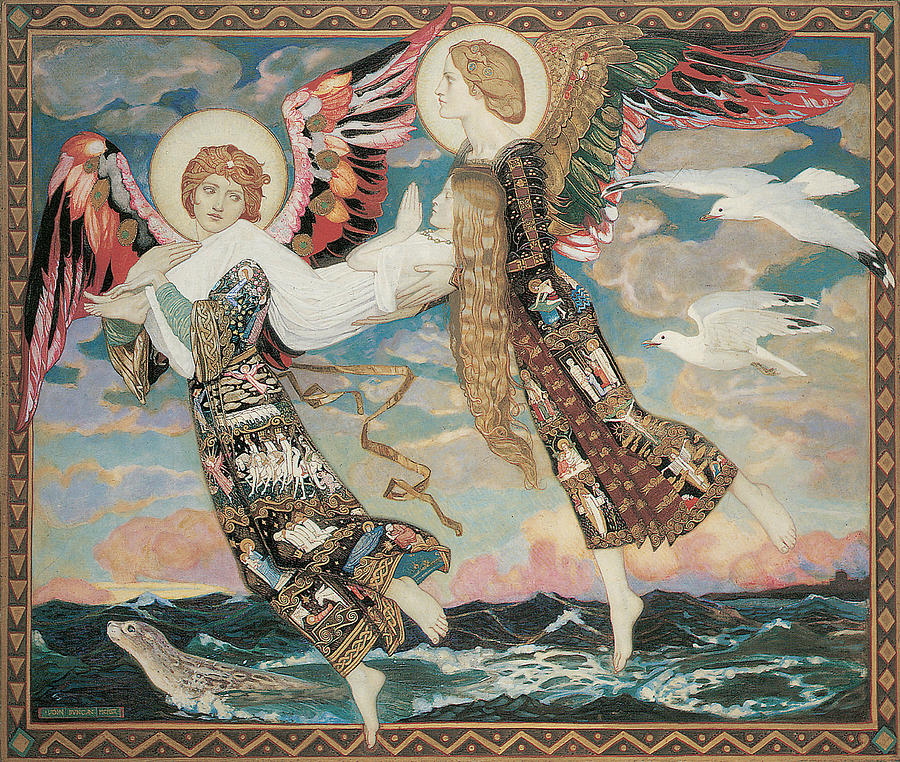
Recall the legend that angels carried Brigid over the seas from Ireland to Bethlehem so that she might be present for the birth of Jesus, assisting Mary as midwife. Brigid, who was born in the fifth century after the event….

John Duncan 1913 Edinburgh Gallery

Immediately we find ourselves in sacred time, in what today’s physicists, following Einstein, would call the simultaneity of time. Mystery. We suspend disbelief, allow our linear, logical brains to take a break, invite the story to offer us its teachings. Ask how this applies to our own lives. Listen.Each one of us is asked, like Mary, to give birth to the Holy One. In Godseed, Jean Houston writes about the heart of our call, inviting us into a meditation, a visualization, of how this might be:

Lying down now and closing your eyes, imagine that you are dreaming. In your dreams, you see light, and into this light comes a Being of Light, a Bearer of Good News, a Resident from the Depths. This angel says to you, “Oh Child of God, fear not to take unto yourself the spiritual partnership, for that which is conceived in you is of the spiritual Reality. And this Reality, if nurtured, shall be born of you and shall help you to…bring the Godseed into the world.”

And now see what the angel sees—the fulfillment and the unfolding of this Child of Promise within you….see and feel and know the possibilities, indeed the future, of this Child in you, this Godseed that you are growing in the womb of your entire being, should you allow it to be nurtured and to grow and to be born into the world.  (Jean Houston in Godseed Quest Books 1992 p.39)

This call to birth the Christ within us is as ancient as first century Paul, who wrote of being in labour until Christ is born in us. It is as modern as twenty-first century eco-feminist theologian Yvonne Gebara who entreats us to give birth to the Christic Presence in the Universe. Contemporary writer Diarmuid O’Murchu cites the words of the thirteenth century Dominican mystic Meister Eckhart: What does God do all day long? God lies on a maternity bed, giving birth all day long.

Reflecting on Meister Eckhart’s image, O’Murchu continues:

This is a metaphor we have known as a spiritual species for thousands of years, long before formal religions ever came into being….The Great Goddess of our Paleolithic ancestors was perceived as a woman of prodigious fecundity, birthing forth the stars and galaxies, the mountains and oceans and every life form populating planet earth today. God, the great life-giver in the pregnant power of creative Spirit, is probably the oldest and most enduring understanding of the Holy One known to our species.

O’Murchu concludes that: we are called to become co-birthers with our birthing God of the ongoing evolutionary re-creation of God’s world in justice, love, compassion and liberation. (Diarmuid O’Murchu Jesus in the Power of Poetry 2009 pp. 45-46)

 When we say yes to our call to give birth, we are embracing a lifelong partnership with the Holy One of “prodigious birthing”, a responsibility that has the power to take over our lives, to demand of us everything, to offer us a life that is at once profoundly meaningful, and intimately engaged with the ongoing renewal of the universe. There will be suffering, there will be hard work, but there will also be times of ecstatic joy, tasting our oneness with the Love at the heart of life.

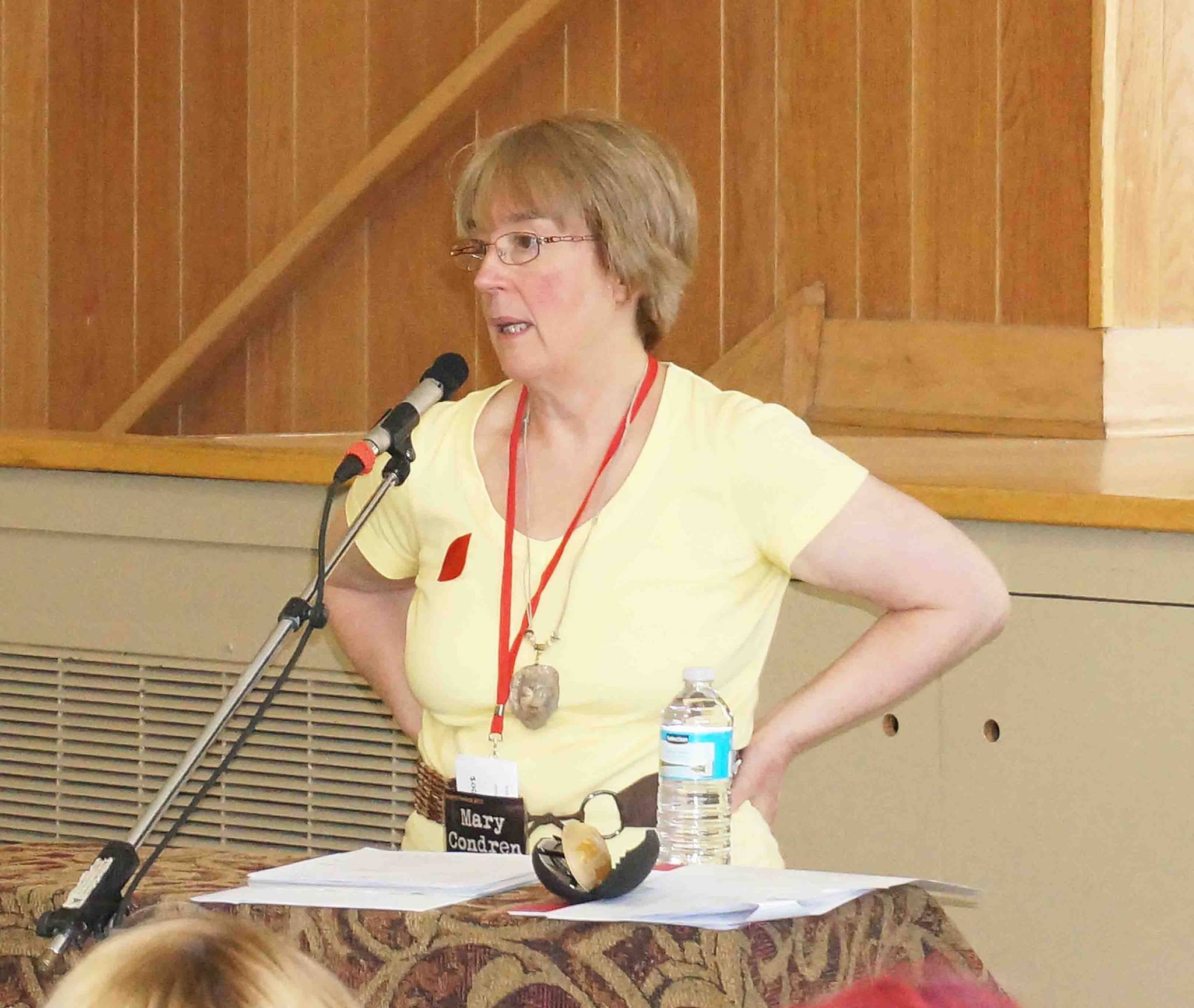
“Brigid is the acceptable face of women’s divinity,” said Irish theologian Mary Condren during the Brigid Festival (Brescia College, London Ontario, May, 2015). Listening to Mary Condren, my understanding of Brigid expanded beyond her aspect of maiden to her embodiment of mother and crone. Mary’s research for a long-awaited book on Brigid is a seemingly endless process of pulling up a thread only to find a cluster of many more threads underneath. Now exploring the Cailleach (Crone) aspect of the threefold presence of the sacred feminine, Mary is discovering how central the Cailleach tradition was in ancient times. It seems that at the Festival of Samhain (November 1st), the maiden, mother and crone return to the Cailleach.

Irish Theologian Mary Condren

By uncovering old pilgrimage paths and excavating ancient ritual sites in Ireland, researchers are finding many earlier aspects of the sacred feminine that were then ”folded into” the Brigid tradition which in turn was interwoven with the 5th century abbess, Saint Brigid. Mary Condren longs for Adrienne Rich’s “dream of a common language” that would bring the Cailleach/Brigid tradition into harmony with the Christian tradition.  

Mercy was the beatitude Brigid chose when she took her veil. Mary Condren believes that the difference between mercy and sacrifice encapsulates the difference between a thealogy (based on feminine values) and patriarchal traditions.

Brigid’s cloak is a symbol of protection and of the creative womb of the earth. Collecting dew on the Festival of Imbolc is an ancient feminine ritual. Mary Condren’s research into dew in the sacred writings of many religions (including Kwan Yin where the dew symbolizes compassion and in the Hebrew Bible) shows the longevity of this tradition.

The dew of mercy becomes in Christianity the blood of sacrifice, the redemptive liquid of patriarchy.

Mary Condren believes that Brigid’s life and tradition offers an alternative to sacrifice in the practice of self-fragilization, a willingness to allow oneself to be vulnerable, to enter the darkness, to enter the well, and still to remain whole.

Brigid’s fire is an inner flame that does not burn out. Mary Condren suggests that we cultivate that inner fire of purification and protection rather than the spectacular destructive fire of sacrifice.

The Imbolc question echoes: Do we have a welcome in our lives for Brigid?

Dolores reminds us that it is only in us, you and me, that the energy of Brigid will rise again, take form and become a force for transformation in our world. (Dolores Whelan in Ever Ancient, Ever New Dublin 2010 p. 81)

brigid of kildare: four

After these weeks of reflecting upon Brigid, we decide to pay her a visit. We book seats on an Aer Lingus Flight to Shannon Airport. Outside the airport, we find a bus, its destination clearly written above the front window: Church of St. Brigid.

The bus stops before a stone church that appears centuries old.  Inside, as our eyes adjust to darkness, we pull shawls/sweaters/light coats more closely around us to protect against the chill, the seeping dampness left over from winter’s rain. The scent is a not unpleasant mix of wax, flowers, dusty hymnals, wispy remnants of incense.

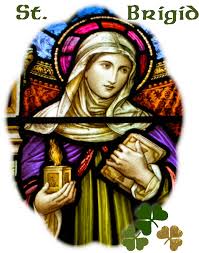
Light comes from the red sanctuary lamp. In a side aisle, a single candle bows in a soft breeze from a high, partially open, window. Drawn by the candle, we find ourselves before a statue of Saint Brigid, eyes looking away, hands joined around a book, as though in prayer.

Clearly she is not expecting us.

But then, slowly, she lowers her gaze, looks steadily at us and…. WINKS!

Behind her, a door opens onto a sunlit landscape of such verdancy that we are drawn towards it even as we see her gesturing that we follow her. We are outside now, breathing in the fragrance of wet, newly-turned earth, pungent with spring life. Brigid draws us onward towards a pool of water that holds a drowned, cloud-drifted sky, invites us to sit on the springy young grass that surrounds the pool.

When we are settled, she speaks: “There’s something I need to tell you….” 

We look at her, surprised by this turn of events, eager to listen, to learn.

“First of all, you took the wrong bus.  When I drew you here to Ireland, I thought you’d know where to look for me, but when you climbed into that bus, I had to get there ahead of you. Believe me, it was no easy task to stand so still, trying my best to look holy, otherworldly, until you arrived. But now you’re here, I have much to say to you.

“You’ve heard stories about me, of my life in the Christian Monastery of Kildare where I served as abbess to both men and women. I embodied in that role the qualities of compassion and generosity, of kindness, of fierceness in my focus, as I kept the sacred fire alight, the healing water of the holy well flowing. These stories you understand for they are part of your heritage.

“Yet there is so much more for you to know, wisdom that goes back to the countless millennia before Christianity, before the Hebrew Scriptures, before men decided that God was a powerhouse running the universe, yet wholly separate from what “he” had created.

“I will speak of Ireland, but you must understand that this wisdom was found in many different parts of the planet, in the myths and stories of numberless, now mostly forgotten, aboriginal peoples, in the days when the Holy was understood to be a woman whose body was the earth that births and holds us, nourishes and comforts us, receiving us back into her body when we die. Fragments of this wisdom have endured, to come to us in stories, in myths, in rituals.

“In those ancient days, wave after wave of people came to Ireland, each bringing their own understanding of that sacred being, our mother. Over the millennia, she was called by many different names: Anu, which relates to Danu, the goddess for whom the great river Danube is named; or Aine, the wheel of the seasons, the circle of life; and later Brigit, a name that derives from an Indo-European word brig, meaning the High, the Exalted One.

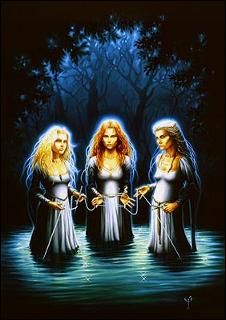
“In ancient Ireland, Brigid was honoured as embodying all three aspects of the goddess: maiden, mother and crone.

The poets, who themselves held positions of honour almost equal to that of the king, worshipped the goddess Brigid, taking her as patron. She was said to have two sisters, each named Brigid, one the patron of healers, the other patron of smith-craft.

“In this, you can see that Brigid was a goddess of many aspects, perhaps herself the many-faceted One, the Sacred Holy Mother of far more ancient times.

  “I can see by your expressions that some of you are wondering why I feel it so important to tell you all of this, you who live in a time so different, so removed from the ancient days of Ireland.

“I have seen in your hearts some of the darkness and suffering you carry, your grief for the ravaging of the planet, the earth that you know as your mother. I have felt your pain over the desertification of the rain forest, the lungs of your planet, the pollution of its waters, its rivers, lakes, oceans, its very life blood, the poisoning of the air…

 “I want you to know, to rediscover the wisdom of the ancient ones who saw Brigid/Aine/Anu as the life within the Earth herself. The hills, her breasts, called the Paps of Anu; the nipples of high mountains sprouting water like breast milk; wells that spring from rocks on the sides of mountains and hills or gushing forth from under the earth, or deep inside caves, offering healing.

“Open your eyes, dear ones, so that you may see the Earth as co–creating with you in love. See yourself as a partner in this great work, and know yourself held in love by the Earth whom you honour as mother.

 “As you watch spring returning to your land, remember these things, remember me, and know you are not alone.

“I hear your bus returning. You need not tell the driver what we’ve been speaking about. But do come back again, for I have so much more to tell you!”

 We board the bus, bemused, intrigued, making for our hotel. We know this is only the first of many conversations with Brigid.

brigid of kildare: two

“Co-birthers” with God

The knocking on the wooden door is so loud it startles us, even though we are waiting for the sound.

A woman’s voice, strong, certain, calls out from the other side: “I am Brigid. Do you have a welcome for me?”

We have our answer ready, “Yes, we do.” The door opens. The woman playing Brigid’s role enters.

On this final morning of our weekend with Dolores Whelan at the Galilee Retreat Centre in 2014, we are enacting an ancient Celtic Ritual of Imbolc as we welcome Brigid in her Maiden form. Brigid, who “breathes life into the mouth of dead winter”, comes among us, announcing spring.

 Brigid is a woman of great power, an archetype, an embodiment of the energies of the sacred feminine, another facet of Sophia. Our welcome of her will open up our lives in ways we cannot foresee, cannot even imagine. But the hints are already given in the stories we have been recalling.

We recall the legend that angels carried Brigid over the seas from Ireland to Bethlehem so that she might be present for the birth of Jesus, assisting Mary as midwife. Brigid, who was born in the fifth century after the event….

artwork by John Duncan 1913

Immediately we find ourselves in sacred time, in what today’s physicists, following Einstein, would call the simultaneity of time. Mystery. We suspend disbelief, allow our linear, logical brains to take a break, invite the story to offer us its teachings. Ask how this applies to our own lives. Listen.

Each one of us is asked, like Mary, to give birth to the Holy One. In Godseed, Jean Houston writes about the heart of our call, inviting us into a meditation, a visualization, of how this might be:

Lying down now and closing your eyes, imagine that you are dreaming. In your dreams, you see light, and into this light comes a Being of Light, a Bearer of Good News, a Resident from the Depths. This angel says to you, “Oh Child of God, fear not to take unto yourself the spiritual partnership, for that which is conceived in you is of the spiritual Reality. And this Reality, if nurtured, shall be born of you and shall help you to…bring the Godseed into the world.”

And now see what the angel sees—the fulfillment and the unfolding of this Child of Promise within you….see and feel and know the possibilities, indeed the future, of this Child in you, this Godseed that you are growing in the womb of your entire being, should you allow it to be nurtured and to grow and to be born into the world.  (Jean Houston in Godseed  Quest Books 1992 p.39)

This call to birth the Christ within us is as ancient as first century Paul, who wrote of being in labour until Christ is born in us. It is as modern as twentieth century eco-feminist theologian Yvonne Gebara who entreats us to give birth to the Christic Presence in the Universe.

 Contemporary writer Diarmuid O’Murchu cites the words of the thirteenth century Dominican mystic Meister Eckhart:

What does God do all day long? God lies on a maternity bed, giving birth all day long.

Reflecting on Meister Eckhart’s image, O’Murchu continues:

This is a metaphor we have known as a spiritual species for thousands of years, long before formal religions ever came into being….The Great Goddess of our Paleolithic ancestors was perceived as a woman of prodigious fecundity, birthing forth the stars and galaxies, the mountains and oceans and every life form populating planet earth today. God, the great life-giver in the pregnant power of creative Spirit, is probably the oldest and most enduring understanding of the Holy One known to our species.

O’Murchu concludes that: we are called to become co-birthers with our birthing God of the ongoing evolutionary re-creation of God’s world in justice, love, compassion and liberation. (Diarmuid O’Murchu Jesus in the Power of Poetry 2009 pp. 45-46)

When we say yes to our call to give birth, we are embracing a lifelong partnership with the Holy One of “prodigious birthing”, a responsibility that has the power to take over our lives, to demand of us everything, to offer us a life that is at once profoundly meaningful, and intimately engaged with the ongoing renewal of the universe. There will be suffering, there will be hard work, but there will also be times of ecstatic joy, tasting our oneness with the Love at the heart of life.

 Dolores reminds us that: it is only in us, you and me, that the energy of Brigid will rise again, take form and become a force for transformation in our world. (Dolores Whelan in Ever Ancient, Ever New  Dublin 2010 p. 81)

Brigid, midwife of this birthing, stands at the door.

We hear her voice, “Do you have a welcome for me?”

What is our response? 

Powers of the Universe: Emergence

Emergence and the Spirituality of the Sacred Feminine

Emergence: the universe flares forth out of darkness, creating, over billions of years, through trial and error and trying again, astounding newness: carbon for life in the middle of a star…. the birth of planets, our earth holding what is required for life to emerge….the creation of water from hydrogen and oxygen….the emergence of a cell with a nucleus.

Each of these seemingly impossible happenings did happen, offering us humans the hope that the impossible tasks confronting us in our time can be creatively addressed, showing us, as Brian Swimme expressed it, a domain of the possible beyond imagination.

Our human endeavour has been powered by non-renewable energy resources. Our task now is to reinvent the major forms of human presence on the planet in agriculture, architecture, education, economics…. We need to align ourselves with the powers of the universe, consciously assisting, amplifying, accelerating the process of creative endeavour.

In her teaching on the Powers of the Universe, Jean Houston speaks about how we can work with the universe in what it is trying to emerge within us.

We set up a schedule. We show up at the page, or in the listening or prayer place, regularly, to signal our intent to be open.

We create internal structures that are ready to receive what wants to emerge in us.

We drop in an idea that puts us in touch with essence, creates in us a cosmic womb so the universal power can work in us. Thus, like Hildegard of Bingen, we become a flowering for the possible, attracting the people and resources that we need.

Among the aspects of human life that require creative imagination for a new birth, I would like to focus on religion/spirituality/our way of relating with the Sacred.

More than thirty years ago the eco-theologian Thomas Berry wrote that:

the existing religious traditions are too distant from our new sense of the universe to be adequate to the task that is before us.

We need a new type of religious orientation….a new revelatory experience that can be understood as soon as we recognize that the evolutionary process is from the beginning a spiritual as well as a physical process. (Dream of the Earth Sierra Club, San Francisco, 1988)

Thomas Berry

What new revelatory experience, what new type of religious orientation is emerging today?

As I am neither a theologian nor a sociologist, I invite you to experience with me a fragment, a fractal, of the newness in spirituality, that is emerging among women with roots in Christianity, with branches that now extend to embrace a relationship of partnership with a sacred feminine presence whom some would call the Goddess.

Take a chair at the table in a room in a small Catholic college in western Canada. As part of a focus group of thirteen women, drawn from some one hundred interviewees, you’ve been asked to reflect upon the way you blend your Christian faith with a relationship to the feminine holy.

For several hours of concentrated conversation on this topic, facilitated by the research co-ordinator, you listen to your new companions.

What do you see? Hear? Experience? On this sunny late spring morning, one of the women leads an opening prayer in the four directions, calling on the presence of the Sacred Feminine to guide us in wisdom, in newness, nurtured by the gifts symbolized by earth, air, water and fire.

As each woman speaks, you notice the different pathways that have brought them here, that have awakened their awareness of a Holy Presence that is feminine. For some it is the writings of the feminist theologians, uncovering the deep but largely neglected tradition of Sophia /Wisdom, the feminine principle of God. For others it is through earth–based spiritualities such as indigenous beliefs and practices, or involvement in ritual, or Wiccan studies.

For the several Catholics present, Mary has been the pathway. As one woman recalls, “I was taught as a child that God was too busy to hear my prayers so I should pray to Mary instead.” Listen as other women tell of travels to places where the Sacred was known and honoured as woman in ancient times, especially sites in France and elsewhere in Europe sacred to the Black Madonna.

Statue of the Black Madonna in Holy Wisdom Benedictine Monastery in Wisconsin 

But mostly you are struck by the way that for each one, imaging the Holy as feminine has given a voice, a new power, a sense of her own value that were lacking to her in the time when God was imaged as male. Imaging God as woman gives an honouring to women’s bodies, especially needed in a culture where the standard for feminine beauty (young, slim, nubile) is set by men.

You hear women share without bitterness, but with a sense of having come to a place of grace, childhood and adult experiences of feeling devalued in Church – related settings because of being female. You smile with recognition as one woman recalls that when her teacher said, “God is in everyone,” she had asked, “Is God in me?” and was assured that was so. “Then is God a woman?” she asked.

Her teacher, a nun, responded, “There are some mysteries we are not meant to understand.”

Listen now to the responses when the facilitator asks, “How do you express your relationship with the Feminine Divine? Would you call it worship?”

No one feels that word fits. “She is a mother…”

“At first she was mother, but now is more of a friend”…

“A partner, inviting me to co-create with her.”

“Devotion is the word I choose, because it holds a sense of love,” and to this many agree with nods and smiles.

What stirs in you as you listen? Do you begin to sense that there is more to this emerging relationship to the sacred feminine than our need for her, our longing for her?

Is this emergence initiated perhaps by the Holy One herself who comes to us in our time of great need?

Statue of Brigid of Kildare  

Brigid of Ireland has been called “the acceptable face of the Feminine Divine”. Ancient Goddess and Christian Saint, Brigid is the threshold woman for our time.

Look around the table at your companions: these are power houses. The submissive woman, so beloved of patriarchal religions, has no place in a life devoted to the Goddess.

There is a rage for justice, for the transformation of life on the planet. One woman here has taken on the task of building and maintaining natural hives for bees; one is a  film-maker who wants to tell stories of women that will change the way we see ourselves in the images of most films and television; one is a Baptist minister who writes of the way Jesus is himself an embodiment of the Sophia-Wisdom principle; one is a theologian who identifies the Spirit as the life force found everywhere in each land and culture and tradition, linking all of life; one fiercely joins the struggle to defeat those who would modify and monopolize the seeds of the earth, or put poison in ground water to release its gas…

As you look at these devotees of the sacred feminine at this table, you see that they are living the new revelatory experience that Berry wrote about.

They are themselves the beautiful reflection of the Sophia, the Sacred Feminine, the Goddess of many names, emerging in the lives of the women and men of today who are opening themselves to her. They are, we are, the ones ready with her creative power at work in us to take on the great tasks that our times require.

Gloria Steinem has written: God may be in the details, but the goddess is in the questions. Once we begin to ask them, there is no turning back.

How will we assist in this Emergence?