Category Archives: Sacred Feminine

Sophia: Her Design in the Universe

Last week, we saw

Sophia/Wisdom (as) the divine order patterning all creation,
from the ancient oceans to this morning’s dew.

Ever since we humans gazed, astonished, at the stars, we have intuited a pattern in the Universe. We have wondered at the pattern maker for eons of time. Have we understood that there is Love within every aspect of this many-faceted reality?

English poet-mystic Edwina Gately speaks of this:

They stretched beyond my sight —

millions of tiny pebbles,

broken stones, and smooth rocks

thrown together,

heaped, it seemed,

in careless huddles,

then washed apart

and rushed into new places

to nudge against

other, different shapes,

falling together

in patterns ever changing.

But over all,

in never-ceasing constancy,

flowed the great water,

drenching and shifting

great and small,

stretching out

in wondrous unfolding

of Wisdom’s great design. 

(Growing into God, Sheed and Ward, Franklin Wisconsin, 2000 p.38.)

Do we experience that great water of Wisdom flowing over the smooth rocks, the pebbles, the broken stones of our lives, forming fresh new patterns? When we dare to name the pattern-maker Sophia, when we come to know her as Wisdom in the Universe, we experience her loving guidance in the small everyday moments of our lives. We sense that we are held in a tenderness that can be, at times, overwhelming.

Joyce Rupp, in her Prayers to Sophia (Innisfree Press, Philadelphia, 2000) writes of knowing and living within the awareness of Sophia’s guidance:

Trusted Guide,

you are my Mentor, my Inspiration,

my Home of good choices and decisions.

You help me to search with confidence

as I find my way to inner peace.

Please gather your wisdom around me.

Guide me carefully as I make choices

about how to use my energy positively.

Place your discerning touch on my mind

so that I will think clearly.

Place your loving fingers on my heart

so I will be more fully attentive

to what is really of value.

Teach me how to hear your voice,

to be aware of what is in my mind and heart,

to attend to your wisdom in those around me,

to acknowledge my intuitions and ponder my dreams,

to listen to earth and all of life,

for in each piece of my existence you are guiding me.

Guide of my life,

thank you for all you have given to me.

Reveal my spiritual path 

and direct me in the living of it.

Lead me to inner peace and oneness with you.

Joyce Rupp invites us to reflect on Sophia’s guidance in our lives:

Search your present life situation. Where is it that you most need Sophia’s Guidance?”

Go to Sophia. Find her sitting in her chair of wisdom. Ask her to lead and direct you.”

Receive her wisdom.”

Sophia’s Presence in the Universe

In recent weeks, we have been reflecting upon the Powers of the Universe
as they have been described in Brian Swimme’s teachings: allurement and emergence,
cataclysm, synergy, transmutation, transformation… In the Hebrew Scriptures Sophia speaks of being present in the very beginning of the Universe,  an inherent part of the whole amazing story of its unfolding.

In the Book of Proverbs we read:

(Sophia/Wisdom) is the divine order patterning all creation,
from the ancient oceans to this morning’s dew.

In the song-prayer “Ancient Love” composed by Carolyn McDade, we find a
beautiful tribute to the Sacred Feminine Presence in the Universe:

Long before the night was born from darkness
Long before the dawn rolled unsteady from fire
Long before She wrapped her scarlet arm around the hills
There was a love, this ancient love was born.

Long before the grass spotted green the bare hillside
Long before a wing unfolded to wind
Long before She wrapped her long blue arm around the sea
There was a love, this ancient love was born.

Long before a chain was forged from the hillside
Long before a voice uttered freedom’s cry
Long before She wrapped her bleeding arms around a child
There was a love, this ancient love was born.

Long before the name of a God was spoken
Long before a cross was nailed from a tree
Long before She laid her arm of colours ‘cross the sky
There was a love, this ancient love was born.

Wakeful our night, slumbers our morning
Stubborn the grass sowing green wounded hills
As we wrap our healing arms to hold what her arms held
This ancient love, this aching love, rolls on.

T
And in this meditation written by Bridget Mary Meehan, we find an invitation to embrace this loving presence of Sophia, to make space for her within our lives:

I therefore determined to take Sophia to share my life,
knowing she would be my counsellor in prosperity,
my comfort in cares and sorrow…
When I go home I shall take my ease with her,
for nothing is bitter in her company,
when life is shared with her, there is no pain,
gladness only, and joy.

(Book of Wisdom, Chapter 8)

“Take a deep breath, as if you were breathing through your toes
and let your breath be carried up through your feet, legs,
abdomen, lungs, mouth, nose – your entire body.

“As you breathe in, say silently, ‘Sophia’ while taking in
whatever you need from Sophia: wisdom, knowledge,
strength, joy, courage, comfort, peace, love….

“Do you remember a time when you felt whole?
… peaceful?…strong? … joyful? …loving?…

“Do you remember a time when you felt alienated? …
broken?…hurt?…angry?
lonely?… guilty?…

“How did you feel? What was it like? Why were these experiences
significant for you? How have these experiences continued to influence you?

“Did you experience comfort and counsel in any new way because of these experiences?

“Image Sophia, God’s Wisdom, as Counselor, wise guide,
who helps you discover meaning in your experience
and aids you in recognizing these experiences
as important touchstones of your unique spirituality.

“Image Sophia as Comforter who assists you to find
your own identity and strength in the midst of disappointments and sorrows of your life.

“As you reflect on your experiences what insights, feelings, thoughts,
images, memories, sensations, are you conscious of?”

Choose a creative way to record your insights, feelings, thoughts, images, memories, sensations, whether in poetry, art,song, writing, dance or any way you wish.

( Meditation adapted from Bridget Mary Meehan: Exploring the Feminine Face of God

pp 28-9 Sheed and Ward Kansas City Missouri 1991)

Sophia and the Powers of the Universe

Today we begin our exploration of the powers of this universe where Sophia resides as spiritual animator of life.

The cosmological Powers of the Universe
are coursing through us moment by moment.
To become aware of these powers is to touch the Source of Life.
Brian Thomas Swimme, Evolutionary Cosmologist
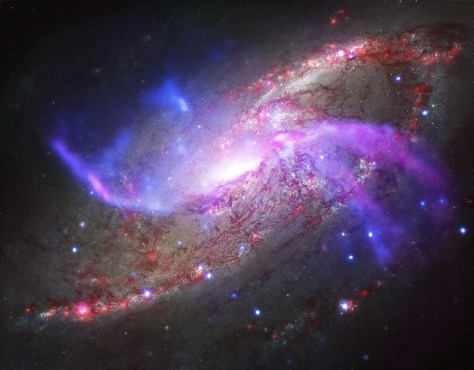
1513214_10155814472145285_5248696702093065973_n

In the introduction to his DVD set “The Powers of The Universe”, Brian Swimme offers this summary of the ten powers, held together in Seamlessness:

Centration: the coming together in one life of the entire evolutionary development

Allurement: what holds it all together; in societies, the values and ideals that help them cohere

Emergence: the Universe is a story, not a place or a thing, always bringing forth newness

Homeostasis: the Universe holds onto its achievements: the oyster shell – it works!

Cataclysm: the Universe sometimes destroys its achievements purposely in addition to accidental destruction

Synergy: complexification as things come together; diversity creates more complex systems

Transmutation: newness begins, builds

Transformation: always, always newness is being created

Inter-relatedness: when diversity and commonality come together, as now on the planet: people are discovering diverse gifts, beginning to have common concerns

Radiance: a new evolutionary reality, as Teilhard de Chardin foresaw, something beyond what has been until now.

Out of seamlessness, a person is here (centration) seeing the universe involved in her unfolding. Through allurement, she begins to pursue dreams which emerge in relationships. Through homeostasis she finds her role in society, where she fits in …but then cataclysm where things fall apart… marriage, health, job… One way or another, the person’s cataclysm will relate to the present cataclysm of the planet. The collapse of what one thought was real eliminates illusion, a glimmer of the need for synergy, a larger vision for the community and for others. Transmutation comes from awareness that I need to change parts of my life (consumerism? militarism? competition?) This can lead to a deep unlearning, a metanoia, metamorphosis, connecting one to the origins of things, developing a creative vision for moving forward, a vision that itself needs to be tested internally against the other powers of the universe…moving one towards transformation where inter-relatedness happens at a more elegant level as one sees the light in the other, and finally radiance.

Recalling that we are beings in whom the Universe resides, we begin our exploration of Swimme’s teaching with the first power that he identifies in the Universe: Centration.

CENTRATION, Swimme teaches, is the coming together in one life of the entire evolutionary development. What if? he asks, what if the role of the human after 13.8 billion years, is to allow the Powers of the Universe to be enhanced and advanced though us? What if we understood that the Universe is centered on us, with the aim of bringing forth another form of life, one that will draw life itself forward? Our challenge, Swimme says, is to learn how to participate in this process by removing obstacles so that the power of centration can proceed. The main obstacle, he says, is that modern individual consciousness prevents our appreciation that the WHOLE is real, and has its own intentions.


How would our lives look if we opened ourselves to allow the power of centration to grow in us? The shift in consciousness, should we as a species open ourselves to this fully, would rival the shift that occurred when, in the sixteenth century Copernicus declared that the earth revolved around the sun, not the sun around the earth….


In 1905, Einstein realized that life is not boxed in with a clock ticking beside it but rather that space and time in the Universe depend upon the observer, that the Universe rises up with respect to a particular orientation. Half a century later, Carl Jung would understand that each of us experiences the universe in our own way.


The story of the evolution of life holds the teachings we require to allow the power of centration to be enhanced through us. Life created the membrane to allow creation to withstand the onslaught of the sea. Swimme advises that in this time when our planet is threatened with destruction we too need to develop a permeable barrier whose intelligence will determine what goes through and to find a way to keep out what is leading to degradation, refusing to give entry.

We need also to identify and amplify what we do want to pass through the membrane: those elements which will enhance our journey into ourselves.


The second thing required for the development of life is a catalyst that, like the molecule, accelerates the process. For this, Swimme suggests we find a way to contact the primordial energy of nature, to drop into contact with the Universe, knowing that the Universe is longing to center itself in a new way. Spend time in a storm, by the waves of a shore, beside a bird-feeder, Swimme suggests. Find a way to channel this energy of 13.8 billion years.

Reflecting on Centration:

What would change in my life if I were more fully open to the power of Centration, understanding that my life is part of a WHOLE? How would my life be different if I saw it as a journey for which the UNIVERSE holds intention, holds a hope for something far beyond what I can see or imagine?

How do I /we develop an intelligent sieve, a membrane with wisdom to keep out of my consciousness what would harm me while recognizing and allowing the passage of elements that will enhance and assist the journey to the sacred centre of my life?

What ways have I found and which do I seek that will bring me into closer contact with the power of nature? Knowing that the Universe is longing to be more fully centred in me, how do I encourage this closeness?

Sophia in the Easter Mystery

Through the cold, quiet night time of the grave underground,
The earth concentrated on him with complete longing
Until his sleep could recall the dark from beyond
To enfold memory lost in the requiem of mind.
The moon stirs a wave of brightening in the stone.
He rises clothed in the young colours of dawn.
John O’Donohue “Resurrection”

The Easter Mystery of life-death-life is at the heart of the universe, at the heart of life on our planet, in the deep heart of our own lives. From its birth out of the womb of a dying star, through its daily cycle of day/dusk/ night/dawn, its yearly cycle of summer/autumn/ winter/spring, the earth teaches us to live within the paschal mystery.

 Ancient peoples understood this mystery. Through their careful observations they constructed buildings such as the mound in Newgrange Ireland where a tiny lintel receives the first rays of dawn only on the winter solstice.

The ancients wove their understanding of life/death/life into their mythologies: the Egyptian story of Osiris, whose severed body was put together piece by piece by his wife Isis, then reawakened; the Sumerians tell of the great queen Inanna who descended to the underworld to visit her sister Erishkigal. There she was stripped of all her royal robes and insignia, and murdered by her sister who then hung her lifeless body on hook. Three days later, Inanna was restored to life, all her honour returned to her.

The people of Jesus’ time would have known these and other great myths of the ancient Near East. What was so stunningly different in the Jesus story was that the mystery of life-death-life was incarnated in a historical person. The Resurrection of Jesus is at the heart of the Christian faith. As Paul wrote, “If Christ be not risen then our faith is in vain”.

In our lifetime, the explosion of new science shows us the life/death/mystery at the heart of the universe. Like exploding stars, our lives are continuously being rebirthed into a deeper more joyous existence. By allowing the death within ourselves of old habits, old mindsets and narrow ideas of who or what we may be, we open ourselves to the possibility of new life being birthed within us. As Jesus told his friends, “You will do what I do. You will do even greater things”.

“Resurrection is about being pulsed into new patterns  appropriate to our new time and place,” Jean Houston writes in Godseed. For this to happen, we need to open in our deep core to “the Heart of existence and the Love that knows no limits. It is to allow for the Glory of Love to have its way with us, to encounter and surrender to That which is forever seeking us, and from this to conceive the Godseed.”

“The need for resurrection has increased in our time,” Jean continues. “We are living at the very edge of history, at a time when the whole planet is heading toward a global passion play, a planetary crucifixion.” Yet “the longing with which we yearn for God is the same longing with which God yearns for us…. the strength of that mutual longing can give us the evolutionary passion to roll away the stone, the stumbling blocks that keep us sealed away and dead to the renewal of life”. (Godseed pp.129-130)

The yearly miracle of Spring awakens within us the confidence and joy that this same rebirth is ours to accept and to live. We know our call to green our lives, our times, our planet:

The force that through the green fuse drives the flower
Drives my green age (Dylan Thomas)

Talmost spring 003

Where in my life do I most experience the need for a rebirth?
What old habits and beliefs would I have to let die in order for this new life to be born?
How does knowing that the longing with which (I) yearn for God is the same longing with which God yearns for (me) make my life more joyful?
What would a resurrected life look like, feel like, for me? for those with whom my life is woven? for our planet?

May Sophia, the feminine presence of Sacred Wisdom, gently guide us through the death of what no longer serves us into the joy of the rebirth for which our hearts yearn.

Brigid: Cailleach and Midwife for a New World: Part Two

Dolores Whelan continues:

A story from the Celtic tradition that illustrates the importance of the cailleach and her energy is the story of “Niall of the Nine Hostages”. Niall and his four brothers come to a well to get a drink of water. The well is being guarded by an old woman who represents the cailleach or hag. When the first brother goes to the well, she tells him that if he wants to drink the water, he must give her a kiss. He is horrified and refuses; she sends him away. The other three brothers go in turn on the same errand, and each refuses to kiss the hag.

crone

As the story goes:

Then it was Niall’s turn. Faced with the same challenge, he kissed the old hag and embraced her. When he looked again, she had changed into the most beautiful woman in the world.

“What art thou?” said the boy.

“King of Tara, I am Sovereignty . . . your seed shall be over every clan.”(1)

This story suggests that in order to have access to the life-enhancing energy represented by the water in the well, it is necessary for the young masculine to embrace this particular and perhaps unattractive aspect of the feminine energy.

Why is this so? The cailleach represents the wisdom gathered by living in right relationship with the earth, something that requires reflection, stillness, and attentiveness. It knows more clearly what is needed and what is possible in each situation, and it is aware of the consequences of particular actions. It knows how to proceed slowly; it understands the value of times of waiting and times of allowing. It knows how to be and how to act.

So how can we, you and I, begin the journey back towards wholeness and balance?
Brigid in her cailleach form can help us to embrace these difficult and fearful aspects of our lives. The cauldron, a central image in both the Celtic and other traditions, is a vessel for transformation and transmutation. In many stories, the cauldron is first filled with unpalatable raw things, which then are used to create a nourishing soup using the transforming energy of the universe through the action of fire and water.

The transformation of the contents of the cauldron is supervised by the cailleach energy, which works inwardly, quietly, and slowly to bring about an unforced and timely rebirth. The transformation of the cauldron’s contents concentrates their essence and offers them back in a new and more suitable form.

From this process, we learn that the possibility of transformation and re-birth always exists, no matter how devitalised something appears to be. A new rebirth can be achieved when we submit ourselves and our concerns to the inward and slow transformational energy of the cauldron and the cailleach.

Philosopher Richard Kearney in his poem “Bridget’s Well” speaks of the importance of this inward and downward journey and suggests that it is the only way to access the life-giving and inspiring fire of Brigid that lies underneath the water.

I will rest now at the bottom of Bridget’s well
I will follow the crow’s way
Footprint by footprint
In the mud down here
I won’t come up
Until I am calmed down
And the earth dries beneath me
And I have paced the caked ground
Until smooth all over
It can echo a deeper voice
Mirror a longer shadow (2)

This poem suggests the importance of that deep journey to the well where the source of new life and the fire of passion is found. At Imbolc (Feb 1st) the tiny spark of new light discovered in the deep womb darkness of the winter solstice has grown sufficiently to safely emerge from that inner world and begin to transform winter into spring ! At this time Brigid appears as the fresh maiden of springtime emerging from the womb of the cailleach, queen of winter. Here Brigid embodies the energy that breathes life into the mouth of dead winter. The energy of Brigid at Imbolc is the energy of Yes, and it can only emerge from the place of stillness!

Brigid is also closely associated with the life- giving aspect of fire, a fire that doesn’t burn but which can never be fully quenched. When this fire comes from a clear and deep space, as happens following the inward journey, it will be significant and filled with truth and potency.


This life-giving fire will act within individuals, within the land, in the relationships between the people and their land, fanning the fires of creative endeavour so that all life forms can partake in the symphony of new life emerging each springtime! The fire discovered through this deep journey is an inner light which guides each of us to find our next step!

Richard Kearney in his poem “Brigit’s Well” also speaks of the re-emergence of a new fire born of a deeper place within:

Then the fire may come again
Beneath me, this time
Rising beyond me
No narcissus- flinted spark
Behind closed eyes
But a burning bush
A fire that always burns away
But never is burnt out (3)

I believe that the archetypal energy of Brigid, the embodiment of the divine feminine, present within the essence of the Celtic tradition, has the capacity to lead and support us in transforming the present wasteland into a new life- sustaining society. For this to happen, it is necessary for us to understand that the archetypal energy that Brigid represents is a real aspect of the human psyche, one that has been largely dormant over the past few hundred years, but is now re-emerging.

Each of us can become keeper of the Brigid flame by developing and living those qualities and values that distinguished her. As we align ourselves with her archetypal energies, she supports us to courageously and safely face the demons of this time. She teaches us how to stand still in a wobbling world, to act as a unifying force, to hold the space of possibility and so become agents of transformation.

Dolores Whelan  (doloreswhelan.ie)  reprinted with permission

Notes/references:
1 Amergin Jan de Fouw Amergin Wolfhound Press Dublin 2000 ( afterword )
2, 3 Richard Kearney quoted in Stephen J. Collins The Irish Soul in Dialogue the Liffey Press Dublin 2001 p 147

Brigid as midwife of a new world

During her workshop at Galilee in February 2014, Dolores Whelan taught that it is no small task to integrate the divine energy of the sacred feminine within oneself. We only do one piece of the work but each piece joined together with the others creates a quantum shift. Dolores said that the crime is to believe that we have no power. We need to ask, “What choices do I have here?” If we say, “there’s nothing I can do,” Dolores responds, “OH YES THERE IS!”

dolores-img

Dolores Whelan doloreswhelan.ie

In her article, “Brigid: Cailleach and Midwife to a New World”, Dolores Whelan shows how Brigid assists us in this great work which is our great work. Because of the richness, the timeliness, the importance of this refection, I am dividing it into two parts, with the second to follow next week.

Reflecting on the turmoil present in the world today it is clear to all but those steeped in denial, that all is not well. It seems that something ails us humans; something that causes us to live in ways that disrespect our mother, the living earth, and all our relatives. We ask what is it in us humans that create such a restless world where there is little sense of belonging, nurture or home and which causes so many of the species with which we share this planet to suffer?

The exclusion of the Feminine energy in our naming and understanding of the Divine is reflected in a corresponding absence and valuing of feminine energy in all aspects of life in western society. The devaluing and exclusion of the feminine energy over the past centuries has created a distorted story about life which has resulted in a world whose shape and vibration creates disharmony.

So how do we find our way back to a more harmonious way of life? If we know what is missing and what ails us, it may be possible for us to make the journey back towards wholeness and health.

At this time many people are becoming aware of the wisdom of the feminine. As this happens, the absence of genuine feminine energy present in most institutions, both religious and secular, throughout western culture, becomes obvious. To include the presence of the divine feminine energy in creating a world whose shape is more wholesome requires a fundamental reclaiming of the essential role of the feminine in all aspects of life. In order to create change within the physical world and in our society it is necessary to change the dreams and stories held within the imagination of a society.

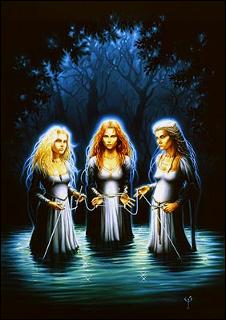
Reconnecting with and re-membering the spirit and archetypal energy of Brigid, in both her Goddess and saint manifestations, is an essential task of this renaissance. Brigid, although normally associated with the maiden and mother aspects of feminine energy, is also expressed in the cailleach form, as indicated in the prayer “Molamid Brid an mhaighean; Molamid Brid an mhathair; Molamid Brid an cailleach” (Praise to Brigid, the maiden, the mother, and the crone).

maiden_mother_crone_jpg_320_320_0_9223372036854775000_0_1_0


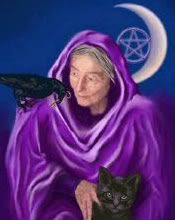
What then is the energy associated with the hag, crone, or cailleach aspect of the divine feminine? The cailleach is the embodiment of the tough mother-love that challenges its children to stop acting in destructive ways. It is the energy that refuses to indulge in inappropriate personal or societal dreams. It is the energy that will bring death to those dreams and fantasies that are not aligned with our highest good. Yet, this cailleach energy also will support the emergence and manifestation in the world of the highest and deepest within us. It will hold us safely as we embrace the darkness within ourselves and our society. It is an energy that insists that we stand still, open our hearts, and feel our own pain and the pain of the earth. This is the energy that teaches us how to stay with the process when things are difficult. This energy will not allow us to run away! 

Her way of being is a slow, inwardly focused way, with minimum outward activity: a way that values times of active waiting that pays attention and allows life to unfold.

An essential part of the journey that all the great heroes and heroines in world mythologies undertake includes facing and embracing the energy of surrender, darkness, and death. The hero or heroine learns the next step required in their outer world journey only by submitting to and being initiated into the dark world of the cailleach.

Through this initiation the mature masculine power can emerge and lead each one to find their true path. When this happens the action that follows will be in the service of the true feminine and bring forth wisdom and compassion creating new life, vitality, and sustainability.

Because western society is currently dominated by the young masculine energy, present in both men and women, characterised by its “can do” attitude, there is an urgent need for each of us to make this heroic journey with the cailleach, so that we will become agents for the transformation of our society.

Sophia as Mystic

In Goddesses in Older Women (2001), Jean Shinoda Bolen speaks of Sophia as an Archetype, Friend, Inner Guide that women may feel drawn to in their wisdom years.

“The mystic is an aspect of the Sophia archetype that is evoked by numinous experiences.” Words used in an attempt to describe numinosity are “awe, beauty, grace, divinity, ineffability”. Bolen writes that “a numinous experience is the defining moment for the woman who becomes a mystic.” After this, knowing God in this way “becomes the central focus of her spiritual life and her spiritual life becomes her life…  she seeks to enter and stay in a mystical union with divinity.” (pp. 27-8)


Bolen notes that a woman with the Sophia archetype may be drawn to a Contemplative Community, either an Eastern Ashram or a Western Cloister such as many of the Medieval Women Mystics joined. However, she adds, “since mystics directly experience divinity and women (especially older ones) no longer automatically defer to hierarchy, question dogma and are aware of sexism”, they also leave these communities if they find the beliefs of a religion “constricting and in conflict with what they deeply trust is true for them”. (p.28)

With the greater freedom that women enjoy today, many “are inspired by their mystical insights” to seek a more “personally meaningful life”. Bolen notes that though most would not define themselves as mystics, “their mystical experiences are at the core of what they are doing with their lives”. Freed from the need to conform to what an institutional religion may define as mysticism, “women are redefining spirituality” writes Bolen. (p. 28)

Bolen tells of the writer Anne Bancroft who set out to find “authentically feminine insights and ways of being that differed from male thoughts about spirituality”. Bancroft found that “women tend to see all things around them as revelatory, revealing totality and completeness and a numinous quality. To see things in this way a certain attention has to be given, which women are good at. It is not the kind of attention with which one acquires knowledge, but rather that which happens when one lets go of all concepts and becomes open to what is there.”( Bancroft in Weavers of Wisdom 1989, cited on p. 29)

Bolen writes that Bancroft found in her study that women mystics “renewed and cultivated their mystical relationship with the sacred in their own way; in nature, in creativity, in contemplation, in a deep connection with another person, and had a life other than being a mystic… ” Their mysticism provided light for their particular path, as for Joanna Macy, whose “mysticism matured through Buddhist meditation and deepened her already-formed concern for social justice; this led her to become an anti-nuclear and ecological activist.” As a practitioner and teacher of “deep ecology”, Joanna uses a “meditative and active imaginative way of listening to plants and animals and even stones, to reach a deeply-felt mystical sense of a web of life.” (p. 29)

Bolen adds that mystical experiences may also inspire writers, poets, artists. She cites Meinrad Craighead as “an artist whose mysticism and paintings have become inseparable.” (p. 29)

Yet the difficulties encountered in describing one’s mystical experiences and in having them understood lead many “contemporary Sophias” to become “closet mystics”, writes Bolen. “Many women who have attempted to describe their mystical insights and found themselves having to defend or justify them arrive at the conclusion that it is enough to live with this connection…” (p. 30)

On this aspect of the Sophia, Bolen concludes: “When Sophia is not only a source of mystical insight but is also the archetype that fully engages the attention of a woman, then it is accurate to say that she is a mystic and her Self-directed task is to find a means of expression and a way to convey the insight she has acquired.” (p. 30)

Greece 2015 138

And what of you, who are now reading these words? How does the Sophia archetype show up in your life? When have you experienced the numinous? Have you felt drawn to pursue that “knowing of God”as a life path? Do your mystical experiences shed light on your calling in social justice or poetry or art or service?

Please email me your thoughts: amclaughlin@sympatico.ca

If you would like to know about the monthly “Sophia Salons” offered here from February to May 2016 in the Ottawa Valley of Central Canada, send me a note asking for the information using the email address above.

Sophia as Archetype of Spiritual Wisdom

Sophia: Who or What is She? Where may we find Her? How might we come to know Her?

These questions draw me here to my computer each week. For the past fifteen months, I have been offering you what can only be a whiff of Her presence, a hint at Her activity in our lives, a suggestion of how She longs to befriend and guide us, how She seeks us as co-creative partners in Her work.

I have offered you a few of my own experiences, but mostly I have shared with you the discoveries of other seekers. Through their luminous writings on Sophia as She emerges in the Hebrew Scriptures, in ancient stories and mythology, in poetry and mystical experience, they continue to open new portals, new ways of knowing and experiencing Sophia in our own lives.

Today I share with you insights from Jean Shinoda Bolen’s 2001 book, Goddesses in Older Women. As I read it last evening by the fire, I found my awareness of Sophia expanding through seeing her as an archetype. It was Carl Jung who taught us that we hold within us ancient knowings/images inherited from our earliest ancestors: archetypes of mother /lover /friend/warrior/father/son/wise one/ teacher/daughter… and so on. In The Search for the Beloved (1987-1997) Jean Houston writes of a realm where these archetypal guides dwell, a place of myth and symbols, of sacred time and sacred space, a “container of that which never was and is always happening.” (p. 24)

(I)t is the place where the self joins its polyphrenic possibilities, including the gods and goddesses and their courts. In Sanskrit these celestial beings are referred to as yidams, the personified “rivers to the Ocean of Being.” The gods — Athena, Asclepios, Sophia, Shiva, Quetzalcoatl, and thousands of others — are those forces that have been crystallized in human cultures and worshipped as personalized emanations of a greater unknowable and unnameable power. Sometimes they assume a humanized form, as did Jesus, Krishna, Buddha, and Zoroaster. We may feel a particularly loving resonance with such beings who have been elevated to godhood. By virtue of this identification, we are evoked to become much more fully what we can be in the depth and breadth of our existence. (pp.24-5)

Jean Houston’s description is helpful as it places Sophia in a sacred realm, beyond the human/historical and yet accessible to us, “as the contact point for sacred time and sacred space”. (p. 24)

Now when I turn to Jean Shinoda Bolen’s writings, I have a clearer sense of how Sophia appears in our lives as Archetype of Wisdom. And I recall the frisson I experienced when I read in She Who Is (Elizabeth Johnson, 1992) the suggestion that Jesus was himself the embodiment of the Sophia archetype! Johnson writes that Jesus lived the qualities of Sophia as described in the Hebrew Scriptures, but his historical entry into time was during a period when a woman would not be accepted as a spiritual teacher.

In Goddesses in Older Women Bolen speaks of Sophia as “a forgotten goddess figure within a monotheistic, patriarchal religious tradition that denies feminine divinity” (p.25) Describing Sophia as “the archetype of spiritual wisdom or soul knowledge,” Bolen writes:

Sophia’s wisdom is insightful, it is what we know through gnosis….Gnostic or noetic…knowledge is what is revealed to us or intuitively perceived as spiritually true. I think of gnosis as what we “gknow” at a soul level, it’s what we know “in our bones”…. At a soul level, we can know that we are spiritual beings on a human path, or know that life has a purpose, or know that we are loved, or know God, or know that we are part of an interconnected universe. (p. 26)

For Bolen, “gnosis” is “an intuitive process of knowing oneself at the deepest level” akin to the Jungian concept of connecting to the Self where with soul knowledge we sense our life as meaningful. “What we know through a connection with the Self is divine wisdom,” Bolen writes. “This is a wisdom that isn’t the exclusive possession of authority above us; it is the wisdom that dwells in us and is everywhere.” (p.27)

What we call “women’s intuition” is also an aspect of gnosis. Bolen writes:

Far from mysterious, it’s a combination of noticing what is going on and processing what we are noticing in an intuitive way. It has to do with knowing people, of assessing character, of seeing through the façade – it’s insight into the presence or absence of soul. The click! insight that sees the underlying sexism or power politics in a situation is gnosis. The Aha! that happens when something important to you suddenly makes sense is gnosis. The moment when you know that your spouse is unfaithful, is gnosis. That inner twinge of a guilty conscience is gnosis. (p. 27)

Bolen concludes her reflection on Sophia as Archetype of Spiritual Wisdom or Gnosis with these words:
Growing older and wiser is a lifelong process that accelerates in the third phase, especially if you heed gnosis in yourself. This is how the archetype of Sophia becomes known to you. She is a way of knowing, a source of inner wisdom as well as an archetypal wisewoman. When Sophia dwells in you, you perceive the soul of the matter or soul qualities in others. (p.27)

Next week: “Sophia the Mystic”

Travelling with Sophia

Even to think about (Wisdom) is understanding fully grown;
be on the alert for her and anxiety will quickly leave you.

She herself walks about looking for those who are worthy of her
and graciously shows herself to them as they go,
in every thought of theirs coming to meet them.

(Wisdom 6: 15-16 Jerusalem Bible)

Poring over notes from the Greece Journey, I seek a place of re-entry, so that I might invite you back inside the deep teachings, the healing processes, the beautiful sights, sounds, stories of our travels in that blessed land. Once again my memories turn to Sophia, the Greek name for Wisdom. Icons of Mary, such as the ones I showed you from the Church of the Hundred Doors on Paros Island, abound in Greece.

For the Greeks, Sophia is a loving presence, close, active, supportive, loving, healing, often seemingly conflated with Mary. I turn again to last week’s posting for Epiphany, find the quote from Chapter 6 of the Book of Wisdom (see above). And then I decide to share a deeply personal experience.

In Holy Week of 2015, I was taking some retreat days here in my riverside home in the woods. As happens when the mind is quiet, dreams came. In one, I found myself in a darkened room, where my teacher Jean Houston was showing me framed depictions of the work I have begun in recent years: a promo for my Irish play, “The Wooing of the Soul”, my book Called to Egypt on the Back of the Wind, the retreats I facilitate…

Further into the room, the darkness was deeper. I understood I must go there alone in order to encounter the Sacred Feminine, the Presence of Sophia. The dream ended there, but stayed inside my heart like an unfinished story. A few weeks afterwards, as I was wondering whether I should consider the Greece Journey, I remembered that dream. Would I find there the presence that awaited me?

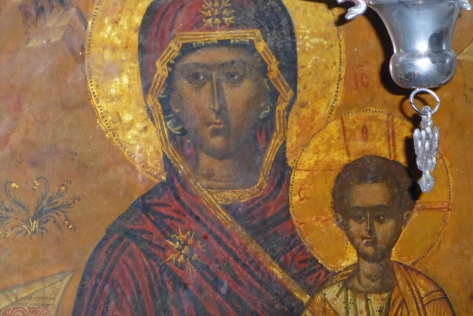
On our last morning on Paros Island, before departure time for our ferry, I was walking through the streets of the town, hoping to find the shops open. They were shut tight, but on a narrow side street, I chanced upon a tiny white building whose door stood invitingly open. Inside, I found a small darkened chapel. On two walls were Icons, glowing in the fiery red light of lamps.

The Icon on the wall to my right was of Mary/Sophia. I gazed at her calm lovely face. It seemed that she gazed back. I stood there, unable to move, drawn to rededicate my life to her. Still I could not go. Then I noticed the child she held. At once I recalled the Inuit tale of the Sealwoman who set her son (her spirit) on the shore in the moonlight for his task was to become a drummer, a singer, a storyteller. She promises him, ” I will breathe into your lungs a wind for the singing of your songs.”

I understood that I must do the same: send my recovered spirit out to tell the stories, trusting that she, Wisdom-Sophia, would “breathe into (my) lungs a wind for the singing of (my) songs”… I was filled with joy and gratitude. I took this photo before I left the small chapel.

Greece Paro dark chapel t2015 174

It was only later, on the ferry back to mainland Greece, that I remembered my dream of the darkened room and the Sacred Feminine Presence who awaited me there.

Truly Wisdom-Sophia  herself walks about looking for (us) and graciously shows herself to (us) as (we) go, in every thought of (ours) coming to meet (us).

Here is a poem by Jan Richardson to give heart to us in all our journeys:

For Those Who Have Far to Travel

A Blessing for Epiphany

If you could see
the journey whole,
you might never
undertake it,
might never dare
the first step
that propels you
from the place
you have known
toward the place
you know not.

Call it
one of the mercies
of the road:
that we see it
only by stages
as it opens
before us,
as it comes into
our keeping,
step by
single step.

There is nothing
for it
but to go,
and by our going
take the vows
the pilgrim takes:
to be faithful to
the next step;
to rely on more
than the map;
to heed the signposts
of intuition and dream;
to follow the star
that only you
will recognize;
to keep an open eye
for the wonders that
attend the path;
to press on
beyond distractions,
beyond fatigue,
beyond what would
tempt you
from the way.

There are vows
that only you
will know:
the secret promises
for your particular path
and the new ones
you will need to make
when the road
is revealed
by turns
you could not
have foreseen.

Keep them, break them,
make them again;
each promise becomes
part of the path,
each choice creates
the road
that will take you
to the place
where at last
you will kneel
to offer the gift
most needed—
the gift that only you
can give—
before turning to go
home by
another way.

Jan Richardson
from Circle of Grace
– See more at: http://paintedprayerbook.com/2016/01/02/epiphany-for-those-who-have-far-to-travel/#sthash.jTkLHSWC.dpuf

The Greek Holon Journey: Meeting Mary

On the Greek Island of Paros, we come upon a magnificent Church, built by the Roman Emperor Constantine to fufill a promise made by his mother Helena.

In 326, St. Helena, the mother of Emperor Constantine the Great, sailed for the Holy Land to find the True Cross. Stopping on Paros, she had a vision of success and vowed to build a church there. She founded it but died before it was built. Her son built the church in 328 as a wooden-roof basilica. Two centuries later, Justinian the Great, who ruled the Byzantine Empire from 527 to 565, had the church splendidly rebuilt with a dome. The emperor appointed Isidorus, one of the two architects of Constantinople’s famed Hagia Sophia, to design it.


P1000728

Calliope (Kapi) our guide tells us of the history of the Church of Panagia Ekatontapyliani (Our Lady of a Hundred Doors), the oldest remaining Byzantine church in Greece.

Greece 2015 138

Inside we come upon two large, luminous icons of Mary. Affixed to the lower frame of the icons we see images made of gold and silver in shapes depicting eyes, legs, arms….. Our guide, Calliope, tells us that these are offerings given in thanksgiving for a healing. Kapi reminds us that we saw something similar in the Museum: plaster representations of an arm or a leg that was healed, offered in thanksgiving to the healer god Asclepius.

Greece 2015 135


Greece silver eye in thanks to Mary 2015 139

The dogmas change; the traditions go on, Kapi comments, revealing yet another way in which Greek spirituality is part of a continuum from ancient days. Where once the Greeks sought healing from Asclepius, they now turn to Mary in their need.

On this beautiful island in the Aegean, the mystery of Mary of Nazareth confronts us. A woman wrapped in silence, the one who waits in the shadow for the great birthing, who “ponders in her heart” the wonders that follow upon the coming of her child.
As we prepare to celebrate the Birth of Jesus, the One whose coming brings Light at the darkest time of the year, Mary is a companion, a guide, a friend who walks with us in the darkness.

Mary has left us no written word. The little we know of her from the Gospels is sketchy at best, her appearances brief, her words cryptic. Yet her influence on Christian spirituality is staggering in its power.
Who is this woman, and how has she risen from a quiet life in the outposts of the Roman Empire to become, as the Church proclaims her, “Queen of Heaven and Earth”?
When we first meet Mary in the Gospels, she is being offered an invitation.Here is how the Irish poet John O’Donohue imagines the scene:

Cast from afar before the stones were born
And rain had rinsed the darkness for colour,
The words have waited for the hunger in her
To become the silence where they could form.

The day’s last light frames her by the window,
A young woman with distance in her gaze,
She could never imagine the surprise
That is hovering over her life now.

The sentence awakens like a raven,
Fluttering and dark, opening her heart
To nest the voice that first whispered the earth
From dream into wind, stone, sky and ocean.

She offers to mother the shadow’s child;
Her untouched life becoming wild inside.

Where does our story touch Mary’s? Where are the meeting points? What are the words waiting for the hunger in us “to become the silence where they could form”? This might be a question to ask in our daily contemplative time… when our hearts open, will they also become a nest for a new birthing of the Holy?

From Jean Houston, we have learned that now there is no time for us to modestly refuse any call that smacks of greatness. The urgent needs of our time require a “yes” to the conception, followed by the birthing, of newness.

Here are Jean’s words, reflecting upon the call of Mary, the call of each of us:
Just think of the promise, the potential, the divinity in you, which you have probably disowned over and over again because it wasn’t logical, because it didn’t jibe, because it was terribly inconvenient (it always is), because it didn’t fit conventional reality, because… because… because….What could be more embarrassing than finding yourself pregnant with the Holy Spirit? It’s a very eccentric, inconvenient thing to have happen.
(Jean Houston in Godseed p. 38)

Eccentric. Inconvenient. Perhaps. But nonetheless it is our call. Mary’s story gives us the courage to say “yes” without knowing where that “yes” may lead. It is enough to know that certainly our own life will become, like Mary’s, “wild inside”.