Tag Archives: spirituality

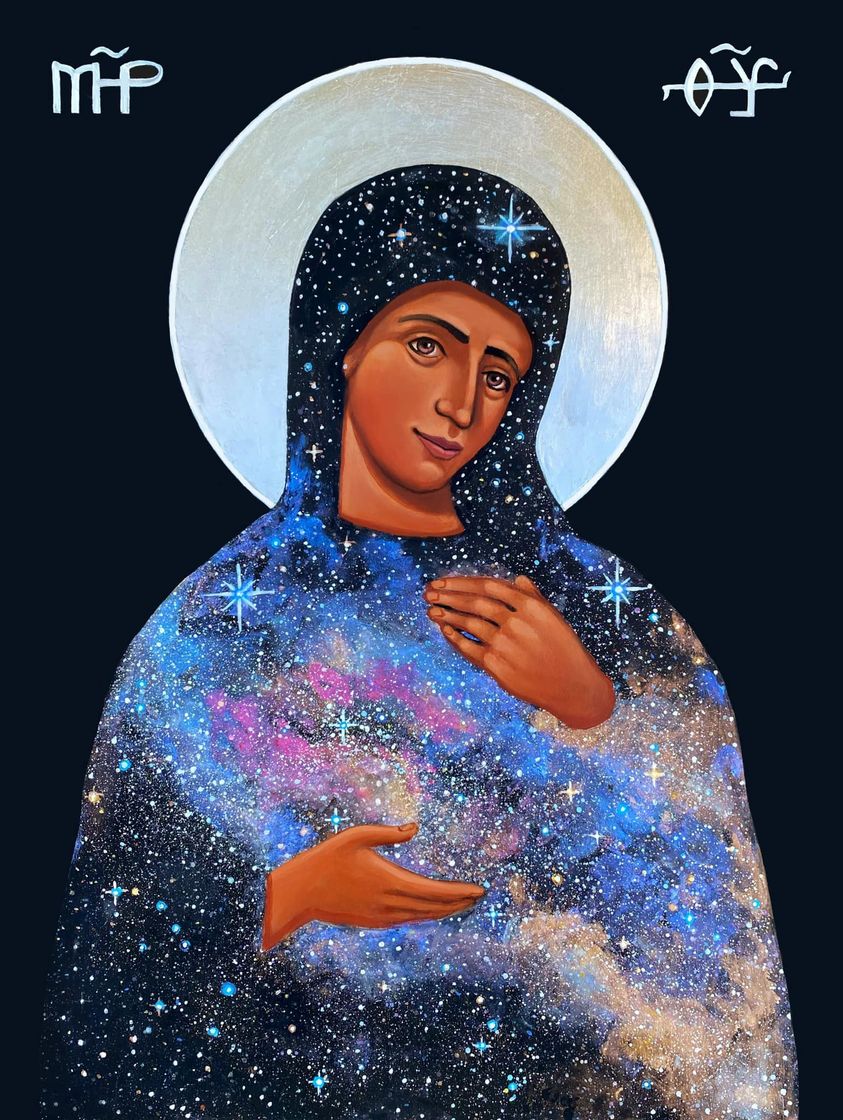
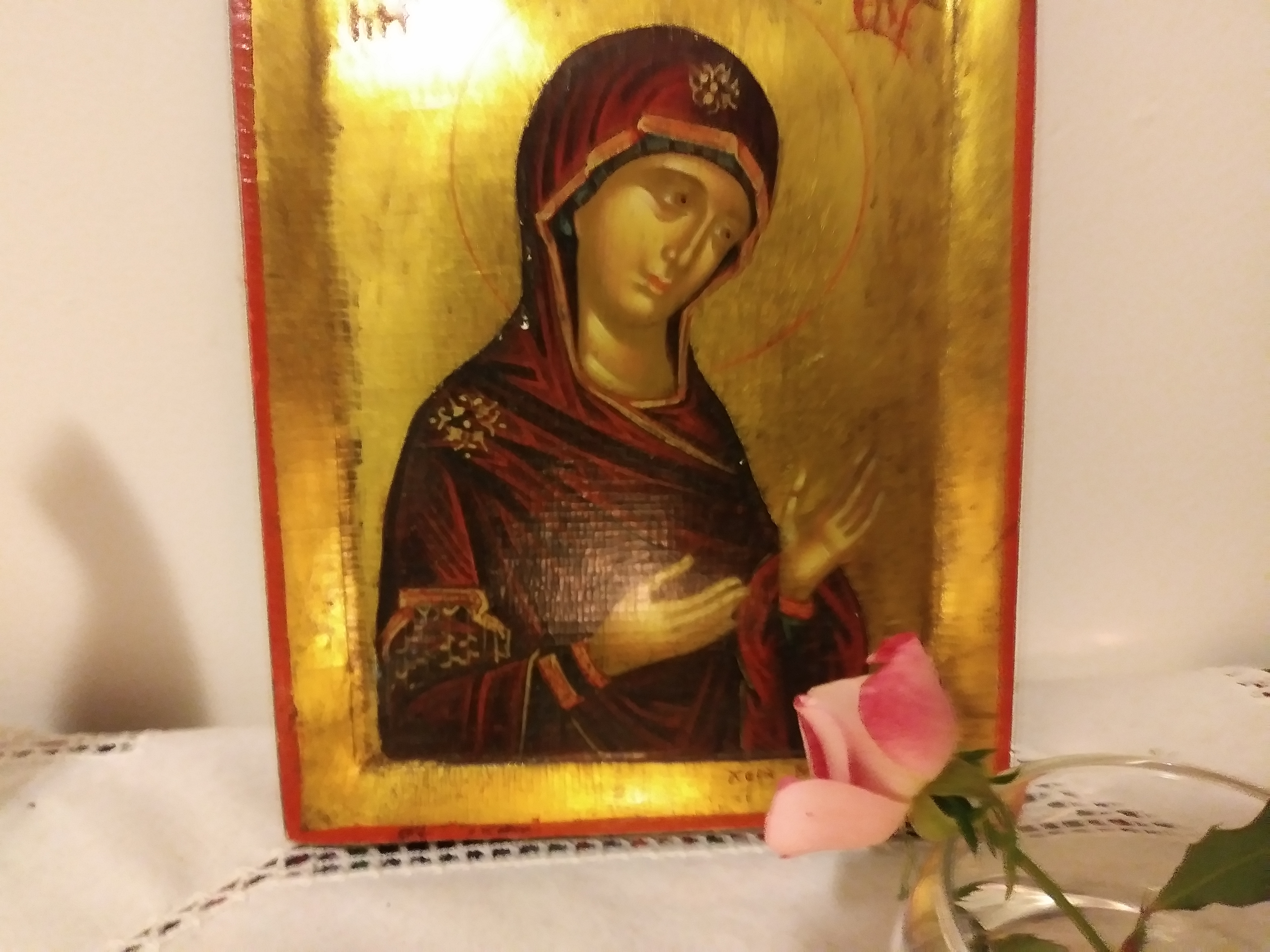
Mary, Mother of Jesus, Who Are You?

Advent Four December 2025

If you grew up Catholic in the years before the Second Vatican Council, chances are Mary was at the very heart of your faith. You prayed the “Hail Mary” many times daily; you sang hymns to Mary as you walked in May processions carrying flowers to decorate her statue; in every trouble and doubt, in every dark moment of your own life, you turned to her as to a mother whose love for you was unconditional. You probably knew by heart the “Memorare”, a prayer to Mary that says, in part, “Remember…Mary, that never was it known that anyone who fled to your protection, implored your help or sought your intercession was left unaided…”

At the call of Pope John 23rd, 2600 Roman Catholic Bishops gathered in Rome for the Second Vatican Council in the mid-1960’s. Believing they were restoring a balance, they invited Mary to step from her throne, and guided her gently to a place among the faithful, the followers of her son, Jesus. The “excesses” of Marian devotion were curbed… and then what happened?

Over the past sixty years since the closing of the Vatican Council, we have seen a burgeoning of interest in the “Sacred Feminine”; a recovery of ancient stories of the Goddess; archaeological finds that create renewed interest in the time when the Sacred One was honoured as a woman; an explosion of writing among theologians, historians, cultural storytellers, seeking to understand the power and presence of “Mary” in the Christian story. I will cite a few here: The Virgin by Geoffrey Ashe; Missing Mary by Charlene Spretnak; Untie the Strong Woman by Clarissa Pinkola Estes and Truly Our Sister by Elizabeth Johnson.

Though I am no theologian, I have a consuming interest in the many aspects of this mystery. What I glimpse is this: the human heart longs for a divine mothering presence. Ancient cultures honoured a feminine divine who over millennia was called by many names: Isis in Egypt; Inanna in Sumeria; Ishtar in Babylon; Athena, Hera and Demeter in Greece, Anu or Danu among the ancient Celts; Durga, Kali and Lakshmi in India; for the Kabbalists, Shekinah; for the gnostics, Sophia or Divine Wisdom. Christianity had no “Mother God” to put in the place of the Goddesses whose worship it was determined to eradicate. Geoffrey Ashe’s theory is that Mary’s gradual ascension in Christianity was not an initiative of Church Leadership, but rather a response to the hunger of the early Christians for a sacred feminine presence.

Mary became for us an opening to a loving feminine sacred presence. Or, put another way, a loving sacred feminine presence responded to the cries of her people when they called her “Mary”, just as that presence had responded over the millennia to other names cried out in love or sorrow or desperate need.

Over these darkening days as we descend to the longest night of the year at the Winter Solstice, Mary will be our companion. We reflect on her pregnancy, her waiting, her uncertainty, the doubts of those who love her, the trust that sustains her “while she opens deeper into the ripple in her womb…”

This is profound mystery. For Mary. For each one of us who carries the Holy within us, seeking a place of birth. We walk the dark road, with Mary, in trust.

We walk companioned by one who knows our struggles to maintain our trust in the face of inner doubts and outer calamity. We walk with one who loves us and encourages us until we are ready to welcome “the day which will be born from the womb of this present darkness.”

What mystery is “Coming Ashore” inside you?

Embracing the Darkness of the Cailleach

Dolores Whelan http://doloreswhelan.ie teaches us that it is no small task to integrate the divine energy of the sacred feminine within oneself. We only do one piece of the work but each piece joined together with the others creates a quantum shift.

Dolores said that the crime is to believe that we have no power. We need to ask, “What choices do I have here?” If we say, “there’s nothing I can do,” Dolores responds, “OH YES THERE IS!”

In her article, “Brigid: Cailleach and Midwife to a New World”, Dolores how Brigid assists us in this great work which is our great work.

Reflecting on the turmoil present in the world today it is clear to all but those steeped in denial, that all is not well. It seems that something ails us humans; something that causes us to live in ways that disrespect our mother, the living earth, and all our relatives. We ask what is it in us humans that creates such a restless world where there is little sense of belonging, nurture or home and which causes so many of the species with which we share this planet to suffer?

The exclusion of the Feminine energy in our naming and understanding of the Divine is reflected in a corresponding absence and devaluing of feminine energy in all aspects of life in western society. The devaluing and exclusion of the feminine energy over the past centuries has created a distorted story about life which has resulted in a world whose shape and vibration creates disharmony.

So how do we find our way back to a more harmonious way of life? If we know what is missing and what ails us, it may be possible for us to make the journey back towards wholeness and health.

At this time many people are becoming aware of the wisdom of the feminine. As this happens, the absence of genuine feminine energy present in most institutions, both religious and secular, throughout western culture, becomes obvious. To include the presence of the divine feminine energy in creating a world whose shape is more wholesome requires a fundamental reclaiming of the essential role of the feminine in all aspects of life. In order to create change within the physical world and in our society it is necessary to change the dreams and stories held within the imagination of a society.

Reconnecting with and remembering the spirit and archetypal energy of Brigid, in both her Goddess and saint manifestations, is an essential task of this renaissance. Brigid, although normally associated with the maiden and mother aspects of feminine energy, is also expressed in the cailleach form, as indicated in the prayer “Molamid Brid an mhaighean; Molamid Brid an mhathair; Molamid Brid an cailleach” (Praise to Brigid, the maiden, the mother, and the crone).

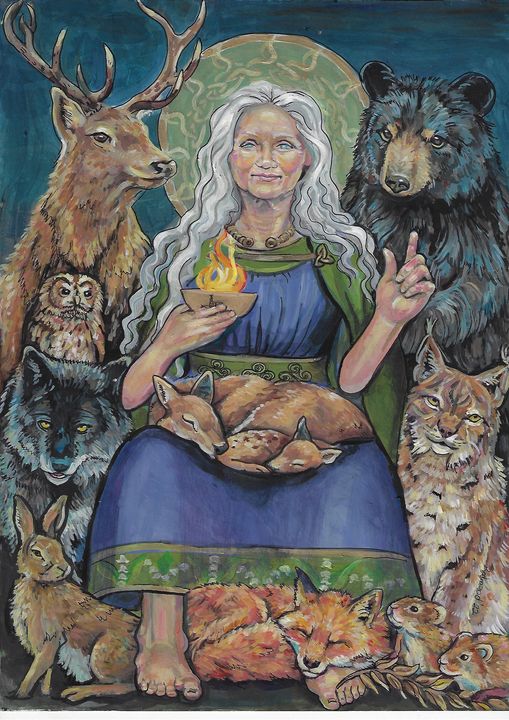
What then is the energy associated with the hag, crone, or cailleach aspect of the divine feminine? The cailleach is the embodiment of the tough mother-love that challenges its children to stop acting in destructive ways. It is the energy that refuses to indulge in inappropriate personal or societal dreams. It is the energy that will bring death to those dreams and fantasies that are not aligned with our highest good. Yet, this cailleach energy also will support the emergence and manifestation in the world of the highest and deepest within us. It will hold us safely as we embrace the darkness within ourselves and our society. It is an energy that insists that we stand still, open our hearts, and feel our own pain and the pain of the earth. This is the energy that teaches us how to stay with the process when things are difficult. This energy will not allow us to run away! Her way of being is a slow, inwardly focused way, with minimum outward activity: a way that values times of active waiting that pays attention and allows life to unfold.

The Cailleach’s way of being is a slow, inwardly focused way, with minimum outward activity: a way that values times of active waiting that pays attention and allows life to unfold.

An essential part of the journey that all the great heroes and heroines in world mythologies undertake includes facing and embracing the energy of surrender, darkness, and death. The hero or heroine learns the next step required in their outer world journey only by submitting to and being initiated into the dark world of the cailleach.

Through this initiation the mature masculine power can emerge and lead each one to find their true path. When this happens the action that follows will be in the service of the true feminine and bring forth wisdom and compassion creating new life, vitality, and sustainability.

Because western society is currently dominated by the young masculine energy, present in both men and women, characterized by its “can do” attitude, there is an urgent need for each of us to make this heroic journey with the cailleach, so that we will become agents for the transformation of our society.

To Dolores Whelan’s wisdom about Samhain, I add here the morning prayer from “Singing the Dawn.” Elspeth, the Cailleach of the novel, recites this prayer to honour Sophia in the darkness of dawn:

“Singing the Dawn” Anne Kathleen McLaughlin. Borealis Press, Ottawa, Canada, 2022)

http://borealispress.com

One Dreamer, One Lifelong Desire

I managed to climb up to the point

where the Universe became apparent to me

as a great rising surge,

in which all the work that goes into serious inquiry,

all the will to create, all the acceptance of suffering,

converge ahead into a single dazzling spear-head –

now, at the end of my life,

I can stand on the peak I have scaled and continue

to look ever more closely into the future,

and there, with ever more assurance,

see the ascent of God.

(Pierre Teilhard de Chardin, The Heart of Matter)

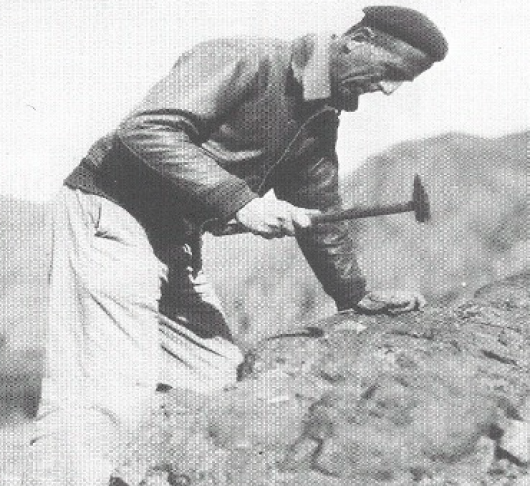
A child, born in France in 1881, too early acquainted with death and loss. begins a lifelong search for something that will last. With the soul of a poet, with eyes drawing in the beauty of nature as he walks with his father through the hills surrounding their home in Auvergne, the young Pierre Teilhard de Chardin is drawn to rocks as things that would endure…. This early allurement leads him into a scientific career that takes him to China where he is today honoured as its founder of paleontology, part of the group that unearthed the earliest human remains in China, known as “Peking Man”.

Drawn to the Jesuit Order, Pierre is sent for his early theological training to Hastings in England. Here, he is enchanted by the natural beauty of the green land around him. Here by the sea, he discovers ancient cliffs bearing fossils that carry the story of evolution. Following his ordination to the priesthood in 1911, Pierre returns to the Jesuit community in Paris. His assignment is to study geology and to apply for acceptance as a student in paleontology under Marcellin Boule at the Paris Museum of Natural History. Boule, probably the greatest scholar in the field, recognizes Teilhard’s talents. As a scientist, Pierre is on his way to great achievements.

If Science were his only love, Pierre’s story would perhaps have been one of intense work accompanied by a steady rise in fame. Yet Pierre’s heart holds another deep desire, a love for the Risen Christ whom he glimpses at the heart of the earth’s beauty, as the living spirit in all that exists. Vowed as a Jesuit within a Church that still, in the early twentieth century, refuses to accept the reality of Evolution, that sees the path to God as an upward climb away from the material to the spiritual, seeking a God who must be found by rising above the Earth and Nature, Pierre is like to child torn between separating parents both of whom he loves. He is to spend his life seeking to draw Matter and Spirit together.

His studies in Science at the Institut Catholique in Paris prepare him to return there as a professor following the First World War, where he serves as a stretcher bearer. His writings increase, sharing his vision of a planet permeated by the Spirit of God. He writes of a Universe filled with the love of the Risen Christ. Yet he is forbidden by his Jesuit Superiors and by leaders of the Church in Rome to publish the book length manuscript that holds the heart of his vision: “The Human Phenomenon”. He is forbidden to teach. He is exiled from his beloved France to live in the Jesuit Community in New York City where he dies on Easter Sunday, 1955.

Not long before his death, Pierre writes: “How is it possible that descending from the mountain and despite the glory that I carry in my eyes, I am so little changed for the better, so lacking in peace, so incapable of passing on to others through my conduct, the marvelous unity in which I feel immersed?….

“As I look about me, how is it I find myself entirely alone of my kind?…

“Why am I the only one who sees?” (“Recherche, travail, et adoration,” New York, March 1955; cited in Teilhard: A Biography by Mary Lukas and Ellen Lukas, McGraw-Hill, New York, 1977, 1981)

Had that been his ending, Pierre’s story would have been a tragedy. It was not the end.

Pierre’s circle of loving friends, several of whom were women: intelligent, capable, gifted, understood his vision. When his health began to fail, on the advice of a Jesuit friend, Teilhard entrusted his writings to a woman friend, a skilled editor…. Shortly after his death, Teilhard’s books began to appear like an explosion of shooting stars.

Just weeks ago, the film Teilhard: Visionary and Scientist, was released on PBS and is now available world wide with this link: https://www.pbs.org/video/teilhard-visionary-scientist-pt9dc1/

Filmmakers Frank Frost and his wife Mary Link spent thirteen years in massive fundraising efforts, allowing them to travel to China, to France and across the US for interviews, research and filming. The result is a work of art: a visually splendid achievement in storytelling and film-making. It is a gift from the Universe, from Teilhard himself, who spent his life shaping and writing of the vision that we, in our time, so desperately need:

Richard and Julian

Faith is the comfort of not needing to know” ( Richard Rohr)

Somewhat unsteadily, using a cane for support, Richard Rohr walked across the stage at the University of Notre Dame, settled into the armchair across from the interviewer. He gazed into the darkness where the packed auditorium of listeners awaited his words in silence. It was Rohr’s first public talk since Covid created a cocoon around our lives.

(Note; The talk referred to here ,“Christianity and the Re-emergence of the Non-dual Mind” is available for viewing on YOUTUBE)

Gentle, smiling, often self-deprecating, this elderly, grandfather-like figure cut to the heart of our 21st century reality. Holding it in the light of the Gospel, particularly the Beatitudes, Rohr showed us that in our eagerness for clarity, our fear of uncertainty, we’re caught in dualities.

“If you don’t understand non-dual thinking, everything slips into liberal of conservative”. Instead of clinging to our own way of thinking as the only right way, Rohr advises “let the whole horizon of reality all come towards you.”

We still haven’t grasped the message of Jesus, haven’t accepted that wisdom lies in that hazy place where we are at peace with not knowing, “Faith is the comfort of not needing to know.” The mystics of the early centuries of Christianity accepted, embraced this unknowing in contemplative presence.

Rohr’s own presence, that smile, that shake of the head at absurdity, was puzzled, a little sad….

He drew a paper from his pocket, unfolded it, began to read a poem to us, translated from Symeon, a tenth century theologian.

We awaken in Christ’s body

As Christ awakens our bodies,

and my poor hand is Christ, He enters

my foot, and is infinitely me.

I move my hand, and wonderfully

my hand becomes Christ, becomes all of Him

(for God is indivisibly

whole, seamless in His Godhead).

I move my foot, and at once

He appears like a flash of lightning.

Do my words seem blasphemous?–Then

open your heart to Him

and let your heart receive the one

who is opening to you so deeply.

For if we genuinely love Him,

we wake up inside Christ’s body

where all our body, all over

every most hidden part of it,

is realized in joy as Him,

and He makes, utterly, real,

and everything that is hurt, everything

that seemed to us dark, harsh, shameful,

maimed, ugly, irreparably

damaged, is in Him transformed

and recognized as whole, as lovely,

and radiant in His light

we awaken as the Beloved

in every last part of our body.

(I found the full poem in The Enlightened Heart, an anthology of poetry edited by Stephen Mitchell, Harper Perennial, 1993)

As the interview was drawing to a close, Rohr was asked, “How would you want to be remembered?”

“I’m about life.” Rohr replied. “It’s not about me. God allowed me to do everything wrong so God could do everything right…through me…in spite of me….it’s all mercy, within mercy, within mercy.”

What words would Rohr send in a text message to the world? “In the end it will be good.”

Painting of Julian of Norwich by Jane Joyner

I write this on the Feast Day of Julian of Norwich, the fourteenth century mystic who lived through three outbreaks of Black Plague, which reduced the population of England by one-half, the violence of the Peasant’s Revolt and the Western Schism which brought chaos to all of Christendom. Yet her writings are a distant echo of Rohr’s words about mercy, about all being well in the end. In her book, Revelations of Divine Love, Julian records her conversations with the risen Jesus which took place in a night of visions following her near-death experience at the age of thirty.

Acknowledging to Julian that, indeed, sin is everywhere, Christ assures her that “All shall be well, and all will be well, and you shall see for yourself that all manner of thing shall be well.” In the two decades of reflection that followed these visions, Julian came to trust that the meaning of this message was that everyone would be saved.

Julian too was texting to the world: “In the end it will be good.”

Today, on Julian’s Feast Day in the Anglican Calendar, I wondered what Julian herself would most want us to remember from her many teachings. Asking for her guidance, I combed through her Revelations of Divine Love seeking passages that seem most important to our lives, to our calling in these times when hope seems out of reach…

(All of the selections are from the Long Text of Julian’s Revelations in Showings, Colledge & Walsh translation, Paulist Press, New York, Toronto, 1978.)

The first passage is stunning in its intimacy and tenderness:

I saw that (Jesus) is to us everything which is good and comforting for our help. He is our clothing who wraps and enfolds us for love, embraces us and shelters us, surrounds us for his love, which is so tender that he may never desert us. And so in this sight I saw that he is everything which is good, as I understand. (Fifth Chapter)

The second continues the theme of intimate nearness, inviting us to respond in like manner:

For as the body is clad in the cloth, and the flesh in the skin, and the bones in the flesh, and the heart in the trunk, so are we, soul and body, clad and enclosed in the goodness of God. Yes, and more closely, for all these vanish and waste away; the goodness of God is always complete, and closer to us beyond any comparison. (Sixth Chapter)

And the third choice: He did not say: “You will not be troubled, you will not be belaboured, you will not be disquieted”; but he said: “You will not be overcome.” God wants us to pay attention to these words, and always to be strong in faithful trust, in well-being and in woe, for he loves us and delights in us, and so he wishes us to love him and delight in him, and trust greatly in him, and all will be well. (Sixty-Eighth Chapter)

(Reflections on Julian of Norwich to be continued…..)

Awakening to Sophia

The new is giving birth to the old… the task is to give birth to the old in a new time—to the primordial ancient in a world that is new. (Peter Kingsley)

On a golden October day in 2014, I began this weekly blog dedicated to giving new birth to the ancient knowing of the feminine principle of the Sacred whom some cultures have known by the name “Sophia.” Inspired by a growing sense of a Sacred Feminine Presence both within and around me, I chose the title, “Sophia Wakens.”

In May of that year on a sacred journey led by Jean Houston, I had visited Greece. Paintings and icons of Sophia adorned many of the churches. Our guide Calliope (Kapi) told us that Greek Christians have a deep reverence for the presence of Sophia, Wisdom.

“How do they see her in relation to Athena, the Greek Goddess of Wisdom?” I asked.

“They see her as a Continuation,” Kapi responded.

Later, as we stood at the site of the Eleusinian mysteries of Demeter and Persephone, about twenty kilometers from Athens, Kapi pointed to a small white church atop a hill. “That is a Church dedicated to Mary,” she said. “We find that a Church built to honour Mary almost always indicates that there is an ancient temple to the goddess below.”

In the ten years since that day, I have been slowly awakening to Sophia’s Presence in my life. I’ve found a kindred spirit in the writings of Thomas Merton (see Christopher Pramuk Sophia: The Hidden Christ of Thomas Merton, Liturgical Press, Collegeville Minnesota, USA 2009) Yet, for the most part, it has been a lonely journey. In my desire to know Sophia I have come to see her in other guises, as a presence in ancient fairy tales, in the goddess Brigid in Ireland, in Mary, Mother of Jesus, whom I have loved since I was twelve years old.

The one who has been seeking me has exercised infinite patience over these years…..until a few weeks ago when I attended a Symposium on Zoom: “Awakening to Humanity’s Sacred Mission”.

Inspired and sponsored by Ervin Laszlo, the experience was put together with the support of several earth-wide organizations dedicated to responding to the urgent needs of our planet at this time. With funding from “Project Earth”, the eight sessions over four days on ZOOM were offered free of cost to anyone who registered.

There were over 2400 registrants from 86 countries who either attended on screen or watched the recordings afterwards. Listening to the presenters, some of whom I knew, like Jude Currivan, author of the Story of Gaia, I felt a deep breath of “at homeness” fill me. In small break-out groups, as I listened to others speak of their personal missions, I recognized ”kindred spirits”. Comments spoken and posted by participants referenced their sense of belonging, of hope, of gratitude for this unprecedented experience of unanimity… and in a deep moment of guided meditation , it was the voice of Sophia that I heard, reminding me of my dedication to Her, asking simply, “Let me love you.”

Among the presenters were Indigenous leaders who brought their ancient wisdom of respect for the Earth, some bringing messages like the recent one received by the Kogi people, of the Amazon Rain forest. The Sacred Mother has spoken to them of the urgent need to act now to save the planet, warning that two years is the time limit for a turn-around of human behaviors that are destroying the living systems of the earth.

Chief Dwayne Perry, Inspirational Leader of the Ramapugh Nation, said, “we are the caretakers of the Earth and all who dwell therein…our Sacred Mission has already begun.”

Here is a sampling of the words of wisdom spoken during the Symposium:

“Something new is emerging and it starts with each one of us… this is the end of the beginning….Let’s dance with the planet and dance with each other…I have great hope in human nature….human nature is nature in the human form.” (Ervin Laszlo)

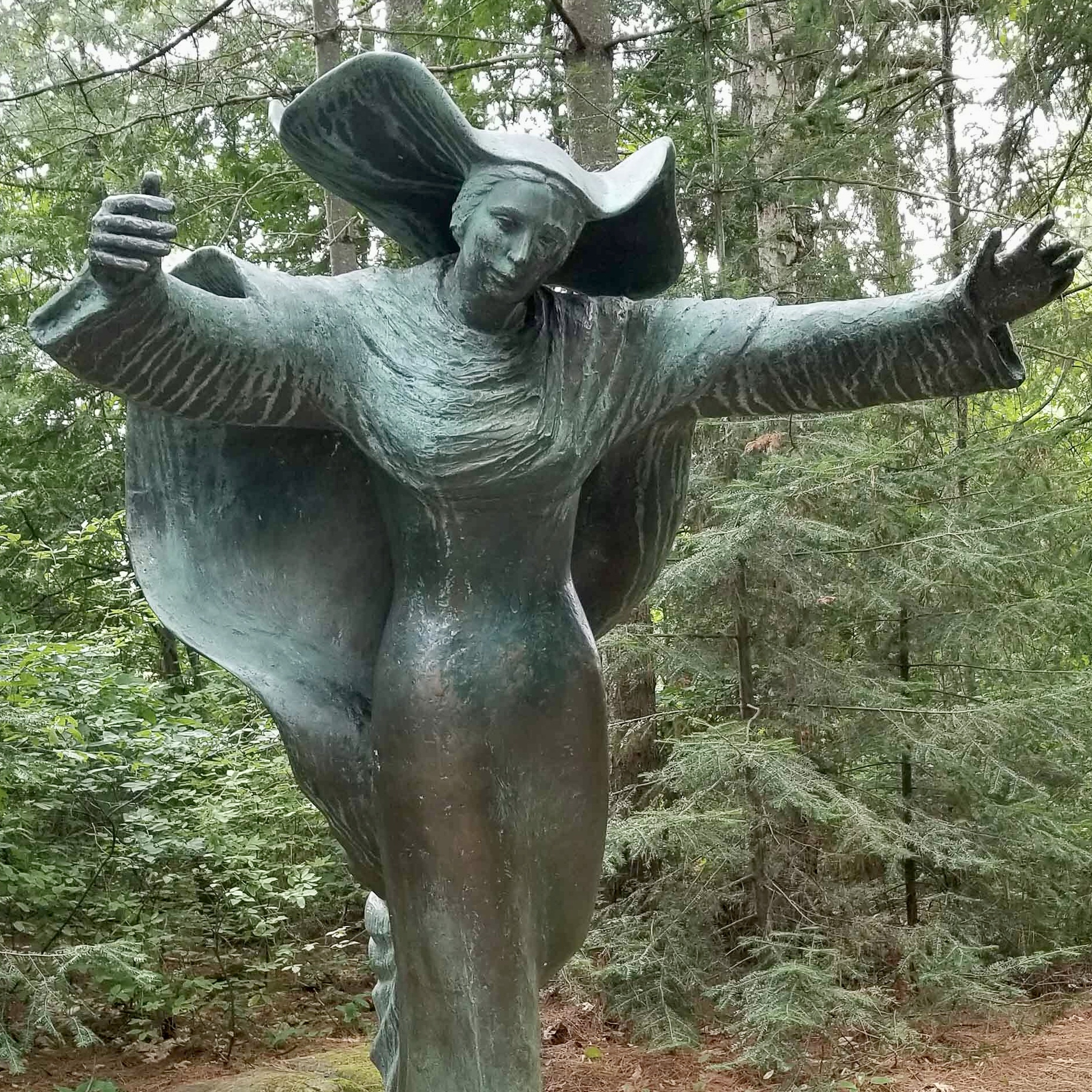
Madonna of Combermere

“We’ve done the Mystic thing,” said Canadian songwriter, Tatiana Speed, before singing, “Awake my ancient memory, let me remember who I am.”

Jarvis Smith, environmental activist in England, through years of deep listening, has received messages from the Earth Mother: “Wake up to living in gratitude for all I have given you….”What you call a crisis, I see as a way to bring people together. I can transform this.”

A renowned spiritual leader in India counselled: “It’s time to come down from the mountain, get up from your prayer cushion and your yoga mat.”

During a silent meditation, led by a gentle wise woman who invited us to ask, “What is my sacred mission?”, the clear response rose in me: “Embody Sophia (the Sacred Feminine)”. Later, we were invited to walk an imaginal labyrinth, to listen deeply, in the Quaker tradition, to share aloud, if what arises seems meant for the whole group. I, who love words, heard nothing. I felt the warmth of a loving embrace which I knew was from Sophia. Only then did I hear words, “Let me love you.” I waited, wondered, then understood this message was for the entire group, so I spoke it.

A week later on Sunday February 18th, Ervin Laszlo appeared on the ZOOM screen, his eyes alight with joy, purpose, enthusiasm: “Where do we go from here?” he asked, inviting “all those engaged and those who formed this (to) join together in a semi-formal alliance.” He added “I pledge my own full allegiance to this….I can offer copies of my new book to each member of the Alliance….I’m very keen on continuing this Alliance.” He encouraged us to “keep in touch….create a program… on Internet (focused on) the evolution of our species on this planet.

“We are one with each other and the world around us. There is no distinction between personal mission and Humanity’s mission: to advance life on this planet, to advance consciousness….What is good for the planet is good for us.

“Transformation needs to happen….the sense of mission expressed here….beings endowed with consciousness can bring a higher level… Humanity will continue.”

Facilitator Jon Ramer was visibly moved: “I’ve never seen something like this before…. I presume, Ervin, this invitation is to all humanity.”

These words are now written in my heart:

Brigid: Midwife for a Planetary Rebirth

by Dolores Whelan

Reflecting on the turmoil present in the world today it is clear to all, but those steeped in denial, that all is not well. It seems that something ails us humans; something that causes us to live in ways that disrespect our mother, the living earth, and all our relatives. We ask what is it in us humans that creates such a restless world where there is little sense of belonging, nurture or home and which causes so many of the species with which we share this planet to suffer?

The exclusion of the Feminine energy in our naming and understanding of the Divine is reflected in a corresponding absence and valuing of feminine energy in all aspects of life in western society. The devaluing and exclusion of the feminine energy over the past centuries has created a distorted story about life which has resulted in a world whose shape and vibration create disharmony.

So how do we find our way back to a more harmonious way of life? If we know what is missing and what ails us, it may be possible for us to make the journey back towards wholeness and health.

In times of great danger and challenges, cultures often seek the wisdom for the journey ahead in the stories and myths that sustained them in an earlier time. However as Poet Nuala Ni Dhomhnail suggests this requires an understanding that “actual myths and stories themselves soar way above any uses to which they may have been put to already and can and must be retranslated by each generation in terms of their own need and thus liberated into a new consciousness.” (1)

At the present time there is a wonderful re-emergence of aspects of ancient spiritual traditions by people all over the world. The reconnection and embodiment of these ancient spiritual traditions, myths and stories has the potential to release the spiritual power needed for us to become agents of transformation within our society.

At this time many people are becoming aware of the wisdom of the feminine. As this happens, the absence of genuine feminine energy present in most institutions, both religious and secular, throughout western culture, becomes obvious. To include the presence of the divine feminine energy in creating a world whose shape is more wholesome requires a fundamental reclaiming of the essential role of the feminine in all aspects of life. In order to create change within the physical world and in our society it is necessary to change the dreams and stories held within the imagination of a society.

My own journey over the past 25years has been primarily within the Celtic spiritual tradition. This tradition has emerged over many millennia and continues to evolve. It includes the wisdom of the megalithic, the pre-Christian Celtic and the Christian Celtic traditions as they met and engaged with each other through the ages. I believe the rekindling of the flames of this tradition, which have lain dormant for many centuries, “like coals under the smooring awaiting a new kindling” holds a key to the recovery of the wisdom needed to create a more sane society.

“God is good and he has a great mother!” a statement sometimes heard in Ireland, reflects an important truth at the heart of the Celtic spiritual tradition, one that honours the presence of the divine feminine and understands that even God emerges out of the feminine energy of being-ness. The Divine Feminine is present at the heart of this spiritual tradition and plays a central role in both Celtic spirituality and Celtic culture. There are many goddesses within Celtic mythology; however Brigid, as both goddess and saint, occupies a central place as representative of the Divine Feminine within Celtic tradition.

Reconnecting with and re-membering the spirit and archetypal energy of Brigid, in both her Goddess and saint manifestations, is an essential task of this renaissance. Brigid, although normally associated with the maiden and mother aspects of feminine energy, is also expressed in the cailleach form, as indicated in the prayer “Molamid Brid an mhaighean; Molamid Brid an mhathair; Molamid Brid an cailleach” (Praise to Brigid, the maiden, the mother, and the crone).

These three different, but related manifestations, the maiden, the mother, and the cailleach, or crone, together create a divine feminine trinity. Each aspect of this trinity occupies a different role within the life, death, and rebirth continuum. The Feminine energy is both the harbinger and the birther of new life and is the destroyer of life that has been spent. It is experienced at the thresholds of life and death and rebirth.

In the past 20 years there has been a new awakening of the importance of Brigid and her place within our lives and our world. Her Feastday at Imbolc in now celebrated in many places in Ireland and all over the world. There is an understanding perhaps it is time for us individually and collectively to recover the qualities that Brigid embodied in her lifetime, marking her as a woman of true spiritual power.

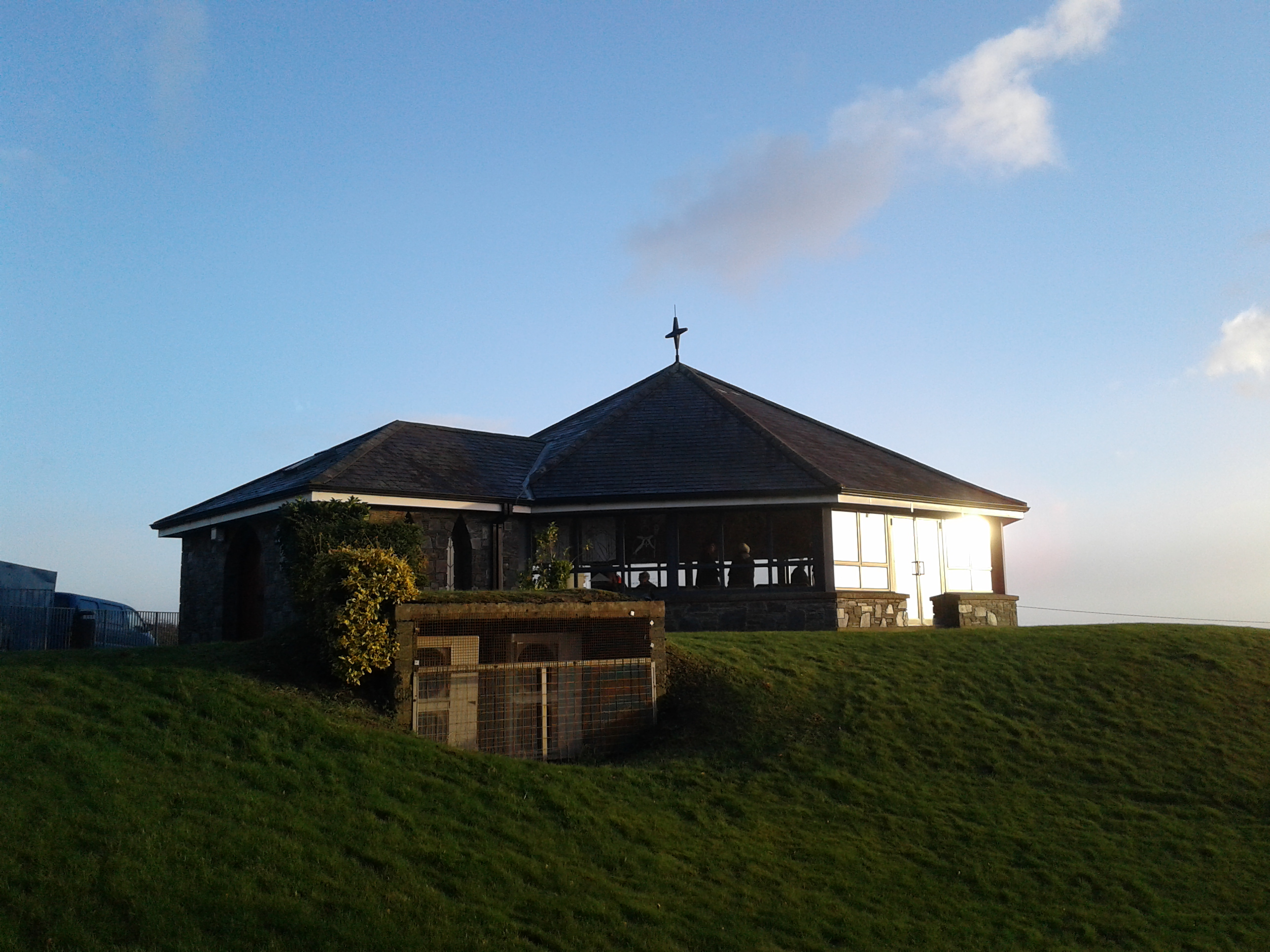
Below: The Shrine of Brigid in Faughart , Ireland , believed to be the birthplace of Brigid of Kildare( Photo, February 1, 2018)