
“For Teilhard, autumn rather than spring was the happiest time of year,” writes John Haught in his essay, “Teilhard de Chardin: Theology for an Unfinished Universe.”(From Teilhard to Omega: Co-creating an Unfinished Universe Ilia Delio, ed. Orbis Books, Maryknoll, New York, 2014) “It is almost as though the shedding of leaves opened his soul to the limitless space of the up-ahead and the not-yet, liberating him from the siren charms of terrestrial spring and summer.”
A scientist, a mystic, rather than a theologian, Teilhard deplored the way that theology continued to reflect on God as though the scientific fact of a still –emerging universe was either unknown or irrelevant. Seventy years after Teilhard’s death, theologians are still engaged in the work of re-imagining a God who calls us forward into an as-yet-unknown reality. And yet, even a limited grasp, a glimpse, of what Teilhard saw of the “up- ahead and the not-yet” is enough to inspire hope. For the next several weeks, I’ll offer that glimpse with Reflections on Teilhard’s thoughts about our “unfinished universe” drawn from Ilia Delio’s collection of essays.
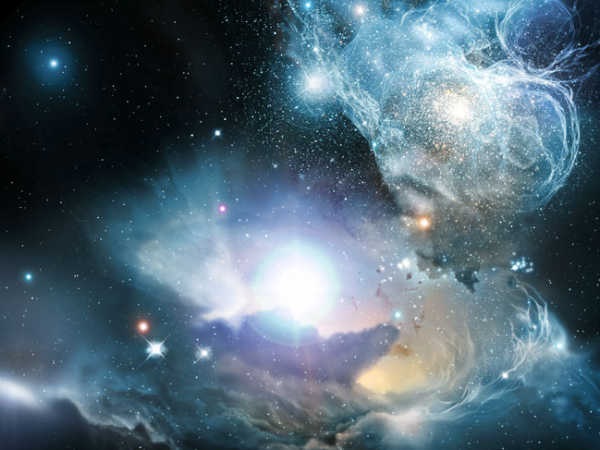
Neither scientist nor theologian, I am a storyteller. I know that a change in the story has power to alter and illuminate our lives. Changing the story that once shaped our lives changes everything. If we live in a story of a completed universe where once upon a perfect time our first parents, ecstatically happy in a garden of unimagined beauty, destroyed everything by sin, what have we to hope for? The best is already irretrievably lost. Under sentence of their guilt, we can only struggle through our lives, seeking forgiveness, trusting in redemption, saved only at a terrible cost to the One who came to suffer and die for us. The suffering around us still speaks to us of punishment for that first sin, and the burden of continuing to pay for it with our lives…. Despair and guilt are constant companions. Hope in that story rests in release from the suffering of life into death.
Yet if we live the story as Teilhard saw it, seeing ourselves in an unfinished universe that is still coming into being, everything changes. In a cosmos that is still a work in progress, we are called to be co-creators, moving with the universe into a future filled with hope. Our human hearts long for joy, and we love to hear stories where suffering and struggle lead to happiness, to fulfillment, to love. The possibility that there could be peace, reconciliation, compassion, mercy and justice to an increasing degree on our planet is a profound incentive for us to work with all our energy for the growth of these values.
The call to co-create in an unfinished universe broadens and deepens our Christian vocation:
Our sense of the creator, the work of the Holy Spirit, and the redemptive significance of Christ can grow by immense orders of magnitude. The Love that rules the stars will now have to be seen as embracing two hundred billion galaxies, a cosmic epic of fourteen billion years’ duration, and perhaps even a multiverse. Our thoughts about Christ and redemption will have to extend over the full breadth of cosmic time and space. (p.13)

Haught believes that “if hope is to have wings and life to have zest,” we need a new theological vision that “opens up a new future for the world.” For Teilhard that future was convergence into God. His hope was founded in the future for he grasped the evolutionary truth that the past has been an increasing complexity of life endowed with “spirit”. Haught writes:
At the extreme term of the convergent movement of the universe from past multiplicity toward unity up ahead, Teilhard locates “God-Omega”. Only by being synthesized into the unifying creativity and love of God does the world become fully intelligible. (p.18)
Teilhard saw God as creating the world by drawing it from up ahead, so that the really real is to be sought in the not yet. And this means that:
The question of suffering, while still intractable, opens up a new horizon of hope when viewed in terms of an unfinished and hence still unperfected universe. (p.19)
Haught believes that the concept of an unfinished universe can strengthen hope and love:
…the fullest release of human love is realistically possible only if the created world still has possibilities that have never before been realized….Only if the beloved still has a future can there be an unreserved commitment to the practice of charity, justice and compassion. (p.19)
Teilhard’s embrace of an emerging universe is one of the reasons why his writings “often lift the hearts of his scientifically educated readers and make room for a kind of hope…that they had never experienced before when reading and meditating on other theological and spiritual works.” (p. 20)


Thanks, Anne, for sharing Haught’s reflections on Teilhard’s work.
LikeLike
Enjoyed this reading and am happy to know that the coming reflections will explore this further.
With gratitude, Colette
LikeLike