
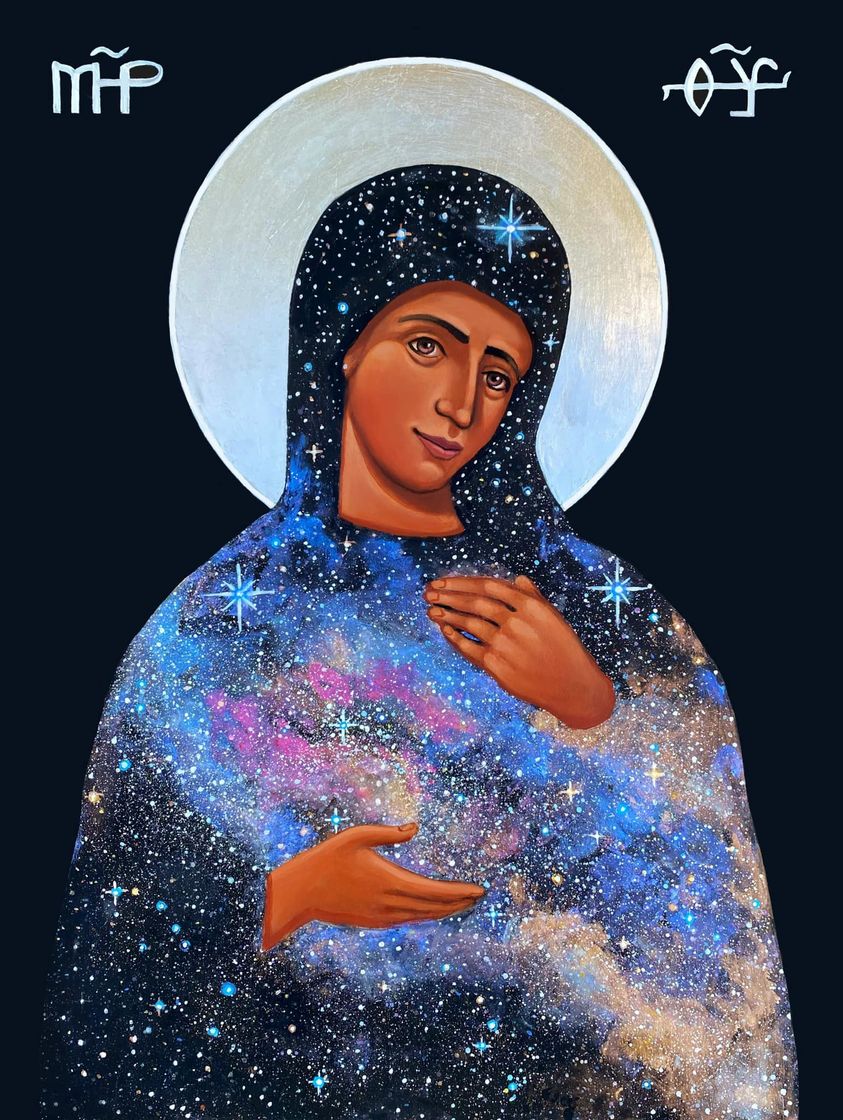
If this question, asked in a tone of desperation, has been rising more frequently from within you in this summer of multiple disasters, you are not alone. Even for people of deep faith in the Love that permeates the Universe, it is difficult to maintain hope and trust as our home planet burns and drowns in record breaking fires and floods. Injuries and deaths from earthquakes, tornadoes and hurricanes force hundreds of thousands of people from their homes. pushing suffering and casualties from ongoing wars out of the headlines.

If only we could turn to someone who lived through a time like ours without losing hope, trusting still in the Love that we have known….
Even as I write this, I recall someone who lived on our planet in a time of immense suffering: the one hundred years’ war between France and England; a schism in the Church with two popes in contention: one in Rome, one in France; three outbreaks of Black Plague, more deadly than our years of COVID, reduced the population of England by one half.
A woman whose name we do not even know, born in 1342, became an anchoress in her early thirties. She chose a life of solitude, prayer, and reflection, offering a service of guidance to those who came to her open window with their sorrows and confusion, their desires and longings.
To our immense benefit this woman wrote of her experiences, becoming the first woman to write a book in English.. Her book, “Revelations of Divine Love” tells of the teachings she received from one night of visions in which Jesus appeared, offering her love and a deep understanding of the role of suffering, of the call to live in love and joy.
This woman we know as Julian of Norwich, a name she was given when she became anchoress of the Church of St. Julian in Norwich, England.
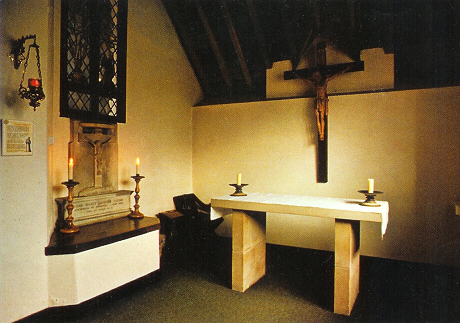
The reconstructed anchorhold of Julian of Norwich
Julian’s death in the early years of the 15th century came as the Reformation was sweeping through Englnd It is believed that her handwritten copy of “Revelations of Divine Love” was lost in transit to a monastery in France where it was being sent for safe-keeping.
A few copies survived of the shorter text , written shortly after her visions. Copies of the longer text, containing the fruit of her twenty years of reflection, survive. These are the sources for the dozens of versions, with various translations from Julian’s “Middle” English, which have been printed in the last decades of the twentieth century. Thomas Merton is credited with the wider knowledge of Julian’s writing. In his book, Seeds of Destruction, he wrote of Julian as “one of the most wonderful of all Christian voices.” TS Eliot quotes Julian in “Little Gidding”: All shall be well and All manner of thing shall be well…
The first words I ever read from Julian were in a small book entitled “Enfolded in Love” with Julian’s words translated by Sheila Upjohn. In 1992, I was visiting the small Church of St. Julian in Norwich, completely rebuilt after a bombing in WW 2.
These words seemed to leap from a page :
He did not say, ‘You shall not be tempest-tossed, you shall not be work-weary, you shall not be discomforted.’ But he said, ‘You shall not be overcome.’ God wants us to heed these words so that we shall always be strong in trust, both in sorrow and in joy.
Julian answers the question we began with. I believe that we may seek and find the wisdom of Sophia in the words of the Mystics, many of whom are being discovered or rediscovered in and for our time.
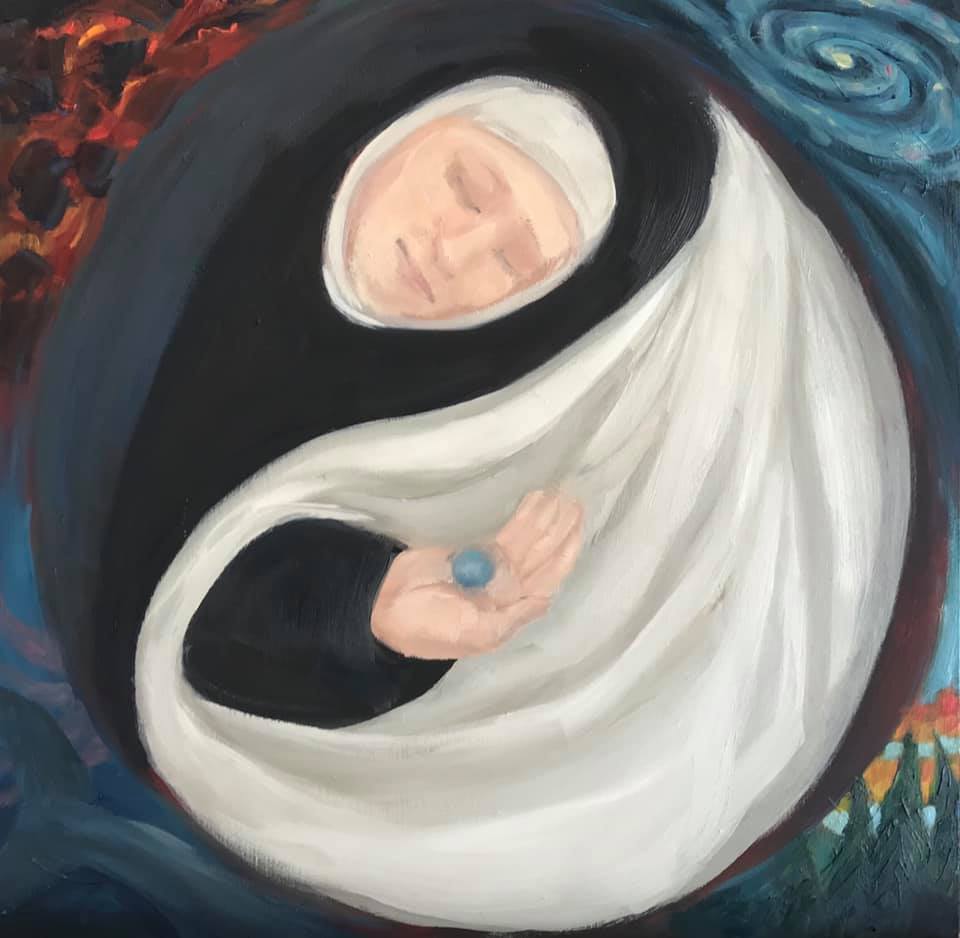
This painting of Julian of Norwich is by Jane Joyner, a contemporary artist whose life was given healing and comfort by Julian.


Anne Kathleen, Your writing, your message is a balm for my heart and soul, some hope for these troubling times.Julian seems to be quite present these days.Looking forward to seeing you
LikeLike
“You shall not be overcome…” – so powerful. Thank you for this reminder, Anne Kathleen.
LikeLike