Category Archives: Uncategorized

Teilhard: The Making of a Mystic

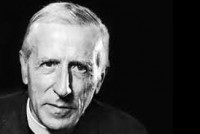
Teilhard de Chardin (Jesuit priest, paleontologist, France 1881-1955)

Sophiawakens for August 21, 2023

In the summer of 2019, just months before COVID would make such an event impossible, I travelled to Jericho House in Ontario’s Niagara Region for a Retreat on “Teilhard’s Mysticism”. Facilitator Kathleen Duffy, SSJ, brought her own love for Teilhard, her years of deep pondering on his life and writings, to our gathering. For five sun-soaked days and star-speckled nights, companioned by others who shared a vision of spirituality centred on a sacred earth, I walked, listened, spoke, learned and dreamed, inspired by the writings of Teilhard de Chardin. I came home, my writer’s quiver filled with fresh insights into the mystic path for our time.

Wondering how I might share this experience on my website, I was drawn back to the words of theologian Margaret Brennan, IHM:

Mystics are people who come in touch with the sacred source of who they really are and are able to realize and experience that in their lives.

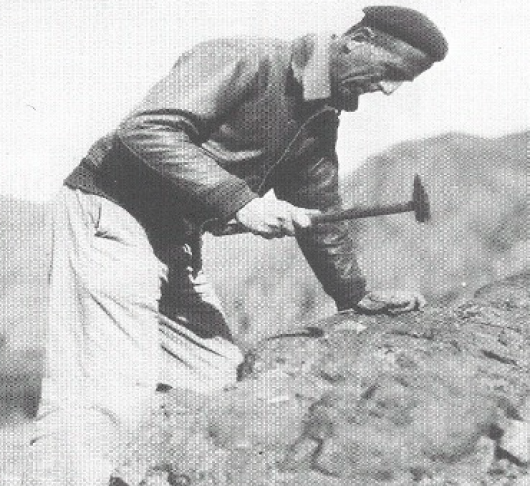
Teilhard’s life path led him to the sacred source not only of himself but of the entire Universe. Beginning with his childhood enchantment with rocks, through his work delving into the depths of the earth as a paleontologist in China, and, while he volunteered as a stretcher bearer in the First World War, through watching the light that briefly illumined the eyes of a dying soldier, Teilhard grew into knowing a divine presence at the heart of all that exists. He wrote:

During my life, as a result of my entire life, the world gradually caught fire for me and burst into flames until it formed a great luminous mass lit from within.

The Diaphany of the Divine at the heart of a glowing Universe, as I have experienced it through contact with Earth – the Divine radiating from blazing Matter: this it is that I shall try to disclose and communicate. (The Divine Milieu, translated by Bernard Wall, New York, Harper and Row, Publishers, 1960)

Thinking back to Kathleen Duffy’s unfolding of Teilhard’s story, I see in that quote the significance of the word: “gradually”. Mystics are not born that way! For Teilhard the path was truly a “long and winding road”. I was touched by his struggles as a young Jesuit novice reading The Imitation of Christ by the fifteenth-century writer Thomas a Kempis. That spiritual handbook counselled that one must love ONLY Christ. Teilhard feared that his great love for the natural world would draw him away from his love for the Christ. His life experiences would gradually bring those two loves into a deep harmony so that he could finally write with deep joy:

Now Earth can certainly clasp me in her giant arms. She can swell me with her life or take me back into her dust. She can deck herself out for me with every charm, with every horror, with every mystery. She can intoxicate me with her perfume of tangibility and unity. She can cast me to my knees in expectation of what is maturing in her breast. But her enchantments can no longer do me harm, since she has become for me, over and above herself, the body of him who is and of him who is coming. (The Divine Milieu)

Of all that I learned of Teilhard during Kathleen Duffy’s Retreat, this sharing of his personal struggle and its resolution is what stirred me most. It reveals Teilhard as a mystic not only OF our time but FOR our time. He recognized the allurement of the Universe for us:

The great temptation of this century is (and will increasingly be) that we find the World of nature, of life, and of humankind greater, closer, more mysterious, more alive than the God of Scripture. (The Heart of Matter, translated by Rene Hague, New York, Harcourt Brace Jovanovich, Inc., 1978)

Yet that allurement was what he saw as most needed for spiritual healing:

Our age seems primarily to need a rejuvenation of supernatural forces, to be effected by driving roots deep into the nutritious energies of the Earth. Because it is not sufficiently moved by a truly human compassion, because it is not exalted by a sufficiently passionate admiration of the Universe, our religion is becoming enfeebled…(Writings in Time of War translated by Rene Hague, New York, Harper and Rowe, Publishers, 1968)

Teilhard looked at the earth with the eyes of a mystic, with the heart of a lover. In love with Holy Presence at the deep heart of all that exists, he could echo Rumi’s wonder-filled exclamation: “Is the one I love everywhere?”

Through Teilhard’s eyes, we can learn to see what mystic-poet Catherine de Vinck calls “the fire within the fire of all things”. Once we see that fire, we know the call that Teilhard knew to put our hearts at the service of the evolution towards love that is the call of the Universe, as well as our personal call within the universal call, for the two are inseparable.

Teilhard shows us that our deepest call is to love, that evolution is advanced by union on every imaginable level of being. And, as another poet, Robert Frost, observed: Earth’s the right place for love: I don’t know where it’s likely to go better.

Nothing that lives on our planet is outside of us. We can no longer accept lines of division between religions, between cultures, between nations, between species. This Universe is evolving as one. Our place within it, like Teilhard’s, is to be its eyes of wonder, its heart of love, its allurement toward union. In co-creative partnership with the Love at its heart, everything that we do contributes towards that great commingled work of the evolution of the Universe, the evolution of ourselves.

Teilhard and Sophia

Teilhard came to know Sophia as the cosmic Love that is holding
all things together.
( Kathleen Duffy)

Born in 1881, Teilhard lived, studied, worked and wrote mainly in the
first half of the twentieth century. As a scientist, he knew Darwin’s
work in Evolution; as a paleontologist, he spent time excavating the
story of evolution inscribed within the earth; as a mystic he was
captivated with the wonder of an unfinished universe being drawn from
within into a radiant future by a sacred presence of love.

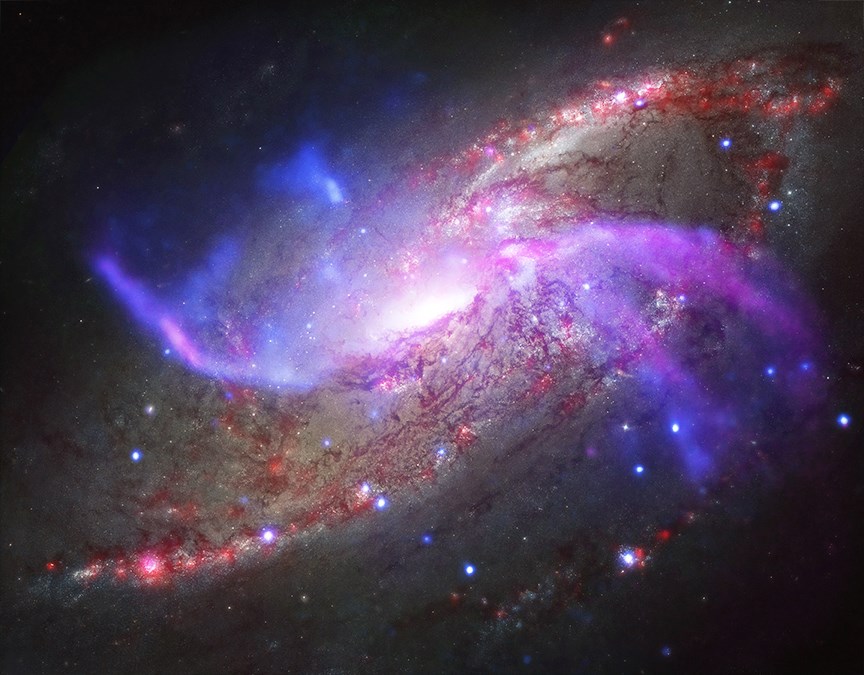
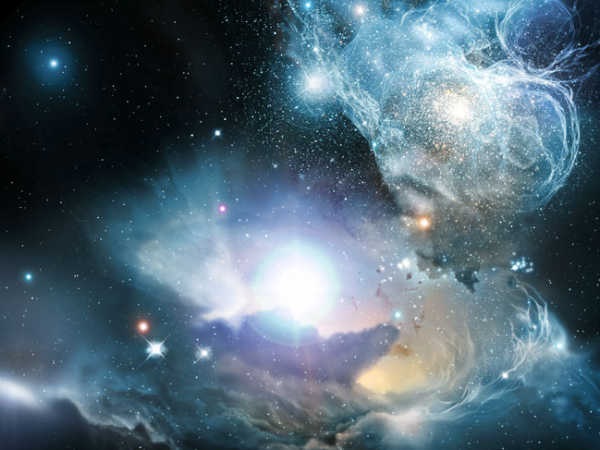
Image from the James Webb Telescope shows the early Universe with its uncombined elements in a swath that stretches across seven light years.

Teilhard was convinced that until theology fully embraced the concept
of an evolving universe, it would remain inadequate, crippled by its
outdated worldview. He wrote: “Who will at last give evolution its own
God?”

In the nearly seventy years since Teilhard’s death, science has taken
massive leaps of understanding, and theology is only beginning to catch
up. In From Teilhard to Omega (edited by Ilia Delio, Orbis Books,
Maryknoll, New York 2014), thirteen scholars take up Teilhard’s
challenge. This week, we look at “Sophia: Catalyst for Creative Union and Divine Love” by Kathleen Duffy, SSJ.

Though a dedicated scientist, Teilhard calls on his mystic and poetic
gifts to describe divine love at work in the cosmos. In his book
Writings in Time of War (translated by Rene Hague, London: Collins,
and New York: Harper & Row, 1968), Teilhard writes of a feminine
presence drawn from the wisdom literature of the Bible, particularly
the Book of Proverbs, (8: 22-31).

Teilhard’s poem opens at the beginning of time, at the moment when
Sophia is embedded into the primordial energy that is already
expanding into the space-time of the early universe. Only half formed
and still elusive, she emerges as from the mist, destined to grow in
beauty and grace (WTW, 192). As soon as the first traces of her
presence become apparent, she assumes her mandate to nurture
creation, to challenge it, to unify it, to beautify it, and ultimately to
lead the universe back to God. With this mission as her guide, she
attends to her work of transforming the world, a world alive with
potential.
(Duffy p. 27)

Duffy reweaves Teilhard’s poem, working through its shining threads
new insights from science, wisdom literature and the work of many
“who have contemplated the divine creativity at work at the heart of
matter”. Duffy names the feminine presence in Teilhard’s poem
“Sophia”, from the Greek word for Wisdom.

“Who then is Sophia?” Duffy asks. Her magnificent response to this
question is worth the price of the whole book. Here are segments:
She is the presence of God poured out in self-giving love, closer to us
than we are to ourselves, ever arousing the soul to passion for the
Divine. From the very depths of matter, she reveals herself to us as
the … very nature of God residing within the core of the cosmic
landscape.

Attempting always to capture our attention, Sophia peers out at us
from behind the stars, overwhelms us with the radiance of a glorious
sunset, and caresses us with a gentle breeze…

Sunset at Stella Maris

Shining through the eyes of the ones we love, she sets our world ablaze.
Sophia is the mercy of God in us….She sits at the crossroads of our
lives, ever imploring us to work for peace, to engage in fruitful
dialogue, and to find new ways of connecting with the other. She longs
to open our eyes to the presence of pain and suffering in the world, to
transform our hearts and to move us to action. (
pp. 31-32)

Duffy says that Teilhard experienced this presence “with nature, with
other persons, and with the Divine”:
He began gradually to recognize her everywhere — in the rocks that
he chiseled, in the seascapes and landscapes that he contemplated, and
in the faces of the dying soldiers to whom he ministered during the
war….Teilhard came to know Sophia as the cosmic Love that is holding
all things together.
(p. 33)

Teilhard came to understand that Sophia can be known “only in
embodied human actions”.

Duffy concludes her illuminative essay with these words:
Sophia was the source of Teilhard’s life…. Her constant care for
creation during so many billions of years gave him confidence she would
continue to be faithful… Teilhard vowed to steep himself in the sea of
matter, to bathe in its fiery water, to plunge into Earth where it is
deepest and most violent, to struggle in its currents, and to drink of its
waters. Filled with impassioned love for Sophia, he dedicated himself
body and soul to the ongoing work needed to transform the cosmos to a
new level of consciousness and to transformative love.
(p. 34)

That final sentence might serve as a calling to each of us.

Teilhard’s Unfinished Universe

“For Teilhard, autumn rather than spring was the happiest time of year,” writes John Haught in his essay, “Teilhard de Chardin: Theology for an Unfinished Universe.”(From Teilhard to Omega: Co-creating an Unfinished Universe Ilia Delio, ed. Orbis Books, Maryknoll, New York, 2014) “It is almost as though the shedding of leaves opened his soul to the limitless space of the up-ahead and the not-yet, liberating him from the siren charms of terrestrial spring and summer.”

A scientist, a mystic, rather than a theologian, Teilhard deplored the way that theology continued to reflect on God as though the scientific fact of a still –emerging universe was either unknown or irrelevant. Seventy years after Teilhard’s death, theologians are still engaged in the work of re-imagining a God who calls us forward into an as-yet-unknown reality. And yet, even a limited grasp, a glimpse, of what Teilhard saw of the “up- ahead and the not-yet” is enough to inspire hope. For the next several weeks, I’ll offer that glimpse with Reflections on Teilhard’s thoughts about our “unfinished universe” drawn from Ilia Delio’s collection of essays.

Neither scientist nor theologian, I am a storyteller. I know that a change in the story has power to alter and illuminate our lives. Changing the story that once shaped our lives changes everything. If we live in a story of a completed universe where once upon a perfect time our first parents, ecstatically happy in a garden of unimagined beauty, destroyed everything by sin, what have we to hope for? The best is already irretrievably lost. Under sentence of their guilt, we can only struggle through our lives, seeking forgiveness, trusting in redemption, saved only at a terrible cost to the One who came to suffer and die for us. The suffering around us still speaks to us of punishment for that first sin, and the burden of continuing to pay for it with our lives…. Despair and guilt are constant companions. Hope in that story rests in release from the suffering of life into death.

Yet if we live the story as Teilhard saw it, seeing ourselves in an unfinished universe that is still coming into being, everything changes. In a cosmos that is still a work in progress, we are called to be co-creators, moving with the universe into a future filled with hope. Our human hearts long for joy, and we love to hear stories where suffering and struggle lead to happiness, to fulfillment, to love. The possibility that there could be peace, reconciliation, compassion, mercy and justice to an increasing degree on our planet is a profound incentive for us to work with all our energy for the growth of these values.

The call to co-create in an unfinished universe broadens and deepens our Christian vocation:

Our sense of the creator, the work of the Holy Spirit, and the redemptive significance of Christ can grow by immense orders of magnitude. The Love that rules the stars will now have to be seen as embracing two hundred billion galaxies, a cosmic epic of fourteen billion years’ duration, and perhaps even a multiverse. Our thoughts about Christ and redemption will have to extend over the full breadth of cosmic time and space. (p.13)

Haught believes that “if hope is to have wings and life to have zest,” we need a new theological vision that “opens up a new future for the world.” For Teilhard that future was convergence into God. His hope was founded in the future for he grasped the evolutionary truth that the past has been an increasing complexity of life endowed with “spirit”. Haught writes:

At the extreme term of the convergent movement of the universe from past multiplicity toward unity up ahead, Teilhard locates “God-Omega”. Only by being synthesized into the unifying creativity and love of God does the world become fully intelligible. (p.18)

Teilhard saw God as creating the world by drawing it from up ahead, so that the really real is to be sought in the not yet. And this means that:

The question of suffering, while still intractable, opens up a new horizon of hope when viewed in terms of an unfinished and hence still unperfected universe. (p.19)

Haught believes that the concept of an unfinished universe can strengthen hope and love:

the fullest release of human love is realistically possible only if the created world still has possibilities that have never before been realized….Only if the beloved still has a future can there be an unreserved commitment to the practice of charity, justice and compassion. (p.19)

Teilhard’s embrace of an emerging universe is one of the reasons why his writings “often lift the hearts of his scientifically educated readers and make room for a kind of hope…that they had never experienced before when reading and meditating on other theological and spiritual works.” (p. 20)

An Honor, A Task

A certain day became a presence to me;

there it was, confronting me—a sky, air, light:

a being. And before it started to descend

from the height of noon, it leaned over

and struck my shoulder as if with

the flat of a sword, granting me

honor and a task. The day’s blow

rang out, metallic—or it was I, a bell awakened,

and what I heard was my whole self

saying and singing what it knew: I can.

Denise Levertov: “Variation on a Theme by Rilke”

It’s morning. More to the point, it’s Monday morning, the day I‘d set aside to write my weekly Reflection on the Sophia blog.

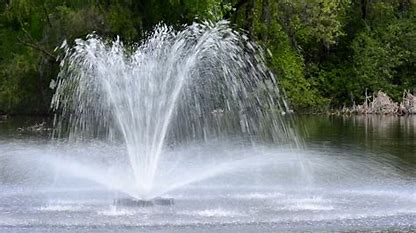
My mind is empty of inspiration, crowded out by feelings that hover dangerously near helplessness and despair as we continue a planetary rush towards destruction. This past week brought record breaking heat into the 40’s Celsius across the US and Europe. The Acropolis in Greece was closed to tourists, people were urged to avoid the burning hot sands of Spain’s beaches, while in Rome, visitors were dousing their heads in the famous fountains…. In South Korea floods from unprecedented rainfalls were washing out bridges, cars were caught in tunnels, their passengers drowning in the sweep of water. Nearly every report included someone commenting that these events are our new reality on Planet Earth.

As I sat in prayer this morning, wordlessly pleading to Sophia, Mother Wisdom, for inspiration, a few lines from a long-forgotten poem rose in me. “A certain day became a presence…” With no other guidance on offer, I set about locating that poem, written by the British poet Denise Levertov. I lifted the heavy 1063-page volume from my bookshelf, turned to the index of first lines… and there it was, just as you see it at the top of this page…

However, as is often the case with such gifts from Sophia, the work had just begun…

I invite you, as i did, to revisit the poem, to enter into it imaginally, feeling yourself breathing the air as Levertov describes it, air that is a sky of light, (not a curtain of smoke!).

A being is descending towards you from the height of noon… this being bends towards you, strikes you on the shoulder with the flat hilt of a sword, making you a knight like one of Arthur’s noble company….

granting you both “honor and a task”.

And you become the “bell awakened”

… you hear your “whole self saying and singing what it knew,”

what it now knows…”I can

What follows for you now?

What do you already know about your role?

What does “I can” open in your imagination?

What would a “Change of Consciousness” mean for you?

Last week, I wrote of Thomas Berry, the brilliant, inspired, ecotheologian who, in the last decades of his long life, wrote of the causes of the looming planetary disasters, adding that our current efforts at curbing fossil fuels along with recycling, re-purposing, and simplifying our material lives…are inadequate to stem the tide of destruction. Berry insisted that what we needed most was “a change of consciousness”.

Today I begin my task with Berry’s advice, searching my memory for people I’ve heard about, read about, or known, who, while pursuing a “change of consciousness” for themselves are opening a new path for others. The first memory that arises is of the Japanese scientist-researcher who explores the effect of thoughts and words on water. His photographs of the water crystals show stunning beauty as a result of being exposed to loving thoughts and words. Exposure to dark, ugly thoughts and words results in misshapen, ugly crystal formation.

Dr. Emoto reminds us that as our human bodies are composed mostly of water, we too can be affected by the words and thoughts we allow to influence us.

From water, my thoughts move to plants, to researchers exploring the intelligence of plants. My friend Corinne facilitates workshops on plants, sharing her understanding that plants want to assist us in our task of healing life on the planet. With a sensitive hearing device, Corinne shows me how to listen to the distinctive music created by individual plants.

And this opens another memory. Efforts to purify huge bodies of water like the Thames River in England and other European rivers as well as rivers in watersheds in North America, choked off by dams, have surprised planners and scientists by significantly reducing the time estimated for the task. One person involved in the clean- up of a river that flows from BC to Washington State said it was as though the river itself was assisting in the task.

That reminds me of my friend Mary, who for over two decades spent her summers helping to purify the lake water at our summer place, polluted by the remains of logs once transported through its water system.

” How do you know what to do?” I ask her. It seems to me an impossible task.

“I ask the water,” Mary replies.

I think of Suzanne Simard, a Canadian researcher and Professor of Forest Ecology in the University of British Columbia’s Faculty of Forestry. Combining exhaustive research and a lifetime of careful observation of the BC forests, Suzanne uses an intuitive understanding to embrace the living intelligence of trees. In her book Finding the Mother Tree: Discovering the Wisdom of the Forest (Penguin Publishers, Canada 2022) Suzanne describes “the wood-wide web”, an astonishing underground network linking trees of different species with nurture, medicine and information. A photo in her book shows a Sitka Spruce Mother Tree on Haida Gwaii in BC. The caption reads: “The Hemlock saplings in its understory are regenerating on decomposing nurse logs, which protect the new regeneration from predators, pathogens and drought.” When logging companies destroy old growth trees, they also destroy the information stored in the trees’ roots, which would have been capable of passing on centuries of experience dealing with climate catastrophes.

By the time I complete my day’s work exploring what a new consciousness might involve, I begin to glimpse the magnitude as well as the simplicity of what Thomas Berry is advising. Like his much-admired spiritual forebearer, the Jesuit Priest and Paleontologist Pierre Teilhard de Chardin, Thomas Berry understands that a divine presence permeates all that lives.

By means of all created things, without exception,

the divine assails us, penetrates us and molds us.

We imagined it as distant and inaccessible,

whereas in fact we live steeped in its burning layers.

(Teilhard de Chardin, A Book of Hours, edited by Kathleen Deignan and Libby Osgood, Orbis Books, Maryknoll, NY, 2022

How would this new consciousness affect the ecological crisis that assails us?

We only save what we love,

and we only love that which we recognize as sacred.


Bealtaine 2023

The Month of May, most beautiful of all the year, when flowers abound, trees put forth leaves and the air itself is perfumed, was originally named for the Goddess Maia. Other Goddesses in the Celtic, Greek and Roman traditions were also celebrated in May. In the Catholic Tradition May is known as the month of Mary, Mother of Jesus.

Veiled in Mystery, and yet nearer to us than we are to ourselves, the Presence of Love that we are coming to know as the Sacred Feminine wants to be found. “Wild Woman” leaves a trail for us to follow: Perhaps we found her tracks across fresh snow in a dream. Or psychically, we noticed a bent twig here and there, pebbles overturned so that their wet sides faced upwards …we knew that something blessed had passed our way. We sensed within our psyches the sound of a familiar breath from afar, we felt tremors in the ground…we innately knew that something powerful, someone important, some wild freedom within us was on the move.” (C.P. EstesWomen Who Run with the Wolves, Random House, New York, 1992, p.457)

Pursuing this presence, lured by her tracks, we come upon not thick books, but rather small hints: the story of a brief encounter, the way that someone’s life has been upturned into joy by her, powerful clues put together by the wise about the way She manifests.

One such small clue has been a beacon in my own search for years. Jean Shinoda Bolen, Jungian analyst, author of Goddesses in Every Woman, wrote of a moment in her own life. One of her patients had unexpectedly died. She was filled with grief that had to be kept under wraps while she attended to the needs of another patient:

No one supposed that I needed any comforting, including me, until this woman who was my analysand sensed something and reached out with compassion to ask if I was all right. And when my eyes moistened with sudden tears, she broke out of role, got out of the patient’s chair to come over to mine, and held me. At that moment, I felt a much larger presence was there with the two of us. When this woman put her arms around me, I felt as if we were both being cradled in the arms of an invisible, divine presence. I was profoundly comforted and felt a deep ache in the center of my chest. This was before I had ever heard of a heart chakra, which I know now opened widely then. I now also know that this is a way that the Goddess (of whom I had no inkling) may manifest. It differed from the mystical experience I had had of God. Then, no other human presence was necessary… Here, in contrast, the compassion and arms of a woman were the means through which a numinous maternal presence was felt….

I now think of this profound moment as a Grail experience in which the Goddess was the Grail that held us. This, and what others have told me about their experiences of the Goddess in their lives, has made me think of the Goddess as a nurturer and comforter whose presence is evoked through human touch.

After recounting experiences of other women with whom she had been leading rituals and meditation, Bolen concludes: In these moments, when each of us felt held in the arms of the Mother Goddess, a compassionate woman mediated the experience, leading me to understand that this feminine divinity comes through the body and heart of a human woman, created in Her image. (Jean Shinoda Bolen, Crossing to Avalon, Harper Collins, New York1994(73-74, 77)

Almost 20 years after Women Who Run with the Wolves was published, Clarissa Pinkola Estes brought forth a new book: Untie the Strong Woman, SoundsTrue, BoulderColorado, 2011. The powerful mysterious feminine presence is seen by Estes as aligned with titles and qualities given in the Christian story to Mary, yet part of a much longer heritage.

In her opening paragraphs, Estes traces the lineage of THE GREAT MOTHER:

She is known by many names and many images and has appeared in different epochs of time to people across the world, in exactly the shapes and images the soul would most readily understand her, apprehend her, be able to embrace her and be embraced by her.She wears a thousand names, thousands of skin tones, thousands of costumes to represent her being patroness of deserts, mountains, stars, streams and oceans. If there are more than six billion people on earth, then thereby she comes to us in literally billions of images. Yet at her center is only one great Immaculate Heart.

Since we staggered out of the Mist eons ago, we have had irrevocable claim to Great Mother. Since time out of mind, nowhere is there a feminine force of more compassion and understanding about the oddities and lovability of the wild and wondrous variations to be found in human beings.

Nowhere is there found a greater exemplar, teacher, mentor than she who is called amongst many other true names, Seat of Wisdom.(C.P. Estes, Untie the Strong Woman, 2)

The Memorare, an ancient prayer calling on Mary in time of need, was learnt by many of us as children. It takes on richness and depth in this adaptation by Estes:

Have you forgotten? I am Your Mother. You are under my protection.” There is a promise Holy Mother makes to us, that any soul needing comfort, vision, guidance, or strength can cry out to her, flee to her protection, and Blessed Mother will immediately arrive with veils flying. She will place us under her mantle for refuge, and give us the warmth of her most compassionate touch, and strong guidance about how to go by the soul’s lights. (Untie the Strong Woman, inside cover)

How might our lives be different if we remembered,

if we then trusted in this promise?

Sophia for Earth Week April 16-22, 2023

Sophia for Earth Week April 16-22, 2023

Once we take our first turning towards a Sacred Feminine Presence, welcoming her into our lives, change begins. In Rebirth of the Goddess (1997), Carol P. Christ writes of how turning towards the presence she names the Goddess altered her life. Her book reflects her new view of religion, politics, ecology, life, death, relationships, morality, the meaning of existence….

Reading Christ’s book has led me to reflect on how my own life has been altered since coming to know Sophia. I realize that the change began when I first recognized that there is a feminine path to the Holy that differs in important ways from the masculine path. The masculine path was shown to me as I grew up in a Church where the teachers, priests, writers, theologians were mostly men and some women who had embraced the masculine way to holiness.

What a revelation it was for me to encounter, through their writings and at times through hearing them speak, the feminist theologians who rose to prominence in the last third of the twentieth century. These women used their powerful intellects, their theological training, and their own experience to show that the “objective” masculine teachings, thought to apply to all humankind, actually reflected the masculine way to God. The feminist theologians found the heart of the difference between the masculine and feminine ways to be within the perceived dualities found in Greek thought: spirit/matter, sky/earth, thought/ feeling, supernatural/natural, mind/body, spirituality/sexuality, man/woman. More than a separation, there is a perceived hierarchy. Spirit, sky, thought, the supernatural, mind, spirituality, man viewed as separate from, superior to, matter, earth, feeling, nature, body, sexuality and woman. This is a worldview where God is separate from creation, from humanity. To find this God, we must soar above the human.

Embracing this worldview, I had embraced an ideal of spiritual life that led me to distrust love, to be cautious with emotion, to value thought over feeling. I had learned to distrust my desires, my body, my sexuality, all of which, I’d been warned, would lead me astray, away from God. I learned to embrace an ideal of perfection, though I never succeeded in living it out.

Through the writings of the feminist theologians, I learned that recovering a sense of the sacredness of the feminine would assist me to recover a sense of the sacredness of the earth, of the body, of my feelings, of my sexuality.

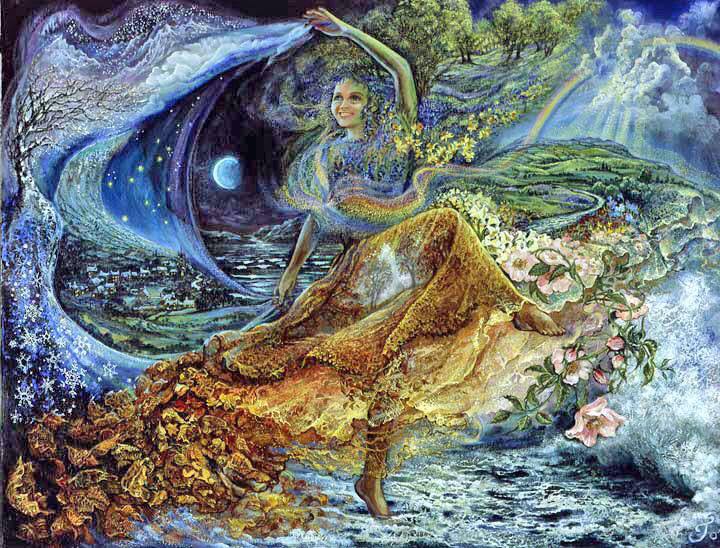
artwork by Josephine Wall

At this time in the story of our planet Earth, this recovery is vital. The sacred presence of love lives within all of life, within the earth herself, within the creatures that walk, swim, fly, crawl upon and within her. Only this knowing can give us the courage and the strength we need for the work we are called to do with the earth as she heals from the ravages of our despoiling her.

In the sixth chapter of her book, “The Web of Life”, Carol Christ writes compellingly of this call:

To know ourselves as of this earth is to know our deep connection to all people and beings. All beings are interdependent in the web of life….We feel deeply within ourselves that we are part of all that is, but we must learn to speak of what we know. We know, too, that we participate fully in the earth’s cycles of birth, death, and regeneration….

The fundamental insight of connection to all beings in the web of life is experienced by children, poets, mystics, and indeed, I suspect, by all of us, though we may lack the language to express what we feel….(p. 113)

Acknowledging the difficulty of speaking of this deep connection “in the face of criticism rooted in dualistic thinking”, Christ quotes Jewish theologian Martin Buber who wrote of his “I-Thou” relation to a tree:

I contemplate a tree.

I can accept it as a picture: as rigid pillar in a flood of light, or splashes of green traversed by the gentleness of the blue silver ground.

I can feel it as movement: the flowing veins around the sturdy, striving core, the sucking of the roots, the breathing of the leaves, the infinite commerce with earth and air – and the growing itself in its darkness…

But it can also happen, if will and grace are joined, that as I contemplate the tree I am drawn into a relation, and the tree ceases to be an It. The power of exclusiveness has seized me. (Martin Buber, I and Thou trans. Walter Kaufmann, New York, Charles Scribner’s Sons, 1970 pp. 58-59)

The writings of Susan Griffin recognize our Earth as intelligent and aware:

I taste, I know, and I know why she goes on, under great weight, with this great thirst, in drought, in starvation, with intelligence in every act, does she survive disaster. (Susan Griffin inWoman and Nature: The Roaring Inside Her New York, Harper and Row, 1978 p. 219)

A beautiful reweaving of dualities into wholeness flows from our embrace of Sophia/Sacred Feminine/Goddess. Here is Carol Christ’s celebration of the insight into oneness intuited by children, mystics and poets:

If Goddess is an intelligent power that is fully embodied in the world, then the notion that divinity, nature and humanity are three totally distinct categories collapses. If Goddess as fully embodied intelligent love is the ground of all being, then it makes sense to speak of intelligence and love as rising out of the very nature of being and of all beings as intelligent and infused with love. Human intelligence and our capacity to love do not separate us from nature. Instead, everything we are arises from the nature of being, from our grounding in the earth. (p. 123)

As we celebrate Earth Week in 2023, may the eyes of our mind, the intelligence of our heart recognize, perhaps for the first time, that Planet Earth is truly Our Mother, the source, sustainer and unifier of all that lives upon and within her.

Dancing with Sophia

Sunday Morning. Just a few hours until the dance session begins on ZOOM. I haven’t registered yet, nor have I attended these classes in recent months, not since Banafsheh, our Persian born teacher of Sacred Dance, invited us to dance in support of the young people of Iran engaged in a revolution to set their country free of oppression. Young people being sentenced to death for their involvement in peaceful protests. I tell myself I can’t take on another nation’s suffering. Not with the war in Ukraine, not with the devastation of the planet. There’s too much darkness already. I stop attending dance class….

Yet somehow I am feeling drawn to today’s class.

I reread the invitation from Banafsheh:

Join us to celebrate Spring and renewal, and dance to put a transformative poem by Rumi into motion, so you can balance the joy and the sorrow in a wide-open heart with self-authority…grounded in the security of our Mother.

Spring, Renewal, Rumi’s Poetry, Balancing Joy and Sorrow…alluring as these references are, I know it’s the last phrase that’s drawing me: grounded in the security of our Mother. It’s what first drew me to Banafsheh’s teaching: her commitment to the Sacred Feminine in her many guises, under her many names.

My life is also committed to this Sacred Presence, whom I name Sophia.

I register for the dance.

Banafsheh begins with photos of young women and men, radiant with youth, with beauty, with intelligence, with nobility. Each picture is surrounded by flowers, adorning a gravesite. The photos remind me of my young adult nieces and nephews. What would I be feeling now if my own beloved ones were put to death for attending a peaceful protest?

Suddenly I know.

I feel my heart breaking within me.

Words are rising silently. I know this voice. The one Banafsheh named Mother, the one I know as Sophia says: “They all belong to me.”

And I get it. This is not the agony of strangers. This is our agony.

In an instant, everything changes. And we begin to dance…

Only later do I realize this is happening on Palm Sunday.

With the rising of the full Paschal Moon on April 6th, we re-enter the Sacred Days of the Passion Play the yearly re-living of the final act in the life of Jesus on earth, his agony and death, his resurrection.

For years, decades, I approached Holy Week with a kind of dread, knowing I must engage once more in the agony of Jesus, his sufferings, his death, followed by the long tomb-time of his absence before I could even remember the truth of Resurrection…. I would get up during the night after the Holy Thursday Eucharist to spend an hour in prayer, remembering Jesus in the Garden of Gethsemane, his friends asleep around him, as he faced the certitude of his coming death.

It was a Mystery Play, perhaps not unlike the ancient Greek and Roman Mystery Rituals, but the emotions were manufactured. The darkness I experienced through these intense feelings of grief and loss was real, as was the physical discomfort of fasting. Yet some part of me knew it was play-acting: both the terrible loss of Good Friday and the exploding joy of Easter. Jesus IS risen and will never die again; the Christ is with us always.

Nine years ago, something shifted. I wakened in the deep heart of Holy Thursday night. Yet I was drawn in prayer, not to the Garden of Gethsemane, but to the Earth herself, in agony, dying. I sat through that hour with her suffering.

Later I came upon this lovely meditation by Susan Griffin which spoke to my heart:

As I go into the Earth, she pierces my heart. As I penetrate further, she unveils me. When I have reached her center, I am weeping openly. I have known her all my life, yet she reveals stories to me, and these stories are revelations and I am transformed. Each time I go to her, I am born like this. Her renewal washes over me endlessly, her wounds caress me. I become aware of all that has come between us, the blindness, of something sleeping between us. Now my body reaches out to her. They speak effortlessly, and I learn that at no instant does she fail me in her presence. She is as delicate as I am, I know her sentience, I feel her pain and my own pain comes into me, and my own pain grows large and I grasp this pain with my hands, and I open my mouth to this pain, I taste, I know and I know why she goes on, under great weight, with this great thirst, in drought, in starvation, with intelligence in every act does she survive disaster. This earth is my sister, I love her daily grace, her silent daring, and how loved I am, how we admire this strength in each other, all that we have lost, all that we have suffered, all that we know: we are stunned by this beauty, and I do not forget what she is to me, what I am to her. (Susan Griffin in The Body of Earth)

Since that time of awakening, I experience these Sacred Days of the Paschal Mystery, the Mystery of life/death/life that is at the Holy Heart of the Universe, in a new and deeper way. The suffering is now for me a reawakening to the raw suffering, the unaccountable losses, the seeking for light and hope in darkness that is the Mystery Play of our lives in this year of 2023 on Planet Earth.

This is why we need a Sacred Feminine Presence that is more than sweetness and light, One who is also fierce, strong, capable of holding us in the darkness in which our lives are shrouded. The Dark Mother, Who was present in the very chaos in which our Universe was birthed, strong enough to remain through eons of destruction and rebirth, still with us, within us.

May the Dark Mother hold each of us as we stand in this moment of darkness, raising the chalice of kindness to bless our earth and all that lives upon and within her, all that belongs to the Mother.

The Sacred Marriage

My Beloved lifts up his voice,

he says to me,

“Come then, my love,

My lovely one come.

For see, winter is past,

The rains are over and gone.

The flowers appear on the earth.”

(The Song of Songs 2:10-12, Jerusalem Bible)

On the theme of the Sacred Marriage, Anne Baring writes: Four thousand years ago in the courtyards of the great temples on the banks of the Nile the Sacred Marriage of goddess and god was celebrated. The theme of the Sacred Marriage has come down to us in myth, in fairy tales like Cinderella and the Sleeping Beauty, and in the Biblical Song of Songs. Alchemy sets the supreme quest for the treasure in the context of a marriage between the lunar and solar aspects of the soul, the fiery gold of the masculine element and the volatile silver of the feminine one, a union between our mind and our soul, our head and our heart, between the solar King and the lunar Queen. This marriage also united the invisible dimension of the subtle world of spirit and the material world of our experience, rendering the latter transparent to spirit. The Sacred Marriage is the age-old image of this mysterious double union. (The Dream of the Cosmos: A Quest for the Soul, 2013, 470-472)

Anne Baring tells of the alchemists’ understanding of how this inner marriage would take place: … in order for consciousness to be transformed from base metal into gold, both king and queen have to undergo a process of dissolution and transformation… resulting in the birth of the child of the new consciousness.

To awaken the consciousness personified by the king to the values associated with the wisdom of the soul, he has to undergo a symbolic death, vividly described by the shamanic initiation. He makes a descent into the watery realm of the soul, the realm of the emotions, feelings, instincts, that has never been associated with anything of value and has been both feared and despised and has consequently remained largely dissociated from consciousness…(and) largely undeveloped.

The queen as the personification of the soul is also transformed as the king enters into a conscious relationship with her. She is no longer forced to remain in a dissociated state. She is no longer in thrall to the deficient values and limited perception represented by the Old King; nor is she any longer bound by the powerful unconscious drives of blind instinct to which he also was bound. The values of the heart begin to be heard and strengthened. Feeling begins to function in a more conscious related way as both king and queen are transformed.

Anne Baring notes that in our time this process as described by the alchemists is necessary for both man and woman: … woman has been educated in the same way as man, has absorbed the same values and has been imprinted with the same ideas and may give the highest value to the masculine principle and the rational mind, knowing nothing of the deeper dimension of the soul and the invisible dimension of reality.

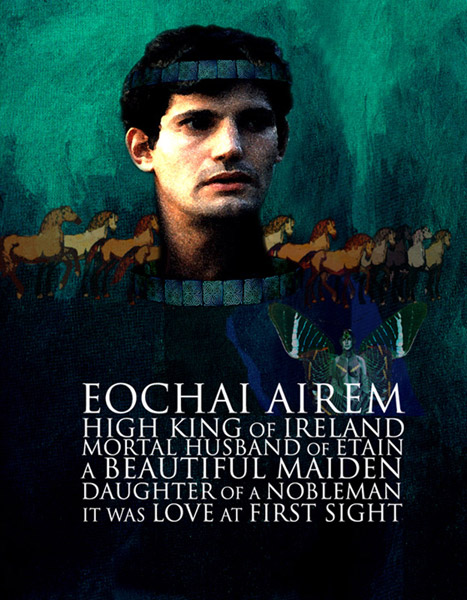
There is another kind of Sacred Marriage associated with the king and the land. In her program on Celtic Shamanism, (Shift Network, 2019), Jane Burns speaks of the ancient custom in Ireland: When the rightful king was sworn in, he was said to marry the land, because it was to the earth goddess, the goddess Sovereignty, he was to pay homage, make personal sacrifices and give allegiance. Here we return to this notion of the marriage of the masculine, the king, and the feminine, the goddess, as a necessity if prosperity is to reign. This is a marriage of equals. That marriage… must exist within us if we are to be sovereign and prosperous.

Referring to the teachings of esoteric astrologer William Meade, Jane said: If we are going to achieve mastery of our soul, we all have to bring into balance within us the divine masculine and divine energies and potential that are resident there….Each strength, the masculine and feminine, has its own contribution to the soul’s pathway to mastery. Each has their own wisdom. What (William Meade) says is that the divine feminine knows what to do and the divine masculine knows how to do it. It’s a very necessary marriage. The divine feminine holds the potential. She creates the design, conceives the design, nurtures it. She knows what the purpose is. The divine masculine executes the design or brings it into manifestation. It’s the same agreement as the relationship between the goddess Sovereignty and the king who serves her. The feminine…what are its attributes? It observes. It receives. It nurtures. It embodies. It grows and flourishes. Through that experience comes the wisdom of what to do. The masculine acts. It changes the circumstance. It fixes things, it executes things, it puts things into play because it has this greater connection to the world. That affords it the opportunity to know how to do it.

The Spring Equinox invites us to reflect on our inner marriage, the union of our feminine and masculine qualities needed for wholeness. At this season when darkness and light, night and day are in balance, how might we come to a healthier, more joyous balance between our inner feminine and masculine? Might we consider creating for ourselves a ritual of “Inner Marriage” with music, poetry, flowers, dance?

Returning to the Rose Garden

In these times of unprecedented crises across our planet, we need the Wisdom, Support and Guidance of the Sacred Feminine, I shall repost here a series of writings based on “Madonna Rising” a program offered on ZOOM in 2020 by Ubiquity University, Anne Kathleen

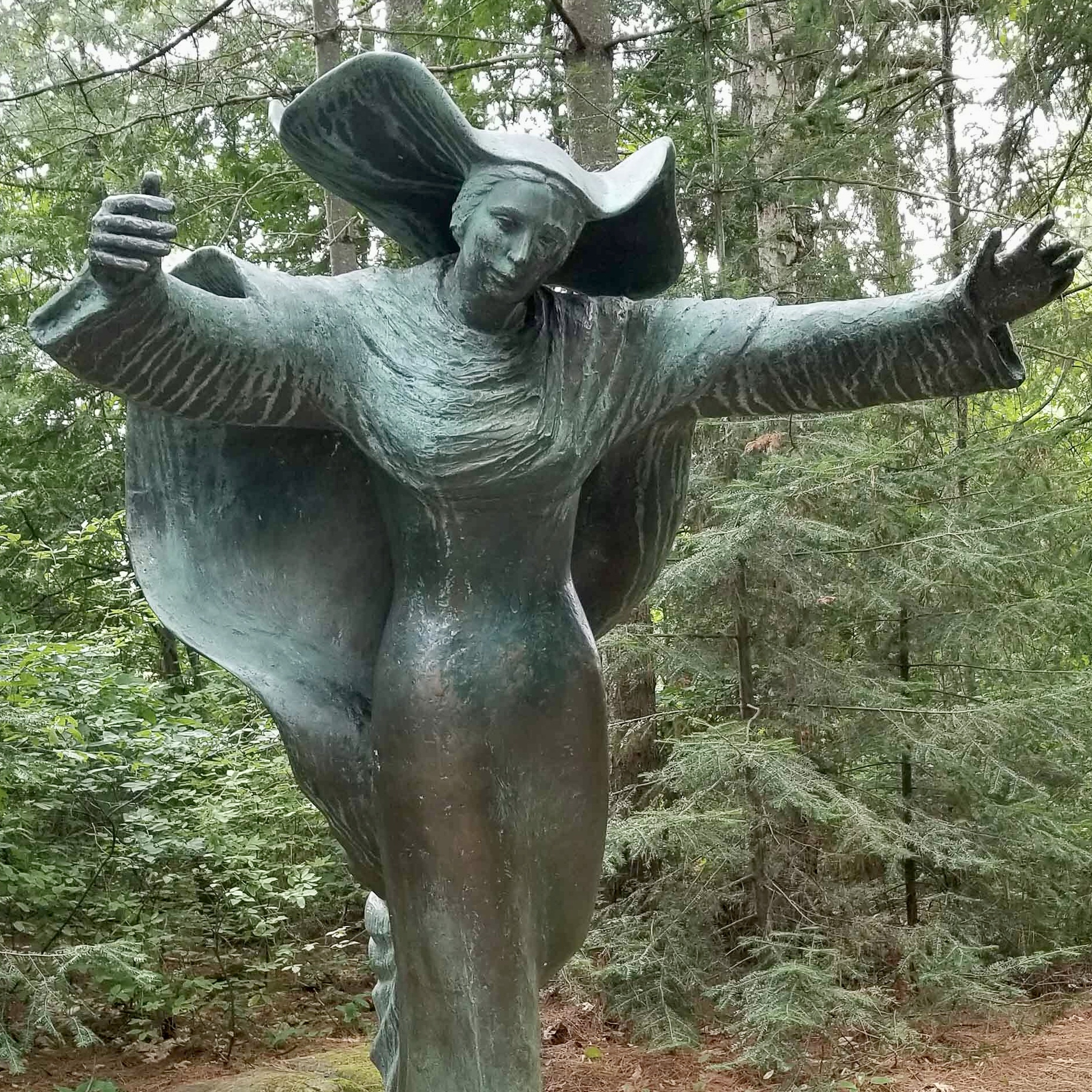
Statue of Our Lady of Combermere Madonna House, Ontario

Sophia Blog for February 16, 2023

Entering the Rose Garden

Whatever their ways,

they are all in love with you,

Each comes, by a path, to the Rose Garden

Niyazi Misri

For seven days in mid-August, 2020, I spent time in an ancient Rose Garden, an imaginal space engineered by ZOOM, offered by Ubiquity University. The garden was peopled by scholars, archaeologists of the soul, dancers, storytellers, musicians, poets and mystics. Their great task is recovering, and offering to those who hunger for it, the knowledge and awareness of the Divine Feminine.

When COVID made Ubiquity’s fourteen-year tradition of a summer program in the Chartres Cathedral of France impossible, Madonna Rising took its place. More than one hundred participants joined in from countries across the planet. The central image for the program was the Mystical Rose, a title honouring the Sacred Feminine in ancient cultures, such as Egypt and Sumeria. Later, that title was given to Mary, Mother of Jesus.  

On Day One we were greeted by Banafsheh Sayyad from her home in Southern California. Over the following days, Banafsheh would lead us in sacred dance, inviting us to open our lives to the Divine Feminine Presence. Banafsheh introduced the theme of Madonna Rising by offering a Prophecy from the Cherokee Nation:

The bird of humanity has two great wings – a masculine wing and a feminine wing. The masculine wing has been fully extended for centuries, fully expressed, while the feminine wing in all of us has been truncated, not yet fully expressed – half extended. So the masculine wing in all of us has become over-muscular and over-developed and in fact violent. The bird of humanity has been flying in circles for hundreds and hundreds of years, held up only fully by the masculine wing…

In the 21st century, however, something remarkable will happen. The feminine wing in all of us will fully extend and find its way to express and the masculine wing will relax in all of us and the bird of humanity will soar.

From her desk, Banafsheh lifted a rose. It appeared to move off- screen to be received by Anne Baring, seated in her home in England. In the first of her trilogy of presentations, Anne would begin to tell the tale of how the bird of humanity lost the power of gracious flight in its feminine wing.

Author of Dream of the Cosmos (Archive Publishing, Dorset, England, 2013) as well as The Myth of the Goddess: Evolution of an Image, (1992) Anne delves for light in history, following paths not yet made, seeking the story that came before the story in pursuit of clarity about so much that has been lost to us.

Was there a story that preceded the 6th c. BCE Creation Story in the Book of Genesis of the Hebrew Bible? And if so, how was it lost? Here is what Anne’s research found:

I loved her more than health or beauty,

preferred her to the light,

since her radiance never sleeps.

(The Book of Wisdom, 7:10 Jerusalem Bible)

 Solomon, to whom the Book of Wisdom is ascribed, built the First Temple in Jerusalem in the tenth century BCE. In the time of the First Temple, Israel had an ancient, shamanic, visionary tradition. Divine Wisdom was worshipped in this First Temple as the Goddess Asherah, the consort of Yahweh and the co-creator of the world with him. In this tradition the Tree of life was associated with Wisdom, Queen of Heaven.

Anne then told us how all this changed:

In 621 BC, in the reign of King Josiah, a powerful group of priests called Deuteronomists took control of the Temple….  The Deuteronomists had the statue of the Goddess Asherah and the great Serpent, image of her power to regenerate life, removed from the Temple and destroyed. Her Sacred Groves were cut down. All images of her were broken. The ancient shamanic rituals of the High Priest which had honoured and communed with the Queen of Heaven as Divine Wisdom and Holy Spirit were banished and replaced by new rituals based on obedience to Yahweh’s Law. The vital communion with the inner dimensions of reality was lost; the making of images was forbidden.

As I listened to this, I felt something inside me twist in pain. More even than the destruction of her images, the cutting down of the trees sacred to the Goddess wrenched my heart.

Anne spoke of the long-lasting effects of this rupture:

This is the crucially important time when I think it is possible to say that the whole foundation of Jewish and later Christian civilization became unbalanced. The Deuteronomists ensured that Yahweh was the sole Creator God. The Feminine co-creator, the Goddess Asherah, was eliminated. The Divine Feminine aspect of the god-head was banished from Orthodox Judaism. The Deuteronomists went further: they demoted the Queen of Heaven – Mother of All Living – into the human figure of Eve, bestowing this title upon her. They created the Myth of the Fall in the Book of Genesis (2 & 3), with its message of sin, guilt and banishment from the Garden of Eden, severing the Tree of Life from its ancient association with the Queen of Heaven.

Anne Baring suggests that the “heritage seeds’’ of the First Temple’s teaching were somehow preserved in the Jewish traditions of Kabbalism:

It seems highly significant that one of the most important images of Kabbalism is the Tree of Life, which is a clear and wonderful concept describing the web of relationships which connect invisible spirit with the fabric of life in this world. At the innermost level or dimension of reality is the unmanifest, unknowable Divine Ground; at the outermost the physical forms we call nature, body and matter.  Linking the two is the archetypal template of the Tree of Life— an inverted tree— whose branches grow from its roots in the divine ground and extend through many invisible worlds or dimensions until they reach this one.

Anne describes this cosmology as one where

Every aspect of creation, both visible and invisible, is interconnected and interwoven with every other aspect. All is one life, one cosmic symphony, one integrated whole. We participate, at this material level of creation, in the divine life which informs all these myriad levels of reality. Our human lives are therefore inseparable from the inner life of the Cosmos.

The Kabbalistic tradition is “vitally important” Anne says, because it celebrates…the indissoluble relationship and union between the feminine and masculine aspects of the god-head—a sacred union which the three Patriarchal religions have ignored or deliberately rejected.

I will end this excerpt from Anne Baring’s first talk with a statement she makes that is both stark and striking in its clarity:

If we want to understand the deep roots of our present environmental and spiritual crisis, we can find them in the loss of three important elements: the feminine image of spirit, the direct shamanic path of communion with spirit through visionary and shamanic experience, and the sacred marriage of the masculine and feminine aspect of the God-head and the Divine Ground. Each of these was an intrinsic aspect of the lost traditions and practices of the First Temple.

(to be continued)  

Awaiting New Birth

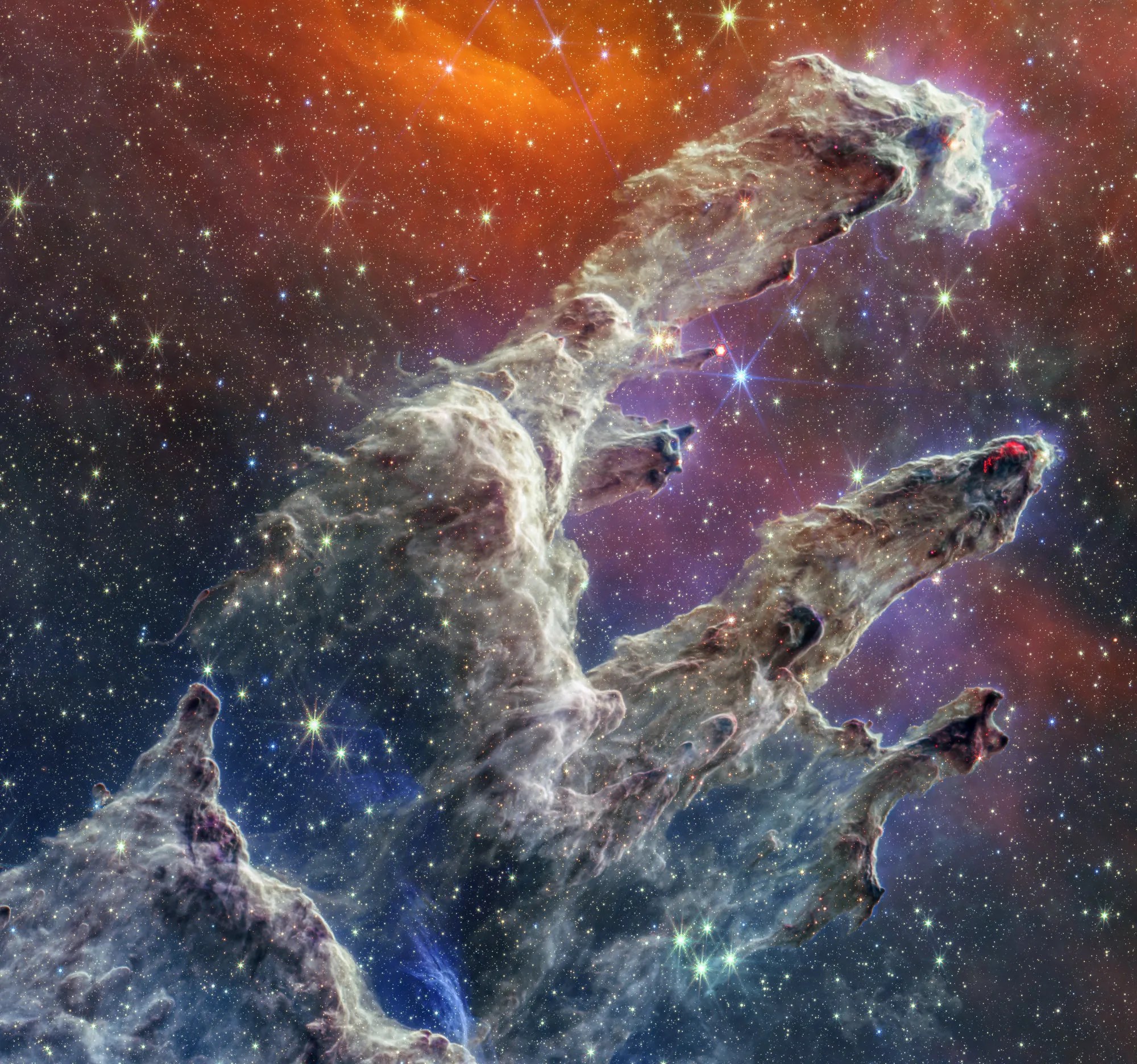
Pillars of Creation : image from Webb Telescope

“It is the demand of the universe for the birth of the ultra-human. It is the rising of a new form of psychic energy in which the very depth of love within you is combined with what is most essential in the flowing of the cosmic stream. It is Love.” Teilhard de Chardin, S.J. (1881-1955)

When there is a new beginning in a story older than time, everything that follows is seen in a new light. As we look with awe and amazement at the photos being sent back to Earth from the Webb Telescope, we’re being given a fresh vision of the beginnings of our Universe.

Now we may understand words, premonitions, foreshadowings, intuitions, offered by the mystics and poets of the ages.

We might find ourselves saying, “Oh, so that’s what was meant….”

Paul wrote in his first century Letter to the Romans: “From the beginning till now the entire creation, as we know, has been groaning in one great act of giving birth…” (8:22)  

Meister Eckhart, medieval mystic, wrote: “What does God do all day long? God lies on a maternity bed, giving birth all day long.”

Reflecting on the words of Meister Eckhart, Diarmuid O’Murchu writes:

“The infancy narratives… need to be approached afresh….as an archetypal statement of the God of prodigious birthing….we  are called to become co-birthers with our birthing God of the ongoing evolutionary re-creation of God’s world in justice, love, compassion and liberation. Incarnation becomes an empowering and liberating dynamic, and Christians, instead of fleeing the world, are now challenged to embrace it in its full embodied existence.” (Jesus in the Power of Poetry,  2009)

As we look to the approaching Feast of Christmas, as we prepare to celebrate the Birth of the Christ, what if we were to celebrate as well the Birth of our Universe, rejoicing in the Love that gave birth and continues to give birth to everything?

And what if we finally understood that we too are called to give birth?  

If we, both women and men, accept this invitation to be co-birthers with God,  one shining figure arises to show us the way forward: Mary of Nazareth, the woman called to give birth to the Christ.

In his poems on “the Joyful Mysteries,” John O’Donohue invites us into the heart of Mary as she receives and lives her calling. In these poems we glimpse the wonder, the magnificence, of our own calling to give birth. We are offered hints about how to ready our hearts for what awaits us… 

1. Annunciation

Cast from afar before the stones were born

And rain had rinsed the darkness for colour,

The words have waited for the hunger in her

To become the silence where they could form.                                                                                 

The day’s last light frames her by the window,

A young woman with distance in her gaze,

She could never imagine the surprise

That is hovering over her life now.

The sentence awakens like a raven,

Fluttering and dark, opening her heart

To nest the voice that first whispered the earth

From dream into wind, stone, sky and ocean.

She offers to mother the shadow’s child;

Her untouched life becoming wild inside.

                                                                                                                                                                  2. Visitation

In the morning it takes the mind a while

To find the world again, lost after dream

Has taken the heart to the underworld

To play with the shades of lives not chosen.

She awakens a stranger in her own life,

Her breath loud in the room full of listening.

Taken without touch, her flesh feels the grief

Of belonging to what cannot be seen.

Soon she can no longer bear to be alone.

At dusk she takes the road into the hills.

An anxious moon doubles her among the stone,

A door opens, the older one’s eyes fill.

Two women locked in a story of birth.

Each mirrors the secret the other heard.

3. The Nativity

No man reaches where the moon touches a woman.

Even the moon leaves her when she opens

Deeper into the ripple in her womb

That encircles dark to become flesh and bone.

Someone is coming ashore inside her.

A face deciphers itself from water

And she curves around the gathering wave,

Opening to offer the life it craves.

In a corner stall of pilgrim strangers,

She falls and heaves, holding a tide of tears.

A red wire of pain feeds though every vein

Until night unweaves and the child reaches dawn.

Outside each other now, she sees him first.

Flesh of her flesh, her dreamt son safe on earth.

(John O’Donohue in Connemara Blues)

May we live the wonder of this season as we await our time of birthing.