Category Archives: Uncategorized

The Sacred Marriage

My Beloved lifts up his voice,

he says to me,

“Come then, my love,

My lovely one come.

For see, winter is past,

The rains are over and gone.

The flowers appear on the earth.”

(The Song of Songs 2:10-12, Jerusalem Bible)

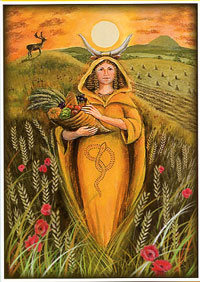
On the theme of the Sacred Marriage, Anne Baring writes: Four thousand years ago in the courtyards of the great temples on the banks of the Nile the Sacred Marriage of goddess and god was celebrated. The theme of the Sacred Marriage has come down to us in myth, in fairy tales like Cinderella and the Sleeping Beauty, and in the Biblical Song of Songs. Alchemy sets the supreme quest for the treasure in the context of a marriage between the lunar and solar aspects of the soul, the fiery gold of the masculine element and the volatile silver of the feminine one, a union between our mind and our soul, our head and our heart, between the solar King and the lunar Queen. This marriage also united the invisible dimension of the subtle world of spirit and the material world of our experience, rendering the latter transparent to spirit. The Sacred Marriage is the age-old image of this mysterious double union. (The Dream of the Cosmos: A Quest for the Soul, 2013, 470-472)

Anne Baring tells of the alchemists’ understanding of how this inner marriage would take place: … in order for consciousness to be transformed from base metal into gold, both king and queen have to undergo a process of dissolution and transformation… resulting in the birth of the child of the new consciousness.

To awaken the consciousness personified by the king to the values associated with the wisdom of the soul, he has to undergo a symbolic death, vividly described by the shamanic initiation. He makes a descent into the watery realm of the soul, the realm of the emotions, feelings, instincts, that has never been associated with anything of value and has been both feared and despised and has consequently remained largely dissociated from consciousness…(and) largely undeveloped.

The queen as the personification of the soul is also transformed as the king enters into a conscious relationship with her. She is no longer forced to remain in a dissociated state. She is no longer in thrall to the deficient values and limited perception represented by the Old King; nor is she any longer bound by the powerful unconscious drives of blind instinct to which he also was bound. The values of the heart begin to be heard and strengthened. Feeling begins to function in a more conscious related way as both king and queen are transformed.

Anne Baring notes that in our time this process as described by the alchemists is necessary for both man and woman: … woman has been educated in the same way as man, has absorbed the same values and has been imprinted with the same ideas and may give the highest value to the masculine principle and the rational mind, knowing nothing of the deeper dimension of the soul and the invisible dimension of reality.

There is another kind of Sacred Marriage associated with the king and the land. In her program on Celtic Shamanism, (Shift Network, 2019), Jane Burns speaks of the ancient custom in Ireland: When the rightful king was sworn in, he was said to marry the land, because it was to the earth goddess, the goddess Sovereignty, he was to pay homage, make personal sacrifices and give allegiance. Here we return to this notion of the marriage of the masculine, the king, and the feminine, the goddess, as a necessity if prosperity is to reign. This is a marriage of equals. That marriage… must exist within us if we are to be sovereign and prosperous.

Referring to the teachings of esoteric astrologer William Meade, Jane said: If we are going to achieve mastery of our soul, we all have to bring into balance within us the divine masculine and divine energies and potential that are resident there….Each strength, the masculine and feminine, has its own contribution to the soul’s pathway to mastery. Each has their own wisdom. What (William Meade) says is that the divine feminine knows what to do and the divine masculine knows how to do it. It’s a very necessary marriage. The divine feminine holds the potential. She creates the design, conceives the design, nurtures it. She knows what the purpose is. The divine masculine executes the design or brings it into manifestation. It’s the same agreement as the relationship between the goddess Sovereignty and the king who serves her. The feminine…what are its attributes? It observes. It receives. It nurtures. It embodies. It grows and flourishes. Through that experience comes the wisdom of what to do. The masculine acts. It changes the circumstance. It fixes things, it executes things, it puts things into play because it has this greater connection to the world. That affords it the opportunity to know how to do it.

The Spring Equinox invites us to reflect on our inner marriage, the union of our feminine and masculine qualities needed for wholeness. At this season when darkness and light, night and day are in balance, how might we come to a healthier, more joyous balance between our inner feminine and masculine? Might we consider creating for ourselves a ritual of “Inner Marriage” with music, poetry, flowers, dance?

Returning to the Rose Garden

In these times of unprecedented crises across our planet, we need the Wisdom, Support and Guidance of the Sacred Feminine, I shall repost here a series of writings based on “Madonna Rising” a program offered on ZOOM in 2020 by Ubiquity University, Anne Kathleen

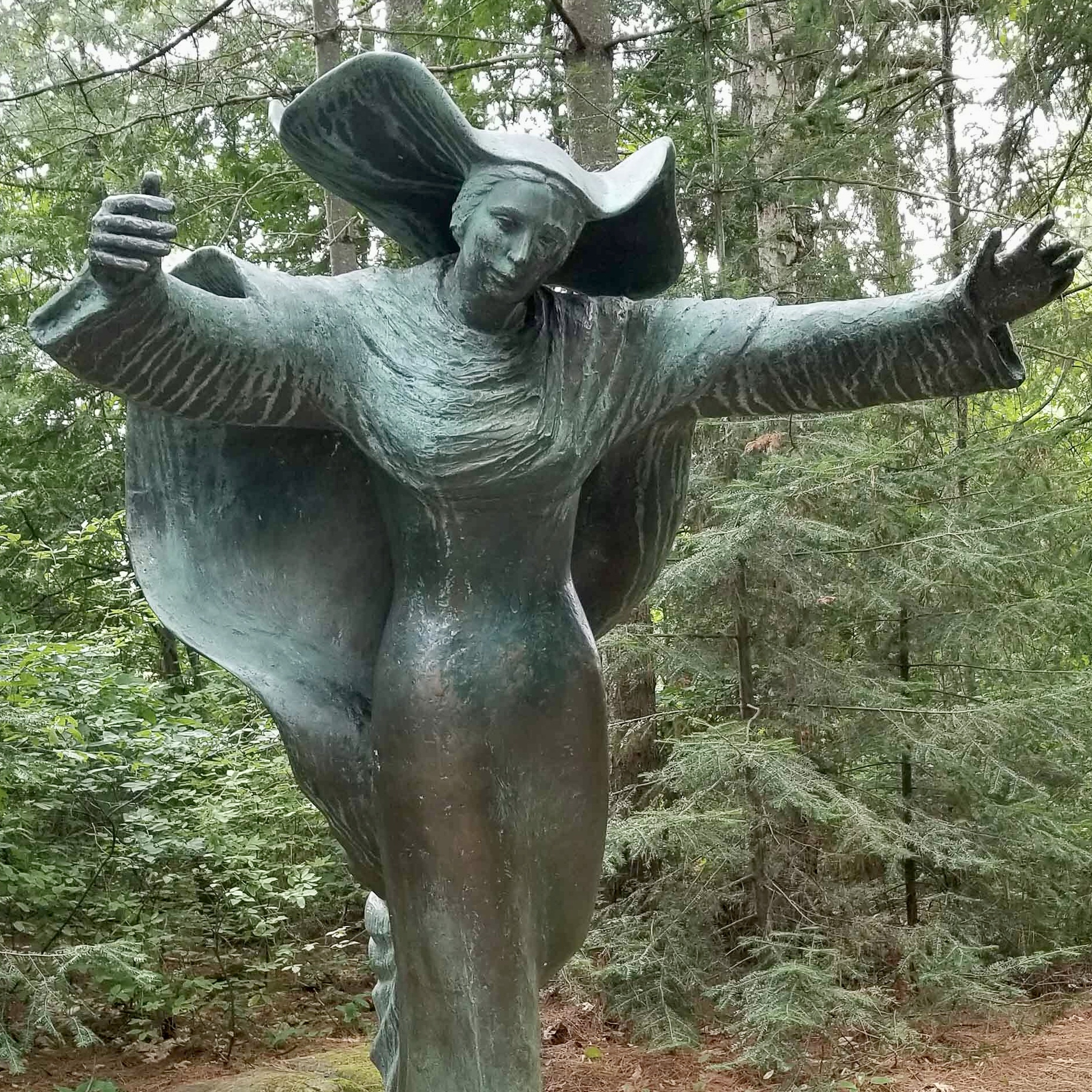
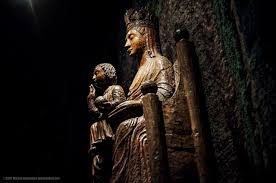
Statue of Our Lady of Combermere Madonna House, Ontario

Sophia Blog for February 16, 2023

Entering the Rose Garden

Whatever their ways,

they are all in love with you,

Each comes, by a path, to the Rose Garden

Niyazi Misri

For seven days in mid-August, 2020, I spent time in an ancient Rose Garden, an imaginal space engineered by ZOOM, offered by Ubiquity University. The garden was peopled by scholars, archaeologists of the soul, dancers, storytellers, musicians, poets and mystics. Their great task is recovering, and offering to those who hunger for it, the knowledge and awareness of the Divine Feminine.

When COVID made Ubiquity’s fourteen-year tradition of a summer program in the Chartres Cathedral of France impossible, Madonna Rising took its place. More than one hundred participants joined in from countries across the planet. The central image for the program was the Mystical Rose, a title honouring the Sacred Feminine in ancient cultures, such as Egypt and Sumeria. Later, that title was given to Mary, Mother of Jesus.  

On Day One we were greeted by Banafsheh Sayyad from her home in Southern California. Over the following days, Banafsheh would lead us in sacred dance, inviting us to open our lives to the Divine Feminine Presence. Banafsheh introduced the theme of Madonna Rising by offering a Prophecy from the Cherokee Nation:

The bird of humanity has two great wings – a masculine wing and a feminine wing. The masculine wing has been fully extended for centuries, fully expressed, while the feminine wing in all of us has been truncated, not yet fully expressed – half extended. So the masculine wing in all of us has become over-muscular and over-developed and in fact violent. The bird of humanity has been flying in circles for hundreds and hundreds of years, held up only fully by the masculine wing…

In the 21st century, however, something remarkable will happen. The feminine wing in all of us will fully extend and find its way to express and the masculine wing will relax in all of us and the bird of humanity will soar.

From her desk, Banafsheh lifted a rose. It appeared to move off- screen to be received by Anne Baring, seated in her home in England. In the first of her trilogy of presentations, Anne would begin to tell the tale of how the bird of humanity lost the power of gracious flight in its feminine wing.

Author of Dream of the Cosmos (Archive Publishing, Dorset, England, 2013) as well as The Myth of the Goddess: Evolution of an Image, (1992) Anne delves for light in history, following paths not yet made, seeking the story that came before the story in pursuit of clarity about so much that has been lost to us.

Was there a story that preceded the 6th c. BCE Creation Story in the Book of Genesis of the Hebrew Bible? And if so, how was it lost? Here is what Anne’s research found:

I loved her more than health or beauty,

preferred her to the light,

since her radiance never sleeps.

(The Book of Wisdom, 7:10 Jerusalem Bible)

 Solomon, to whom the Book of Wisdom is ascribed, built the First Temple in Jerusalem in the tenth century BCE. In the time of the First Temple, Israel had an ancient, shamanic, visionary tradition. Divine Wisdom was worshipped in this First Temple as the Goddess Asherah, the consort of Yahweh and the co-creator of the world with him. In this tradition the Tree of life was associated with Wisdom, Queen of Heaven.

Anne then told us how all this changed:

In 621 BC, in the reign of King Josiah, a powerful group of priests called Deuteronomists took control of the Temple….  The Deuteronomists had the statue of the Goddess Asherah and the great Serpent, image of her power to regenerate life, removed from the Temple and destroyed. Her Sacred Groves were cut down. All images of her were broken. The ancient shamanic rituals of the High Priest which had honoured and communed with the Queen of Heaven as Divine Wisdom and Holy Spirit were banished and replaced by new rituals based on obedience to Yahweh’s Law. The vital communion with the inner dimensions of reality was lost; the making of images was forbidden.

As I listened to this, I felt something inside me twist in pain. More even than the destruction of her images, the cutting down of the trees sacred to the Goddess wrenched my heart.

Anne spoke of the long-lasting effects of this rupture:

This is the crucially important time when I think it is possible to say that the whole foundation of Jewish and later Christian civilization became unbalanced. The Deuteronomists ensured that Yahweh was the sole Creator God. The Feminine co-creator, the Goddess Asherah, was eliminated. The Divine Feminine aspect of the god-head was banished from Orthodox Judaism. The Deuteronomists went further: they demoted the Queen of Heaven – Mother of All Living – into the human figure of Eve, bestowing this title upon her. They created the Myth of the Fall in the Book of Genesis (2 & 3), with its message of sin, guilt and banishment from the Garden of Eden, severing the Tree of Life from its ancient association with the Queen of Heaven.

Anne Baring suggests that the “heritage seeds’’ of the First Temple’s teaching were somehow preserved in the Jewish traditions of Kabbalism:

It seems highly significant that one of the most important images of Kabbalism is the Tree of Life, which is a clear and wonderful concept describing the web of relationships which connect invisible spirit with the fabric of life in this world. At the innermost level or dimension of reality is the unmanifest, unknowable Divine Ground; at the outermost the physical forms we call nature, body and matter.  Linking the two is the archetypal template of the Tree of Life— an inverted tree— whose branches grow from its roots in the divine ground and extend through many invisible worlds or dimensions until they reach this one.

Anne describes this cosmology as one where

Every aspect of creation, both visible and invisible, is interconnected and interwoven with every other aspect. All is one life, one cosmic symphony, one integrated whole. We participate, at this material level of creation, in the divine life which informs all these myriad levels of reality. Our human lives are therefore inseparable from the inner life of the Cosmos.

The Kabbalistic tradition is “vitally important” Anne says, because it celebrates…the indissoluble relationship and union between the feminine and masculine aspects of the god-head—a sacred union which the three Patriarchal religions have ignored or deliberately rejected.

I will end this excerpt from Anne Baring’s first talk with a statement she makes that is both stark and striking in its clarity:

If we want to understand the deep roots of our present environmental and spiritual crisis, we can find them in the loss of three important elements: the feminine image of spirit, the direct shamanic path of communion with spirit through visionary and shamanic experience, and the sacred marriage of the masculine and feminine aspect of the God-head and the Divine Ground. Each of these was an intrinsic aspect of the lost traditions and practices of the First Temple.

(to be continued)  

Awaiting New Birth

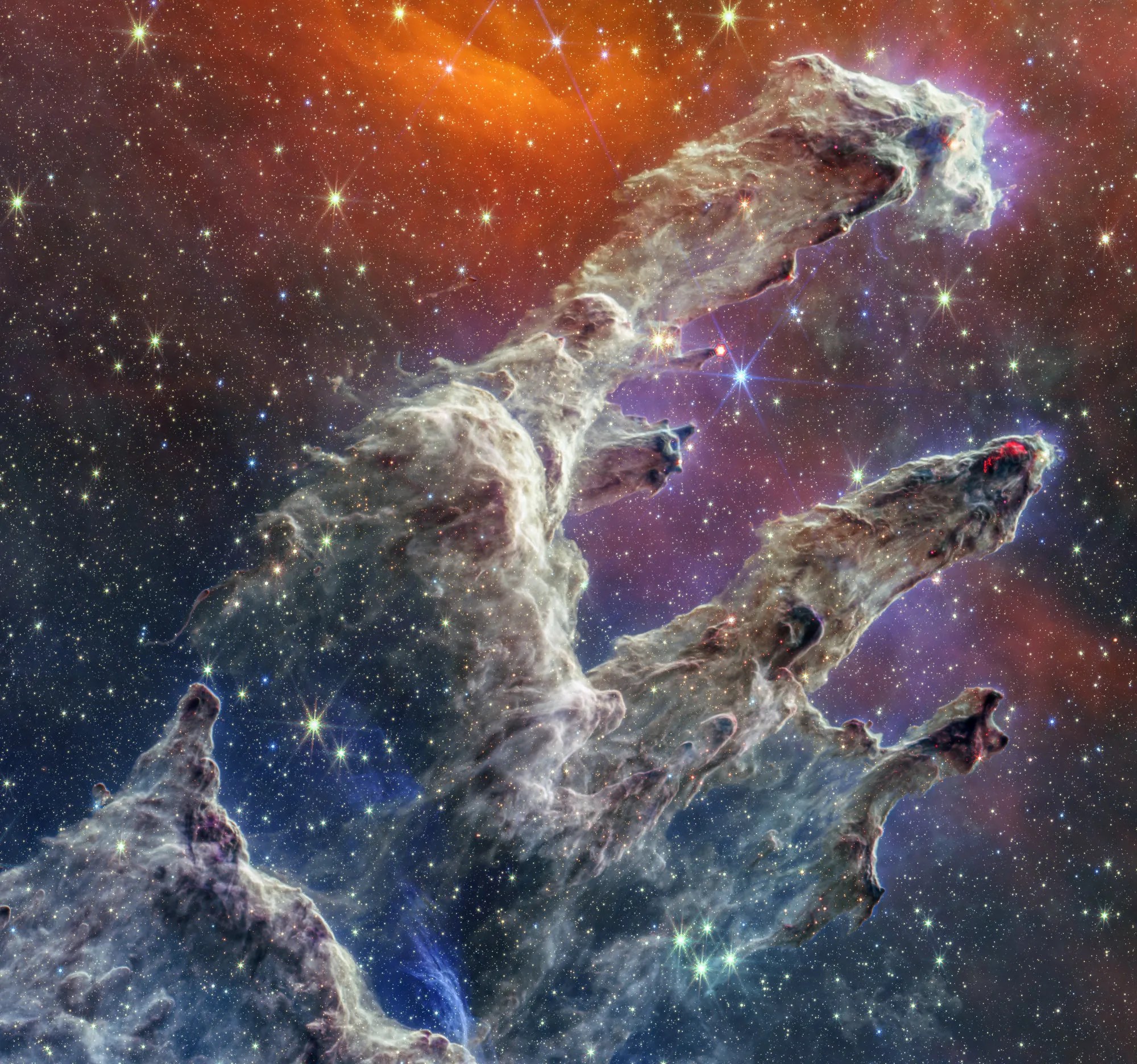
Pillars of Creation : image from Webb Telescope

“It is the demand of the universe for the birth of the ultra-human. It is the rising of a new form of psychic energy in which the very depth of love within you is combined with what is most essential in the flowing of the cosmic stream. It is Love.” Teilhard de Chardin, S.J. (1881-1955)

When there is a new beginning in a story older than time, everything that follows is seen in a new light. As we look with awe and amazement at the photos being sent back to Earth from the Webb Telescope, we’re being given a fresh vision of the beginnings of our Universe.

Now we may understand words, premonitions, foreshadowings, intuitions, offered by the mystics and poets of the ages.

We might find ourselves saying, “Oh, so that’s what was meant….”

Paul wrote in his first century Letter to the Romans: “From the beginning till now the entire creation, as we know, has been groaning in one great act of giving birth…” (8:22)  

Meister Eckhart, medieval mystic, wrote: “What does God do all day long? God lies on a maternity bed, giving birth all day long.”

Reflecting on the words of Meister Eckhart, Diarmuid O’Murchu writes:

“The infancy narratives… need to be approached afresh….as an archetypal statement of the God of prodigious birthing….we  are called to become co-birthers with our birthing God of the ongoing evolutionary re-creation of God’s world in justice, love, compassion and liberation. Incarnation becomes an empowering and liberating dynamic, and Christians, instead of fleeing the world, are now challenged to embrace it in its full embodied existence.” (Jesus in the Power of Poetry,  2009)

As we look to the approaching Feast of Christmas, as we prepare to celebrate the Birth of the Christ, what if we were to celebrate as well the Birth of our Universe, rejoicing in the Love that gave birth and continues to give birth to everything?

And what if we finally understood that we too are called to give birth?  

If we, both women and men, accept this invitation to be co-birthers with God,  one shining figure arises to show us the way forward: Mary of Nazareth, the woman called to give birth to the Christ.

In his poems on “the Joyful Mysteries,” John O’Donohue invites us into the heart of Mary as she receives and lives her calling. In these poems we glimpse the wonder, the magnificence, of our own calling to give birth. We are offered hints about how to ready our hearts for what awaits us… 

1. Annunciation

Cast from afar before the stones were born

And rain had rinsed the darkness for colour,

The words have waited for the hunger in her

To become the silence where they could form.                                                                                 

The day’s last light frames her by the window,

A young woman with distance in her gaze,

She could never imagine the surprise

That is hovering over her life now.

The sentence awakens like a raven,

Fluttering and dark, opening her heart

To nest the voice that first whispered the earth

From dream into wind, stone, sky and ocean.

She offers to mother the shadow’s child;

Her untouched life becoming wild inside.

                                                                                                                                                                  2. Visitation

In the morning it takes the mind a while

To find the world again, lost after dream

Has taken the heart to the underworld

To play with the shades of lives not chosen.

She awakens a stranger in her own life,

Her breath loud in the room full of listening.

Taken without touch, her flesh feels the grief

Of belonging to what cannot be seen.

Soon she can no longer bear to be alone.

At dusk she takes the road into the hills.

An anxious moon doubles her among the stone,

A door opens, the older one’s eyes fill.

Two women locked in a story of birth.

Each mirrors the secret the other heard.

3. The Nativity

No man reaches where the moon touches a woman.

Even the moon leaves her when she opens

Deeper into the ripple in her womb

That encircles dark to become flesh and bone.

Someone is coming ashore inside her.

A face deciphers itself from water

And she curves around the gathering wave,

Opening to offer the life it craves.

In a corner stall of pilgrim strangers,

She falls and heaves, holding a tide of tears.

A red wire of pain feeds though every vein

Until night unweaves and the child reaches dawn.

Outside each other now, she sees him first.

Flesh of her flesh, her dreamt son safe on earth.

(John O’Donohue in Connemara Blues)

May we live the wonder of this season as we await our time of birthing.

Journey of the Heroine

Sophia Blog for September 29, 2022

Does autumn stir your blood? awaken desires for travel, adventure, newness…longings that slept quietly through the lazy days of summer heat, now awakening with the first whiff of autumn air?

It was so for Frodo, the reluctant hero of what many consider the greatest journey tale ever written, JRR Tolkien’s Lord of the Rings. When the call to leave his beloved home in the peaceful Shire arose for him, Frodo resisted…suggesting he might wait until autumn:

As Tolkien writes: To tell the truth, he was very reluctant to start, now that it had come to the point…. When autumn came, he knew that part at least of his heart would think more kindly of journeying, as it always did at that season.

With the inspiration that arrives with the Autumn Equinox, I invite you to join me on a journey of the soul, inspired by Jean Houston’s teachings on The Heroine’s Journey. Here is how Jean describes the task that sends us forth:

In becoming a hero or heroine, we undertake the extraordinary task of dying to our current, local selves and being reborn to our eternal selves. And then we continue to travel deeper still until we reach the eternal place of sourcing and resourcing.  There are two great works for heroes and heroines to perform. The first is to withdraw from everyday life and open ourselves to the inner creative life through which lie our only means of reaching the Source. The second work is to return to everyday life, carrying the knowledge we have gained in the depths and putting it to use to redeem time and society. (Jean Houston in The Power of Myth and Living Mythically p.14)

Jean sees a recurring pattern in the journey of one who sets out to be a heroine in her own life:

The Call for a woman is a state of reality that is drawing you; the call may even be a mistake, but it gets you moving, puts you in an intensive learning situation. What is calling you now? What are reasons for refusing? Why do each of us say no?  As you hear the call, who is there? What are the powers gestating? What is the new story? What do you need to over-ride the continued refusal?

The Guardian at the Threshold asks how you want to change the world and what help you need with this… what more must you ask? Fool the guardian with the unexpected.

The Belly of the Whale takes us by surprise, for just when we know we know what we must do, just when we manage to fool the guardian and pass the gate, we find ourselves blindsided… by a depression, an ingression, a call to the depths of being. Though we are clear about our mission, we are not yet prepared. The Belly of the Whale gives us preparatory time, time for deep inner work.  We enter our own depths, the source place for all endeavours. Find your form for this inner work: drawing or dance or journaling or music or drumming or nature or working with an archetype. When you discover who your archetype is, you have guidance. You are put on the path. “You may not know what your archetypal guidance is, but your archetypal guidance knows who you are.”(Jean Houston) Live in the Temple of Inner Abundance where you are the womb of your new becoming. Choose your daily practice and be faithful. Think of something you have to do in the world for which you are not yet ready. What aspect of yourself might help you prepare? List your inner selves – your writer, perpetual child, cook, caregiver, teacher, priestess, dancer, mother – choose one who can be really helpful in the belly of the whale time.

Emergence with Amplified Power: You discover now that your expectations become magnets, drawing to you what you need for your task, your life work. You have entered the path of wisdom, and with her come all good things. You experience the grace of ABBONDANZA. You are moving into the fullness of life. Your entelechy holds the seed of what you truly are and draws you into the magic and mystery of being “a local outcropping of the Godself in time”. (JH)

Return with Elixir: You begin to embody the deep happiness that is your birthright. You heed the call to live the WHY at the centre of your life. In women’s ways of knowing, inner space has as much ontological reality as outer.

Over the coming weeks, we will explore how each of these aspects of the Heroine’s Journey show up in our lives.  

For this week, let’s be aware of the Call. How do we recognize the signs that a new call is about to arise for us? Often we feel restless, begin to experience an inchoate longing. The Poet W.S. Merwin expresses this awareness:

“Send me out into another life
lord because this one is growing faint
I do not think it goes all the way”


This restless longing opens us to recognize a call to newness when it comes, often in surprising and unexpected ways….      

What is calling you now? What are reasons for refusing? Why do each of us say no?  As you hear the call, who is there? What are the powers gestating? What is the new story? What do you need to over-ride the continued refusal?

Sophia at the Autumn Equinox

As the Autumn Equinox approaches, darkness and light, night and day, winter and summer move into a delicate balance. Following her example, I allow the earth to guide my own balance of feminine and masculine both within and outside of myself. This prompts me to return once more to Rabbi Rami Shapiro, opening my heart to receive his translation of the “Song of Songs”, the Jewish text originally written in Greek somewhere in the second or first centuries BCE. Shapiro, in his book, Embracing the Divine Feminine, traces the history of rabbinical scholarship and offers his own insights into this poem of erotic love which he sees as “a celebration of the union of the seeker of wisdom with Lady Wisdom herself.”

In his Introduction, Shapiro writes: Given the centrality of Chochmah, Lady Wisdom, to this reading of the Song of Songs, we would be wise to take a moment to understand just who she is. According to the Book of Job, Wisdom is the means by which God created the universe. God looked and took note of her. (Job 28:27) In other words, God looked to Wisdom to discover both the form and function of the universe. Wisdom therefore is the very nature in nature.

Curious, I opened my Jerusalem Bible to the Book of Job and found these lines:

But tell me, where does wisdom come from? ….

God alone has traced (her) path

and found out where (she) lives….

When (God) willed to give weight to the wind

 and measured out the waters with a gauge,

When (God) made the laws and rules for the rain

and mapped a route for the thunderclaps to follow,

then (God) had Wisdom in sight, and cast (her) worth, 

assessed (her), fathomed (her). (Job 28:20, 23, 25-27)

Who is Lady Wisdom?

For answer, Shapiro offers his own translation of Proverbs 8: 22-32. (Remember Thomas Merton’s dream of a young girl named Proverbs who was for him the Sophia Presence?)

I am the deep grain of creation,

the subtle current of life.

God fashioned me before all things:

I am the blueprint of creation,

I was there from the beginning,

from before there was a beginning.

I am independent of time and space, earth and sky.

I was there before depth was considered,

before springs bubbled with water,

before the shaping of mountains and hills,

before God fashioned the earth and its bounty,

before the first dust settled on the lands.

When God prepared the heavens, I was there.

When the circle of the earth was etched into the face of the deep

I was there.

I stood beside God as firstborn and friend.

My nature is joy and I gave God constant delight.

Now that the world is inhabited, I rejoice in it.

I will be your true delight if you will heed my teachings.

Follow me and be happy.

Practice my discipline and grow wise.

(T)he Hebrew is clear: the speaker is Chochma, Lady Wisdom, and hence all the pronouns and verbs referring to Wisdom in this passage are feminine. The grammar of this and every passage that speaks of, to, about, or for Wisdom always uses the feminine form.  

Shapiro invites us to consider the qualities of Wisdom usually associated with God. She is the “firstborn” of God and from her come the thousand things of creation. Her way is of truth and justice while her essence is pure delight. Wisdom delights in humanity and one who finds her finds life.

Shapiro compares this with Jesus who said, I am the way, the truth and the life. No one comes to the Father except through me. (John 14:6) Paul connects Jesus with Wisdom in Corinthians 1:24 when he writes: Christ is the power of God and the Wisdom of God.

Then Shapiro goes further: What becomes the male Christ in the Christian Scriptures was originally the female Chochmah in the Hebrew Bible.

He continues: Wisdom is the way God manifests in and as creation. Uniting with Wisdom, as the Song of Songs invites us to do, is a way of uniting with the life and the Source from which life arises.

Why do we personify Wisdom? Shapiro believes it is because “on a deep and subconscious level we know her to be the other with whom we long to unite. She is not an abstraction but our Beloved. She is not to be thought about but physically embraced in a manner that reveals YWVH to us.”

Returning to Proverbs, Shapiro offers us his translation of Chapter 9, 1-6:

Wisdom’s house rests on many pillars.

It is magnificent and easy to find.

Inside, she has cooked a fine meal and

sweetened her wine with water.

Her table is set.

She sends her maidens to the tallest towers to summon you.

To the simple they call: Come enter here.

To those who lack understanding they say:

Come eat my food, drink my wine,

Abandon your empty life and walk in the way of understanding.

Shall we accept her invitation?

Touching the Earth

As the whiff of autumn coolness awakens us to the knowing that summer is about to depart, this stirring reflection by Thich Nhat Hanh offers a practice for coming closer to Our Mother Earth.

THE POCKET THICH NHAT HANH

TOUCHING THE EARTH

In the Buddhist tradition, I am part of, we do a practice called “Touching

the Earth” every day. It helps in many ways.  You too could be helped by

doing this practice.  When you feel restless or lack confidence in yourself,

or when you feel angry or unhappy, you can kneel down and touch

the ground deeply with your hand. Touch the Earth as if it were your

favorite thing or your best friend.

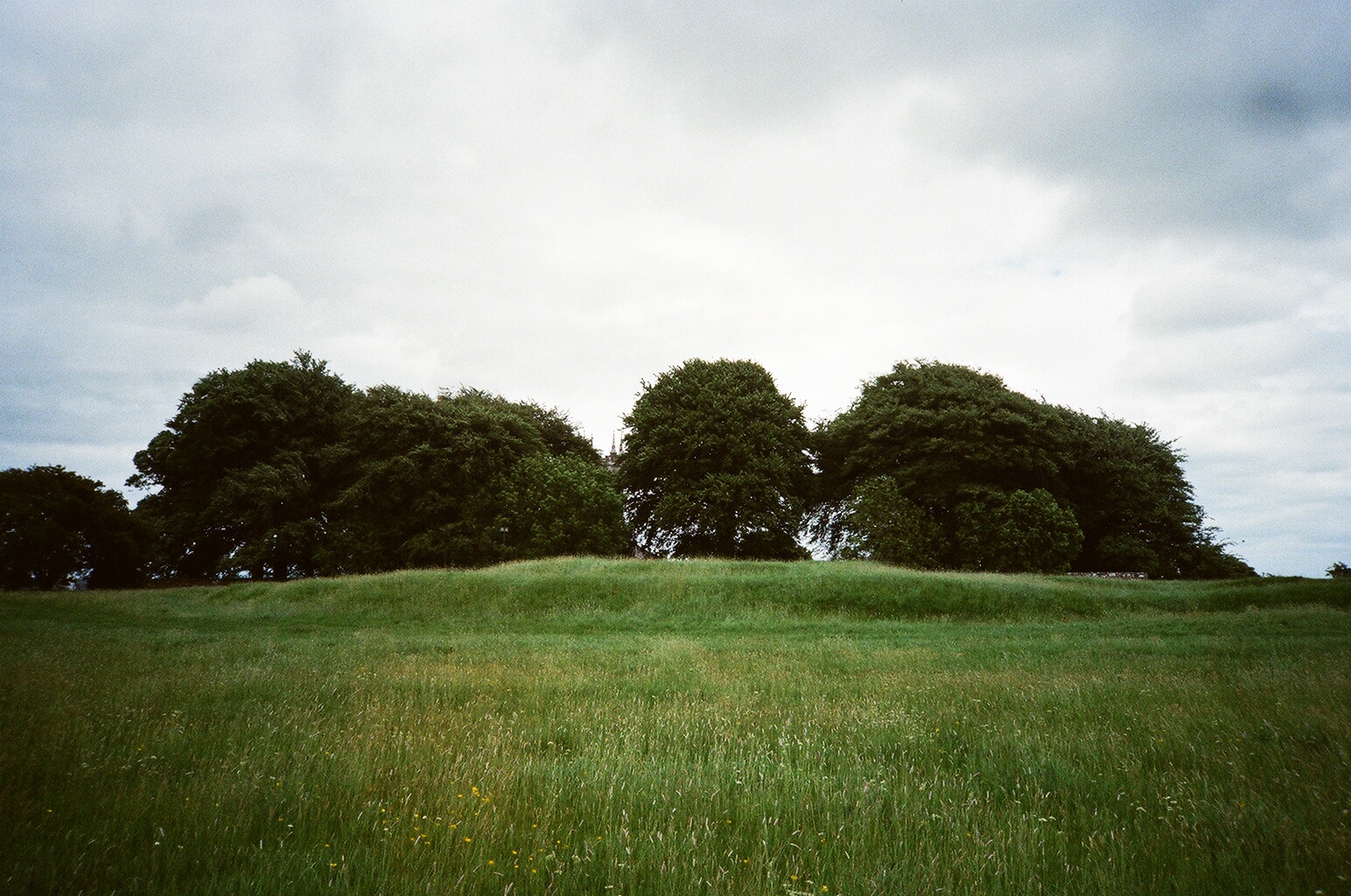
The Hill of Tara County Meath Ireland

The Earth has been there for a long time. She is mother to all of us.

She knows everything. The Buddha asked the Earth to be his witness by

touching her with his hand when he had some doubt and fear before his

awakening. The Earth appeared to him as a beautiful mother. In her arms

she carried  flowers and fruit, birds and butterflies, and many different

animals, and offered them to the Buddha. 

The Buddha’s doubts and fear instantly disappeared. Whenever you feel

unhappy, come to the Earth and ask for her help.

Touch her deeply, the way the Buddha did.

Madonna of Combermere

Suddenly, you will see the earth with all her flowers and fruit,

trees and birds, animals and all the living beings that she has produced.

All these things she offers to you.

You have more opportunities to be happy than you ever thought.

The Earth shows her love to you and her patience.  The Earth is very

patient. She sees you suffer, she helps you, and she protects you.

When we die, she takes us back into her arms.

With the Earth you are very safe. She is always there, in all her

wonderful expressions like trees, flowers, butterflies, and sunshine.

Whenever you are tired or unhappy, Touching the Earth is a very good

practice to heal you and restore your joy.

Before Leaving the Rose Garden

For the past four weeks, we have been sitting at the feet of scholar and wise woman Anne Baring as she unfolded for us her research, her intuitions, her reflections on the Divine Feminine, especially as She is known in Judaism as the Shekinah. These teachings have been so rich and profound that they merit more than a brief reading. In preparing the four reflections, I spent many hours seeking to understand Anne Baring’s work, seeking a way to present her teachings so that you might also enter them with joy.

I invite you to spend time re-reading the Rose Garden pieces (below).

What do you hear the Sacred Feminine say to you?

What do you wish to say to her?

You may be blessed to receive a poem in which this Presence of Love speaks to you directly. Or you may be inspired to simply write your own words to this Sacred Presence. I offer you three examples:

Here’s the Dark Mother
by Peggy Rubin
I am the Voice in the whirlwind,
in the place others call, and experience as,
Chaos.
I am above, below, within the Chaos.
I am the darkness. And I am the One to seek when you need to source yourself in joy,
in peace, in turbulence.
But beyond, beyond, way beyond
the normal experience of darkness,
I invite you into the Darkness — beyond and before and after Time.
This is your Source, your Origin.
If things fall apart,
if you fall apart,
come into my all-holding embrace.
I am the energy that shapes and holds universes together.
Can I do any less for you?
There is pressure in my holding
and incalculable power — so
after a time of rest you may begin to feel the pressure
of new birth — persistent, insistent.
I who shape galaxies
do not hesitate to shape you —
fiercely, perhaps — but truly to your most
elegant and beautiful design.
Your design — like the galaxy —
is glorious to behold.
And in my vast darkness
I hold that pattern, and desire
you to recognize it, to become it.
You will not fly apart,
though it may feel like it.
I am holding you and
I am holding your becoming.

Black Madonna

Mother Wisdom Speaks

by Christin Lore Weber

“I am the maiden of joy. 


I am song in the wind and rain upon the rocks.

I am fair love and holy hope and the flight of the dove.

 I am earth, betrothed. I am mystical rose. 


I am the mother of mystery. 


I hold opposites together.

I birth children and sever the cord with my teeth.

Those I love I send away to their lives.

 I am the cauldron of fire and the cup of milk.

I am the two edged knife. 


”I am the old woman: I am the queen.


If you seek me you will find me everywhere.

I am the womb of wise blood.

I am the world’s crown. I am diamond. I am pearl.

 I shine with the wisdom of God.


”I am the circle of being.


I am glory — splendor of infinite life.

I am the spiral, the fullness of being, fully becoming,

 forever, world without end.”

~

Some of you I will hollow out.

I will make you a cave.

I will carve you so deep the stars will shine in your darkness.

You will be a bowl.

You will be the cup in the rock collecting rain…

I will do this because the world needs the hollowness of you.

I will do this for the space that you will be.

I will do this because you must be large.

A passage.

People will find their way through you.

A bowl.

People will eat from you

and their hunger will not weaken them to death.

A cup to catch the sacred rain….

Light will flow in your hollowing.

You will be filled with light.

Your bones will shine.

The round open center of you will be radiant.

I will call you Brilliant One.

I will call you Daughter Who is Wide.

I will call you transformed.

(Originally published in “Circle of Mysteries: The Woman’s Rosary Book“, 

and “Woman Prayers” edited by Mary Ford-Gabowsky)

“In My Glad Hours” by Rainer Maria Rilke

In my glad hours, I will make a city of your smile, a distant city that shines and lives. I will take one word of yours to be an island on which birches stand, or fir trees, quite still and ceremonial. I will receive your glance as a fountain in which things can disappear and above which the sky trembles, both eager and afraid to fall in.

I will know that all of this exists, that one can enter this city, that I have glimpsed this island and know exactly when there is no one else beside that fountain. But if I appear to hesitate, it is because I am not sure whether it is the forest through which we are walking or my own mood that is shaded and dark. (Rilke: Early Journals)  

With what words will you respond to the Sacred Feminine or in what words will this Presence of Love address you? So that we may have a sharing on the Sophiawakens Blog next week before the summer break, please send your words/poetry/insights to me at this email address : amclaughlin@sympatico.ca 

Entering the Rose Garden Part Two

Tree of Life

Whatever their ways,

they are all in love with you,

Each comes, by a path, to the Rose Garden

Niyazi Misri

 Anne Baring finds in the richness of Kabbalistic teachings and traditions traces of the luminous period of the First Temple in Israel. Thanks to her generosity in making her lecture notes available to those who participated in Ubiquity University’s online program “Madonna Rises”, I have Anne Baring’s own words to rely on. Short quotes are in quotation marks, longer ones designated by the use of italics. 

Last week, we reflected on The Tree of Life as an image of the soul of the cosmos. “Every aspect of creation, both visible and invisible, is interconnected and interwoven with every other aspect.” In the Tree of Life there exists “one cosmic symphony”.

The Tree of Life is no hierarchical descent from invisible to visible. Rather it is “an image of worlds nesting within worlds, dimensions within dimensions emanating…from within outwards…the tapestry of relationships which connect invisible spirit with the visible fabric of this world…. At the innermost level is the unknowable source or god-head, at the outermost the physical forms of matter.”

And who or where are we in this “one unified web of life: one energy, one spirit, one single cosmic entity”?   

Anne Baring responds: “According to this Tradition, we are, each one of us, that life, that energy, that spirit.”

There is something still more wonderful: an intermediary between “the unknowable source” and “the physical forms of matter”: the Shekinah:

The Shekinah is the image of the Divine Feminine or the Feminine Face of God as it was conceived in this mystical tradition of Judaism. In the image and cosmology of the Shekinah, we encounter the most complete description of Divine Wisdom and the Holy Spirit as the indissoluble relationship between the two primary aspects of the god-head that have been lost or hidden for centuries.

The Shekinah- the feminine co-creator- is the Voice or Word of God, the Wisdom of God, the Glory of God, the Compassion of God, the Active Presence of God: intermediary between the mystery of the unknowable source or ground and this world of its ultimate manifestation.

The concept of the Shekinah as Divine Wisdom and Holy Spirit ….transmutes all creation, including the apparent insignificance and ordinariness of everyday life, into something to be loved, embraced, honoured and celebrated because it is the epiphany or shining forth of the divine intelligence and love that has brought it into being and dwells hidden within it.

The elimination of the image of the Great Mother took away from us the concept that “the whole of nature was ensouled with spirit and therefore sacred”. People living through the millennia of Patriarchal religions lost “their age-old sense of participation in a Sacred Order.”

The Shekinah, named as Divine Wisdom and Holy Spirit- divinity present and active in the world- supplies the missing imagery of divine immanence which is absent from Judaism, Christianity and Islam. And this mystical tradition brings together heaven and earth, the divine and the human, in a coherent and seamless vision of their essential relationship.

How would the recovery of the Shekinah as the feminine aspect of the god-head, as Mother, Beloved, Sister and Bride transform our image of God? of Nature? of ourselves?

Anne Baring states that “the Shekinah gives woman what she has lacked throughout the last two thousand years in western civilization—a sacred image of the Divine Feminine that is reflected at the human level in herself.”

Yet prior to this in the ancient world Wisdom was always associated with the image of a Goddess: Inanna in Sumeria, Isis and Ma’at in Egypt, Athena in Greece… Anne Baring celebrates the recovery of these ancient images with the even greater richness of the Shekinah’s role in the web of Life:

The Bronze Age imagery of the Great Goddesses returns to life in the extraordinary beauty and power of the descriptions of the Shekinah, and in the gender endings of nouns which describe the feminine dimension of the divine. But the Divine Feminine is now defined as a limitless connecting web of life, as the invisible Soul of the Cosmos, as the intermediary between the unknowable god-head and life in this dimension. The Shekinah brings together heaven and earth, the invisible and visible dimensions of reality in a resplendent vision of their essential relationship and union.

Another aspect of this tradition preserves the image from the Bronze Age of the Sacred Marriage. Rather than a Father God there is a Mother-Father who are “one in their eternal embrace, one in their ground, one in their emanation, one in their ecstatic and continual act of creation  through all the dimensions they bring into being and sustain.”

Ann Baring comments:

From the perspective of divine immanence, there is no essential separation between spirit and nature or spirit and matter.  

In a burst of poetic praise, Anne Baring adds:

No other cosmology offers the same breath-taking vision in such exquisite poetic imagery of the union of male and female energies in the One that is both.

Not surprisingly, the kabbalists, in contemplating the mystery of this divine union, turned for inspiration to “The Song of Songs”.

The Easter Mystery 2022

Through the cold, quiet nighttime of the grave underground,

The earth concentrated on him with complete longing

Until his sleep could recall the dark from beyond

To enfold memory lost in the requiem of mind.

The moon stirs a wave of brightening in the stone.

He rises clothed in the young colours of dawn.

(John O’Donohue “Resurrection”)

he Easter Mystery of life-death-life is at the heart of the universe, at the heart of life on our planet, in the deep heart of our own lives. From its birth out of the womb of a dying star, through its daily cycle of day/dusk/ night/dawn, its yearly cycle of summer/autumn/ winter/spring, the earth teaches us to live within the paschal mystery.

Ancient peoples understood this mystery. Through their careful observations they constructed buildings such as the mound in Newgrange Ireland where a tiny lintel receives the first rays of dawn only on the winter solstice.

The ancients wove their understanding of life/death/life into their mythologies: the Egyptians had the story of Osiris, whose severed body was put together piece by piece by his wife Isis, then reawakened. The Sumerians tell of the great queen Inanna who descended to the underworld to visit her sister Erishkigal. There she was stripped of all her royal robes and insignia, and murdered by her sister who then hung her lifeless body on a hook. Three days later, Inanna was restored to life, all her honour returned to her.

The people of Jesus’ time would have known these and other great myths of the ancient Near East. What was so stunningly different in the Jesus story was that the mystery of life-death-life was incarnated in a historical person.

The Resurrection of Jesus is at the heart of the Christian faith. As Paul wrote, “If Christ be not risen then our faith is in vain”.

In our lifetime, the illumination of new science shows us the life/death/mystery at the heart of the universe. Like exploding stars, our lives are continuously being rebirthed into a deeper more joyous existence. By allowing the death within ourselves of old habits, old mindsets and narrow ideas of who or what we may be, we open ourselves to the possibility of new life being birthed within us.  As Jesus told his friends, “You will do what I do. You will do even greater things”.

“Resurrection is about being pulsed into new patterns appropriate to our new time and place,” Jean Houston writes in Godseed. For this to happen, we need to open in our deep core to “the Heart of existence and the Love that knows no limits. It is to allow for the Glory of Love to have its way with us, to encounter and surrender to That which is forever seeking us, and from this to conceive the Godseed”.

“The need for resurrection has increased in our time,” Jean continues. “We are living at the very edge of history, at a time when the whole planet is heading toward a global passion play, a planetary crucifixion.” Yet “the longing with which we yearn for God is the same longing with which God yearns for us…. the strength of that mutual longing can give us the evolutionary passion to roll away the stone, the stumbling blocks that keep us sealed away and dead to the renewal of life”. (Godseed pp.129-130)

The yearly miracle of spring awakens within us the confidence and joy that this same rebirth is ours to accept and to live. We know our call to green our lives, our times, our planet:

The force that through the green fuse drives the flower

Drives my green age (Dylan Thomas)

Where in my life do I most experience the need for a rebirth?

What old habits and beliefs would I have to let die in order for this new life to be born?

How would my life be more joyful if I knew that my yearning for the Love at the heart of the Univers is matched by the same longing of Love for me?

What would a resurrected life look like, feel like, for me? for those with whom my life is woven? for our planet?

May Sophia, the feminine presence of Sacred Wisdom, gently guide us through the death of what no longer serves us into the joy of the rebirth for which our hearts yearn.

Return to Norwich

In 1999 I returned to Norwich. In the seven years since I’d been here, I’d changed. With the reverse logic of the lover, I’d thought that Norwich would’ve remained the same. With a sense of betrayal, I looked on large car parks, half-demolished industrial buildings, a new four-storey shopping mall that towered over the old Castle. My favourite pub, “The Murderer’s Cafe”, was gone. Altered roadways blotted out the clarity of the city map I held in my head.

Yet the Church of St. Julian had not altered. I walked towards the tiny flintstone building, rebuilt after the bombing of the original twelfth century structure in June, 1942. As I made my way along Julian’s Alley, my attention was caught by a notice attached to the arched front door of the Church. I drew nearer. I was reading my own name. Soon the whole notice became legible, announcing four performances I’d come to Norwich to offer: a one-woman play on the life and writings of Julian, written by James Janda.

The interior of the church had been adapted for the event. The altar, with its reredos (which had survived the bombing), stood just behind a built – up stage area, adding some three feet to the height of the floor to allow the audience seated in the church pews a clearer view. Felicity Maton, secretary to the Friends of Julian, who’d made the arrangements for the event, explained the plans for lighting. Together we examined the props: the bed, a trunk, the stool, the writing desk.

“Excuse me for a moment,” I said to Felicity. “I need to greet someone.” I walked to the arched doorway at the right of the sanctuary, pushed my thumb down on the iron latch. The door to Julian’s reconstructed cell swung inwards.

 Inside, all was as I’d remembered it, as I’d seen it in memory many times over the past years. I sat down on the bench that was built against the far wall under windows that in Julian’s time would have opened onto the street. Now they looked out to the green grass and trees of the Church yard, edged with a gigantic bush of red roses.

 I let my eyes rest on the marble slab that contained an image of the crucified Jesus.  It bore the words that on my first visit had transfixed me, “Thou art enough to me.”  This time, my eyes lighted on the other words carved into the marble, “Lo, how I loved thee.”

 Yes.  How you loved me, I repeated silently to the One who had brought me here, who had brought me on a far longer journey from emptiness to fullness over the past years, from the state of being without a ministry or a place to live, to the eruption in my life of a ministry so full and satisfying that I could hardly take it in. 

 On that earlier visit I’d prayed to Julian, “Please find me a work like yours, where I can speak to others of God’s love.” Now in the palpable presence of Julian’s spirit, I thanked this goodly woman who had changed my life.

 I returned to Felicity after a few moments with a question, “What do you suggest I do about changing into costume?”

“Why don’t you dress in Mother Julian’s cell and emerge from there to begin the play?”

 So that is how it was, for the four performances over the two weekends.  At first I had to catch myself in the midst of my lines, distracted by the thought, It’s happening here, in the very place where Julian lived.

 On the night of the third performance there was a difference. The wonder had not ceased, but the lack of reality was replaced by an intense awareness that was joyous.  I felt the role with every aspect of my being. In the midst of the first act, I was so conscious of elation, that I tried to touch its source.  It came to me soon enough.

That afternoon I’d been invited to tea in the small apartment of Father Robert Llewellyn, an Anglican priest whose name I’d seen liberally sprinkled through bibliographies of works on Julian.  As we shared the last pieces of his ninetieth birthday cake, Father Robert told me of his assignment in 1976: to be a presence in the Julian Cell.

“For the first month, I spoke with no one,” he recalled. “I just went morning and afternoon and sat in her cell, and prayed.”  After a month someone approached with a question, and gradually his work of listening and advising, mostly in aspects of prayer, began to grow.

Through Father Robert’s efforts, a bookstore/study room and counselling room were created in a hall belonging to the Anglican convent next door. Now this “Julian Centre” attracts scholars and pilgrims who come to read about Julian, to ask about her teachings, to purchase books and souvenirs.

 At the end of our visit, Father Robert asked if we might have fifteen minutes of silent prayer together. There were people he’d promised to pray for, and he suggested that prayers be offered for the performance scheduled for that evening, that it would reach people who would need Julian’s message.

The lightness and joy I felt in the midst of that evening’s performance were the fruit of that silent prayer with Father Robert After the first act, he pressed my hand to his heart. “Thank you,” he said. “You have given us a gentle Julian. You have made her homely.” With a smile he added, “I know in America, that is not a good word, but it is here.” 

My life and my work have become intertwined with the loving trust and homely wisdom of this woman whose teaching is meant for the ordinary days of our lives. 

Days like my second last in England in that summer of 1999, when I stood at the airline desk, one half hour before the departure of my flight from Gatwick to Ottawa, and was told the flight was closed.

 In a moment of near panic, followed by a sense of utter despair, I said, “What am I to do?  I have nowhere to go.” I was met with closed faces. Then from within me Julian’s words arose: “He did not say, `You shall not be tempest – tossed, you shall not be discomfited.’ But He said, `You shall not be overcome.'”

 I believed her. I turned my luggage cart around, trying to balance the seven-foot container of the tapestry, my luggage with costume and props, the weight of new books on Julian. I stood in the middle of Gatwick Airport and cried. Then, having finished with tears, I wheeled the cart outside and found a taxi, a hotel, and the peace to accept this reversal.  I was not overcome.