
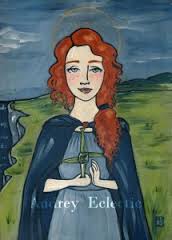
Brigid of Kildare
Who is Brigid for us today? We take inspiration from her, and yet we are separated from her life by a millennium and a half. We don’t live in a monastery, or in a way of life intimately tied to the land and its cycling seasons.
In her book Praying with Celtic Holy Women Bridget Mary Meehan writes that “the force of (Brigid’s) Celtic soul is a rich lodestone of the Celtic feminine which continues to challenge each new generation.” (p.29) Consider the word Meehan chooses: lodestone, a magnet, a thing that attracts….
What is it in Brigid’s story that so attracts us after so many centuries? One story from Brigid’s life tells of Old Bishop Mel, as he prepared to read the words that would consecrate Brigid as a spouse of Christ, by accident read the prayer over her for the consecration of a bishop. When the error was pointed out to him, Bishop Mel declared it was the work of the Holy Spirit. “Let it stand,”he said. . Thus Brigid became the Abbess of the Monastery of Kildare.
Kildare was a double monastery, housing consecrated women and men, as was the way in the Celtic expression of Christianity. Brigid would have governed as Abbess/Bishop to both women and men. The development of Irish Monasticism appears to have been richly differentiated, a garden of wild profusion and endless variety. So there is no way of knowing how or when or why Brigid’s monastery of women began to welcome men. But here is a story I found that tells how it may have happened:
One day a group of men, for whom Brigid’s faithful spirit and generous heart were as a lodestone, came knocking at the door of the Kildare Monastery, requesting that they be allowed to join the community. Brigid consulted with her Sisters. They were aghast! What? Men! Noisy, unruly, bothersome. No way! Brigid’s first assistant sealed the matter with the words that have frequently put an end to something new: “It’s never been done before.”
Still not at ease with the decision, Brigid went outside and sat near the holy well. Something urged her to look deeply into its dark waters, recalling as she did so that imagination dwells in the dark places. Brigid picked up a tiny stone and dropped it into the well. Down, down it fell, until a small splash in the deep told her it had reached the water. But there was still nothing to be seen in the well’s depths. She picked up another stone and dropped it into the well. Just at that moment the noonday sun, from its highest place in the sky, illumined the water where the stone had struck. Brigid saw tiny circles rippling out from where the stone had pierced the water.
In the depths of her own imagination, Brigid saw a circle widening. She thought about this: “Because it’s never been done before does not mean it can never be done.” And it was so. Kildare become a monastery for both men and women, drawn by the depth of Brigid’s holiness.

Seeking a meaning for the word lodestone I notice another word: lodestar. This refers to the star by which a ship navigates, usually the pole star. Symbolically it refers to a guiding principle. This illumines something for me, shining into the wells of legend and story that flow around Brigid’s life. Under the tales there is a guiding principle that will illumine our lives if we look deeper.
What was the lodestar of Brigid’s life, the star by which she navigated the uncertainties and challenges that faced her each day
In another legend, a sea creature in great danger had cried out to Brigid for help and she came to its aid. Brendan the Navigator was much offended and asked Brigid why the creature did not cry out to him instead.
“What do you think of when you are out in your boat, Brendan?”
He answered that he thought about the waves, the tides, the movement of the fish, the weather… all the things a fisherman must be aware of….
Brigid said to him, “From the first moment I met the Christ, my thoughts have never left him. That is why the sea creature called to me instead of to you.”
Such focus is important in our lives. I have to admit to Brigid how easily I lose focus, forget the One who began this work in me, let the Holy One slip from my gaze, from my path, from my heart. I realized that it is the fire of a passionate love for the Holy that has been lit within me, a fire I must tend faithfully. A fire tender must first of all take care that the flame of her love burns bright. All else, for each one of us, flows from that.
February 1st is now a National holiday in Ireland, honouring Brigid. Why not take time on Brigid’s Day to speak or write a dialogue with her, asking what for you, is the most important focus, the flame you must faithfully tend?



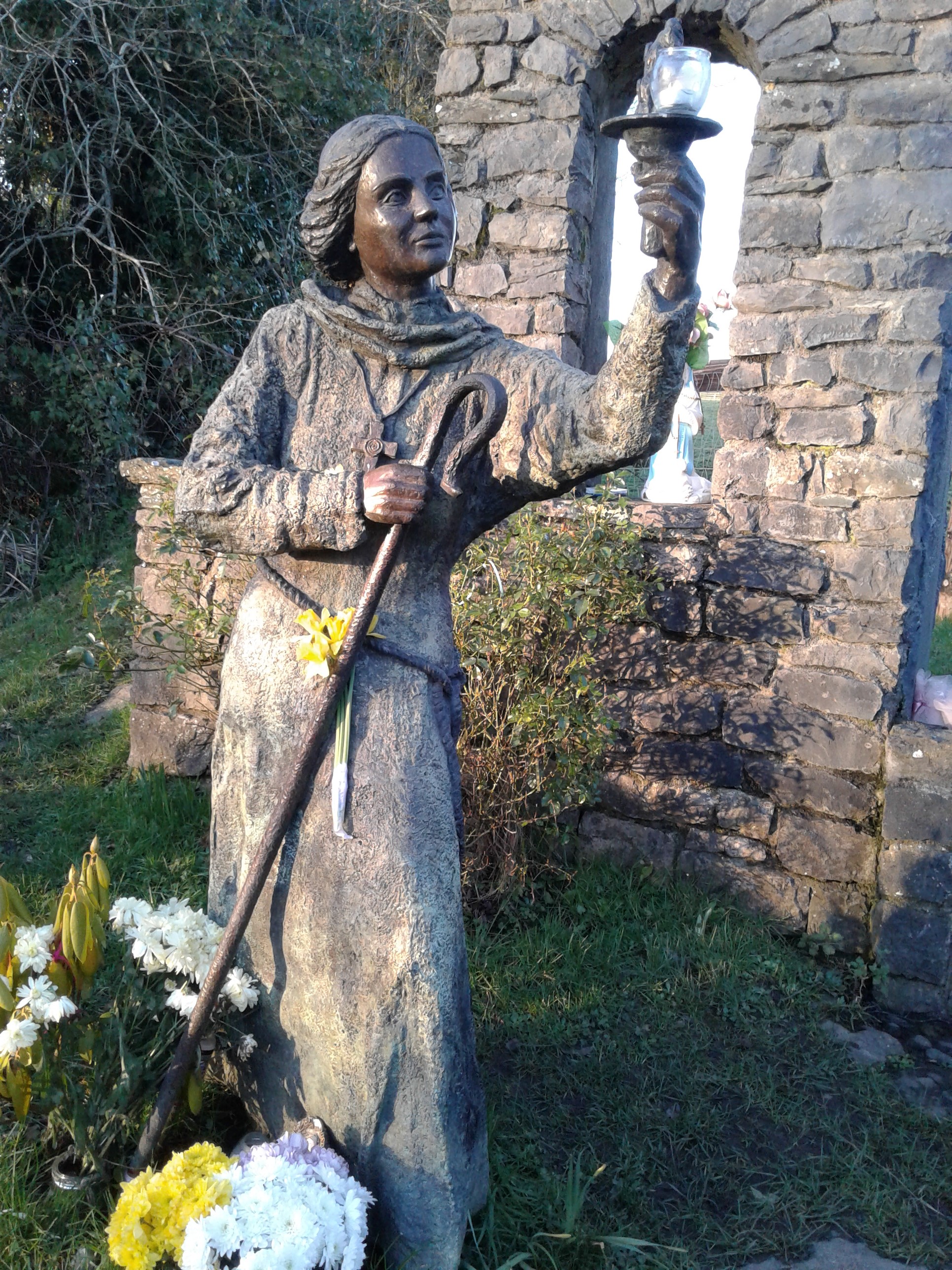
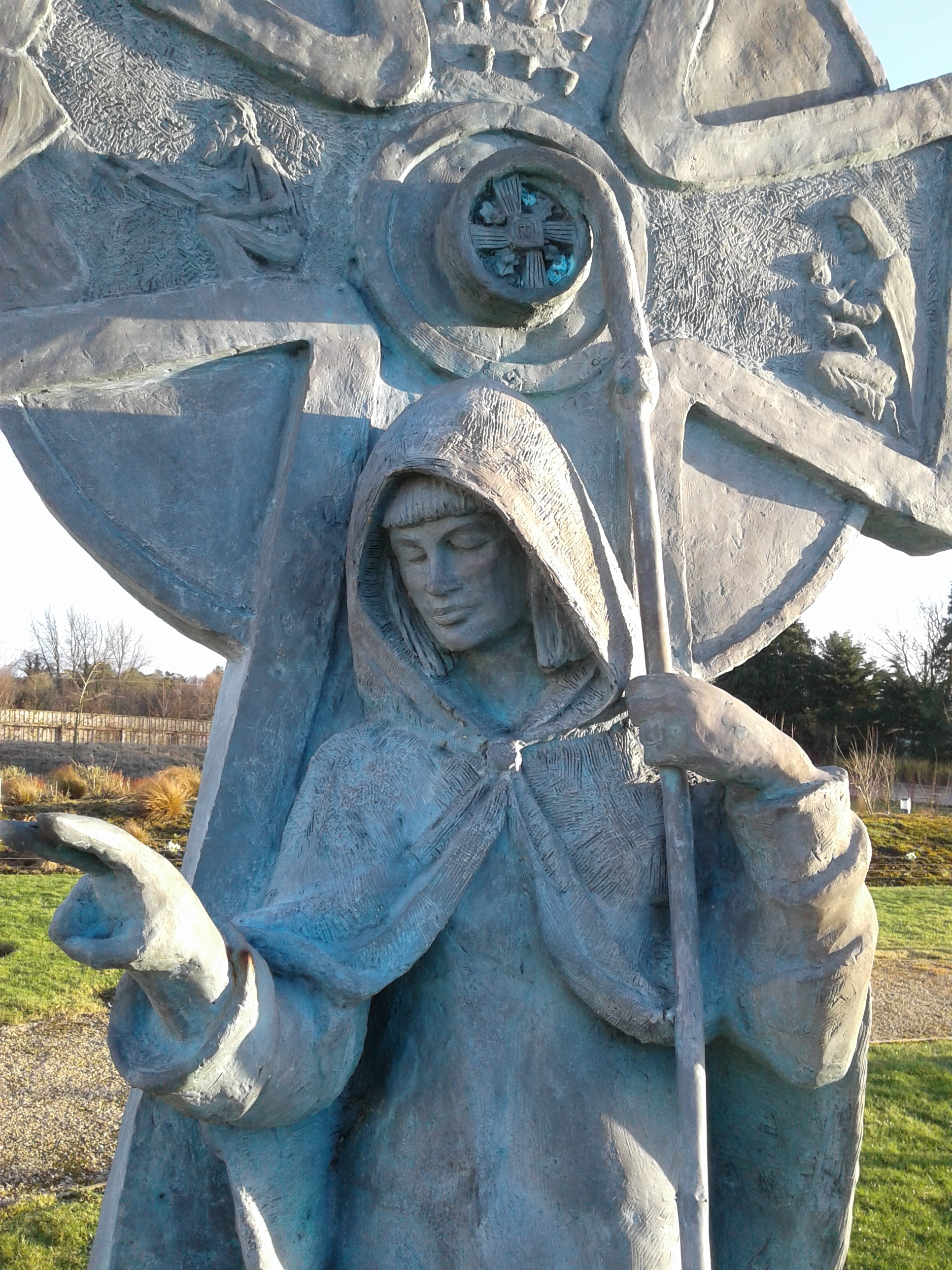
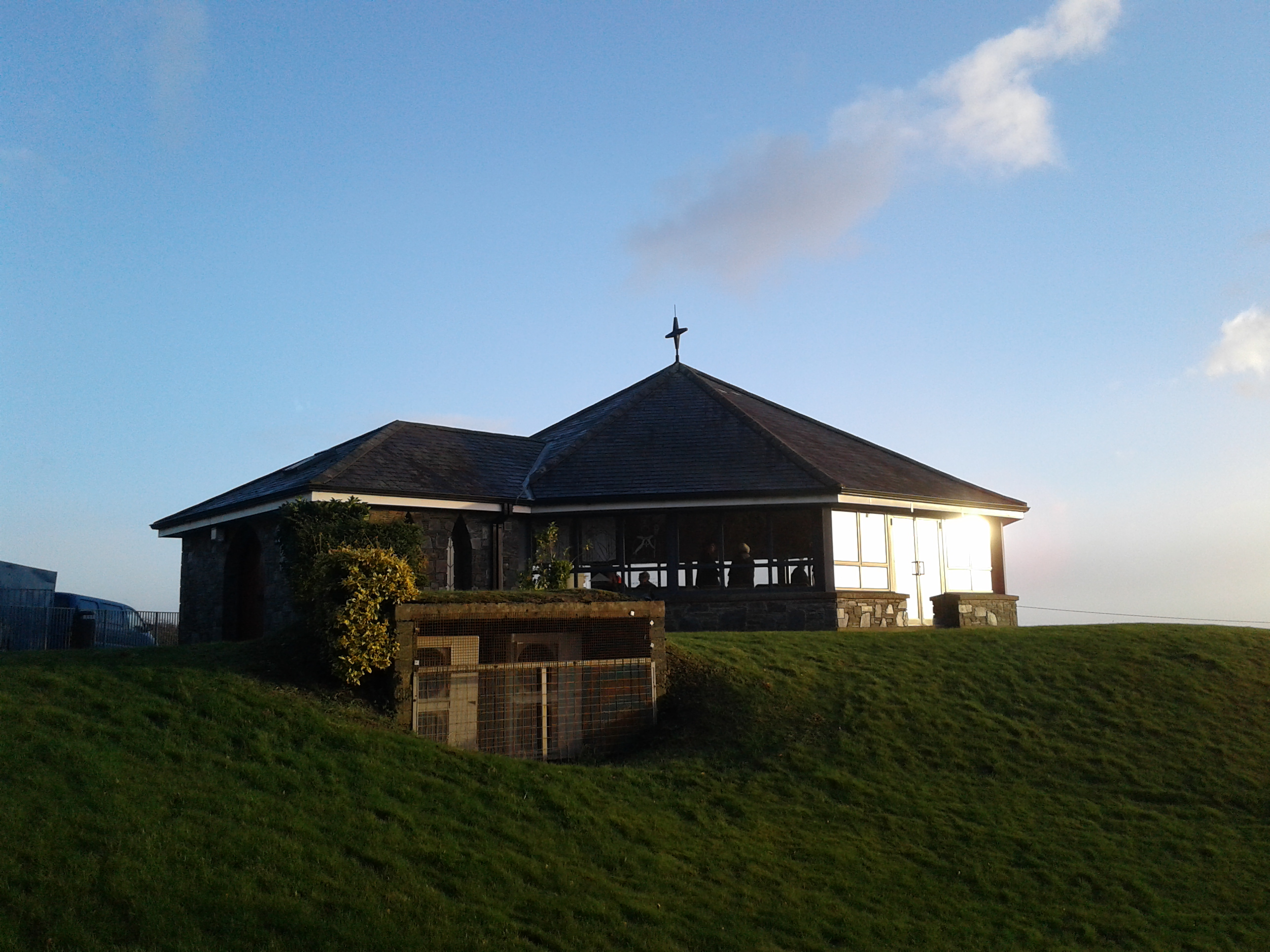
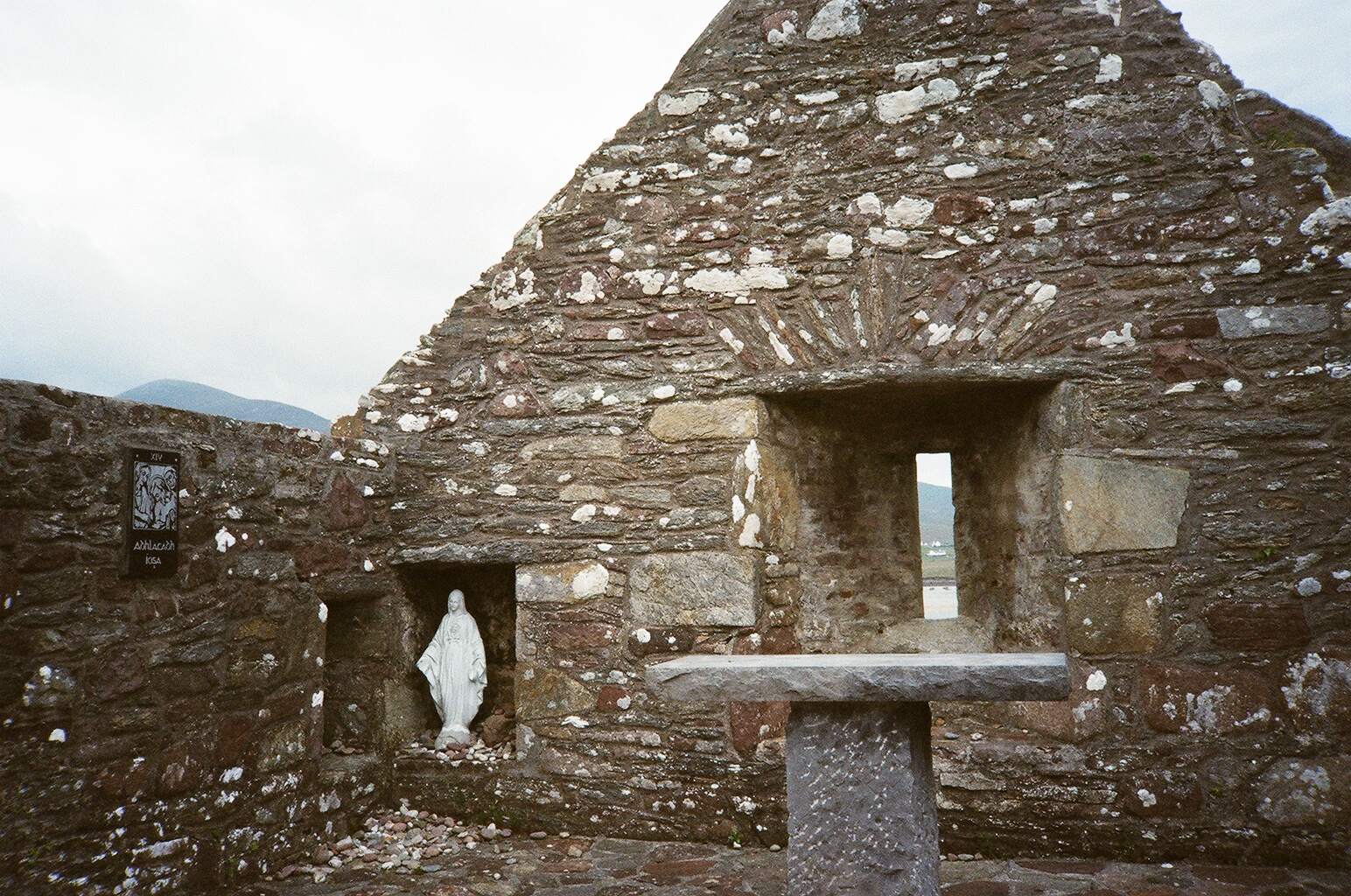 We have come here seeking an ancient holy well, dedicated to the early Christian Saint Dymphna, (Dimp / Nah) credited with healings. Dymphna was fleeing from her father, a pagan Irish king, her pathway marked by sacred wells, remnants of a tradition that predates Celtic Christianity. People sought healing at such wells, believed to be the openings of the body of our Mother Earth.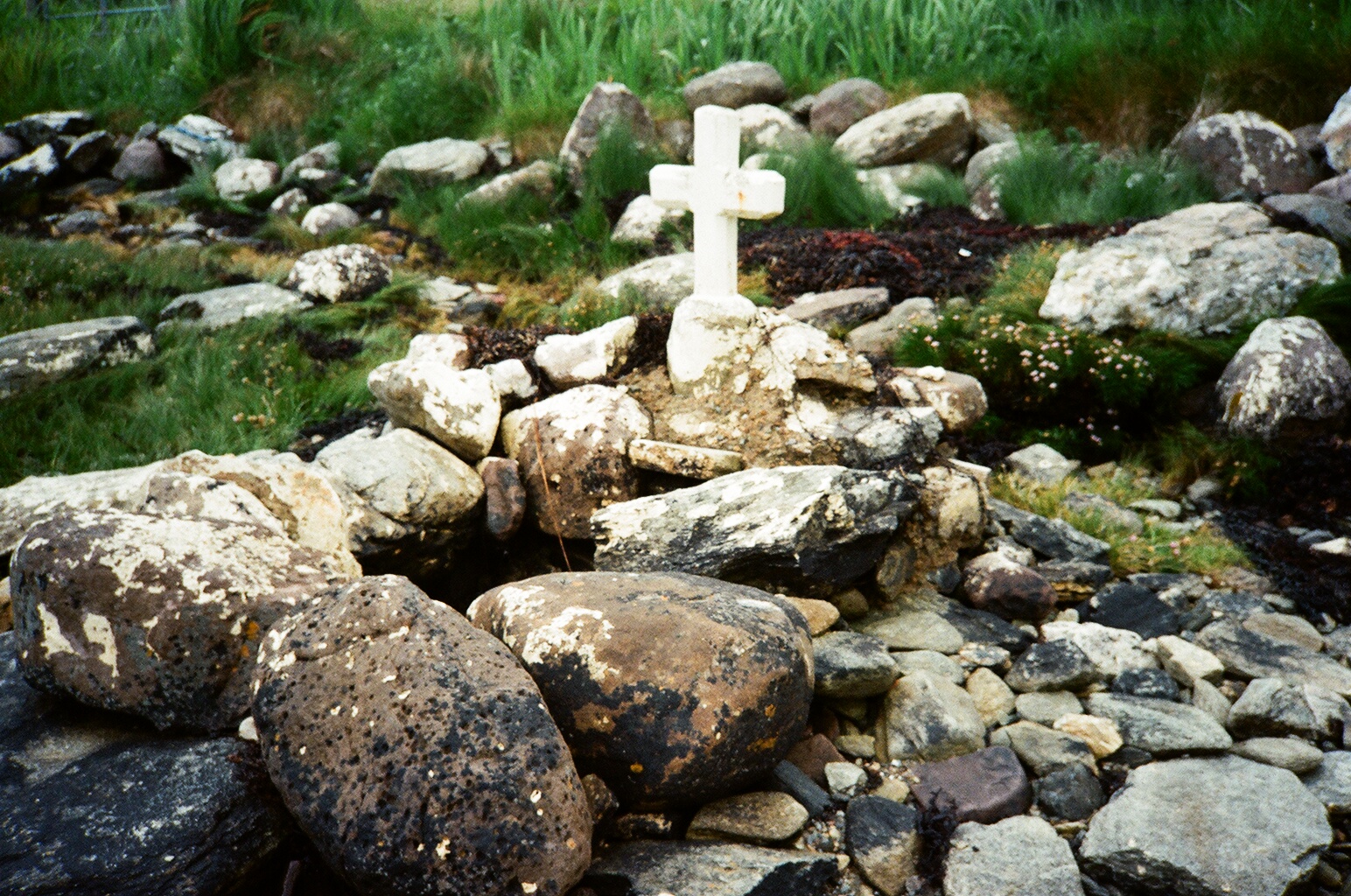
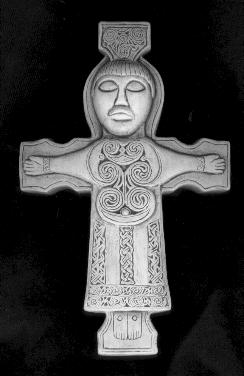 from an 8th c. bronze plaque, St. John’s Rinnagan, County Roscommon, Ireland
 sophiawakens